Pincio gardens · Nearby
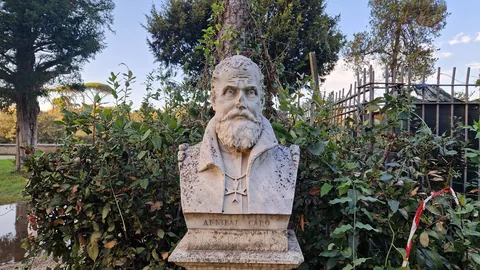
Andrea Palladio
Palladio adapted ancient architectural forms to villas, civic buildings, and churches, then explained those choices in print.
Find on the mapRead aloud with your device’s voice.
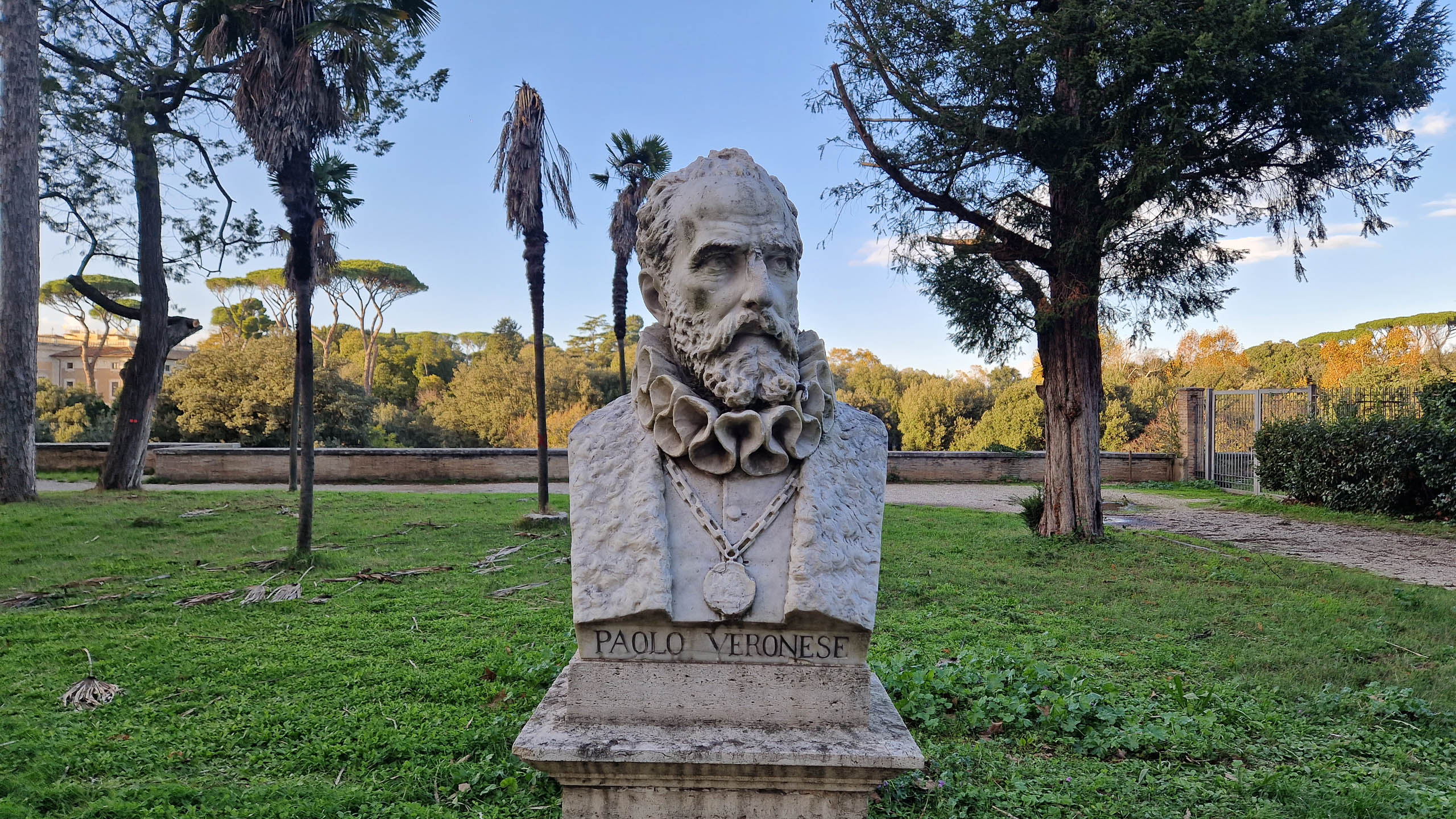
Paolo Veronese gave banquets the scale of public theater. Columns and stairways organize crowds dressed in costly fabrics, while servants and spectators occupy the edges of the main action. The architecture creates order, but the abundance of detail allows attention to move away from the biblical subject.
That freedom drew official scrutiny in 1573. Questioned by the Venetian Inquisition about figures included in a Last Supper, Veronese defended his choices. The large canvas is now known as The Feast in the House of Levi. The change of subject made room for a different reading of the assembled company.
Born in Verona in 1528, he became a leading painter in Venice, working for religious institutions and wealthy families. His painted architecture could extend the apparent space of a room, especially when combined with figures that seem to stand at its thresholds.
The brilliance of the color should not obscure the organization of the scene. Scale, placement, and gesture establish who commands attention and who performs service. Veronese’s pictures reward looking beyond the central narrative to the social world through which he chose to tell it.
Pincio gardens · Nearby
Palladio adapted ancient architectural forms to villas, civic buildings, and churches, then explained those choices in print.
Find on the mapPincio gardens · Nearby
Caro’s Italian Aeneid gave Virgil a new poetic voice, while his court employment connected literature with the planning of images.
Find on the mapPincio gardens · Nearby
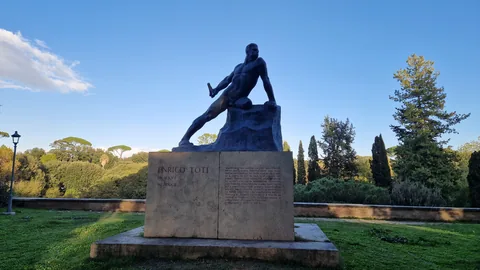
Arturo Dazzi’s bronze monument commemorates a Roman railway worker whose death in World War I became a national heroic image.
Find on the mapPincio gardens · Nearby
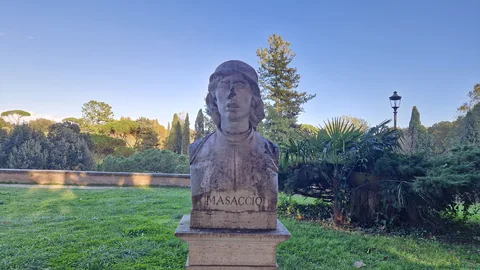
Masaccio gave painted figures physical weight and placed sacred events in spaces that appear measurable and inhabited.
Find on the map