Pincio gardens · Nearby
Andrea Palladio
Palladio adapted ancient architectural forms to villas, civic buildings, and churches, then explained those choices in print.
Find on the mapRead aloud with your device’s voice.
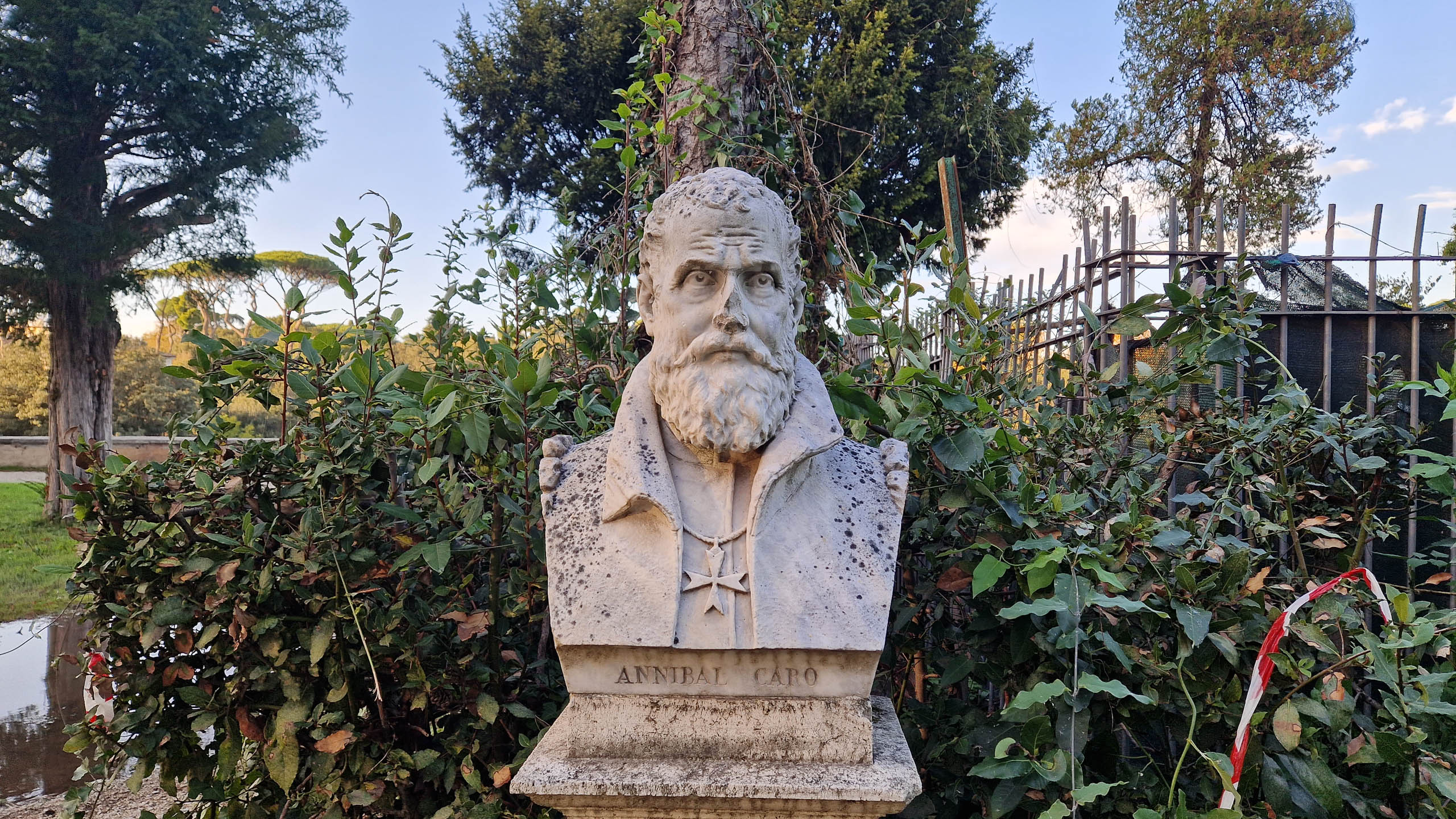
Annibale Caro’s translation of the Aeneid became a substantial poem in its own right. He rendered Virgil’s Latin epic in unrhymed Italian eleven-syllable verse, choosing an idiom that could sustain the movement of speeches and narrative over a long work. Translation required decisions about rhythm as well as verbal meaning.
Born in Civitanova in 1507, Caro spent much of his career in the service of powerful patrons, including the Farnese family. A secretary’s work could include correspondence and diplomatic obligations alongside literary activity. It also brought a writer into contact with artists and the ideas used to decorate elite residences.
Caro advised on subjects for painted decoration, showing how a literary imagination could help shape visual programs. The author who interpreted an ancient poem for new readers could also propose how classical stories should appear on a wall or ceiling.
He completed the Aeneid translation late in life and died in 1566; the work was published afterward. His bust commemorates a kind of authorship that depended on reworking inherited material. The achievement lies in the particular choices of language, rather than in claiming the story as his invention.
Pincio gardens · Nearby
Palladio adapted ancient architectural forms to villas, civic buildings, and churches, then explained those choices in print.
Find on the mapPincio gardens · Nearby
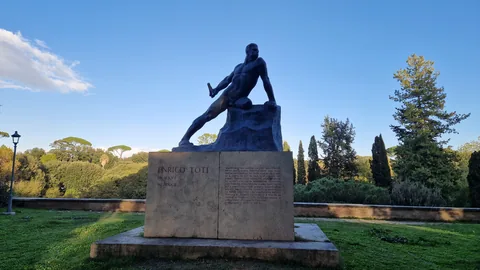
Arturo Dazzi’s bronze monument commemorates a Roman railway worker whose death in World War I became a national heroic image.
Find on the mapPincio gardens · Nearby
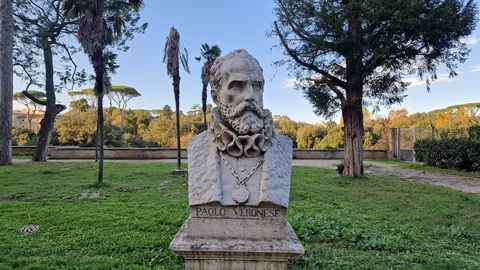
Veronese staged painted banquets on an architectural scale, bringing sacred stories into crowded worlds of wealth and display.
Find on the mapPincio gardens · Nearby
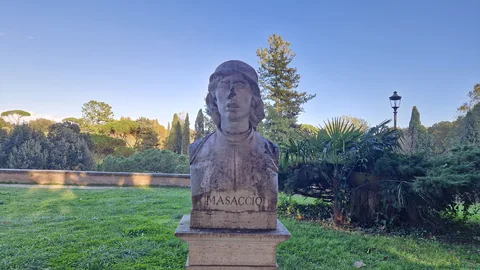
Masaccio gave painted figures physical weight and placed sacred events in spaces that appear measurable and inhabited.
Find on the map