Pincio gardens · Nearby
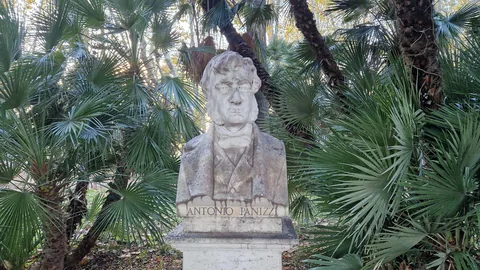
Antonio Panizzi
Panizzi helped make the British Museum’s books easier to find and its reading facilities better suited to a growing collection.
Find on the mapRead aloud with your device’s voice.
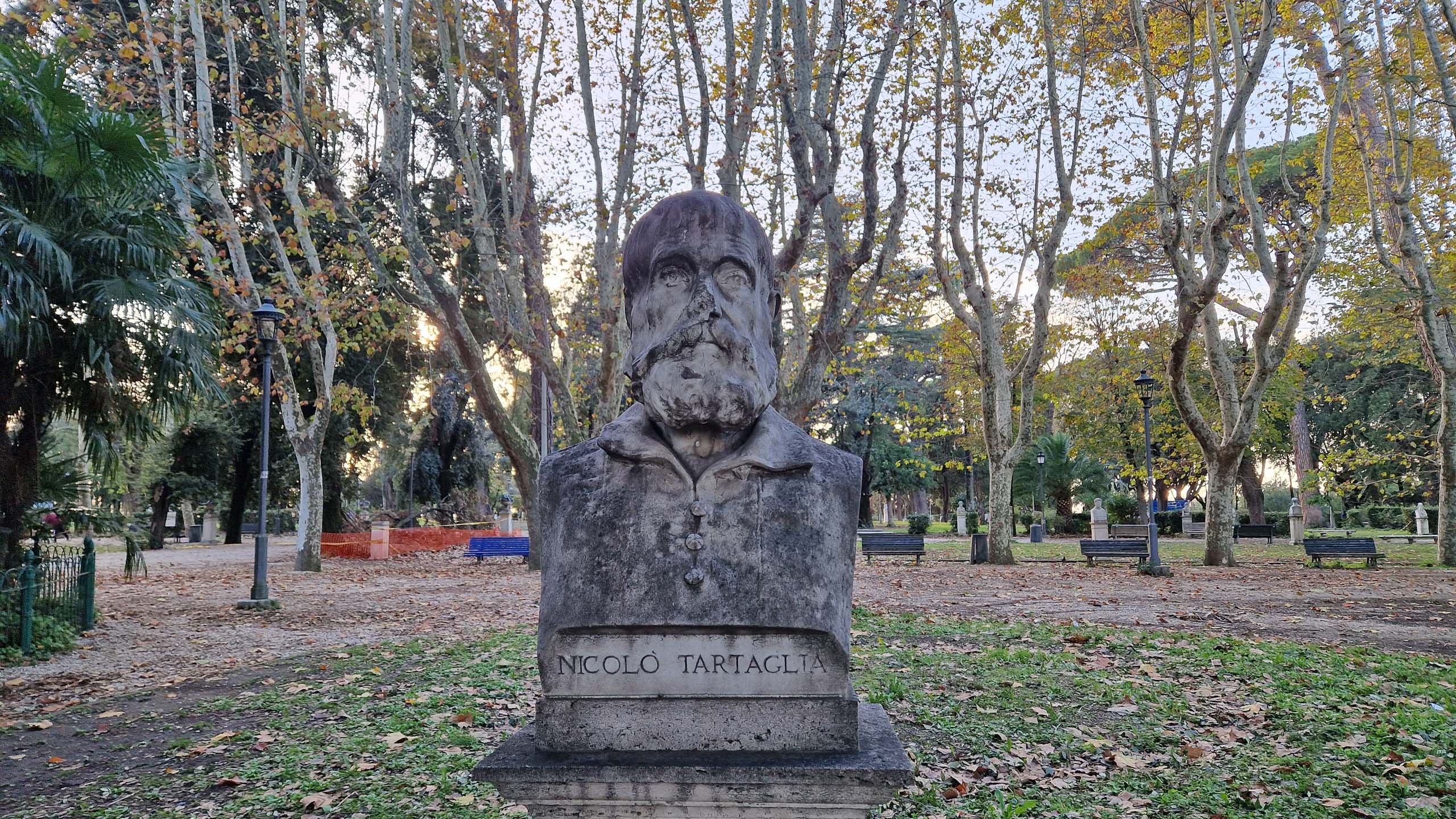
Niccolò Tartaglia found a method for solving a class of cubic equations during a period when public mathematical challenges could establish a reputation. In 1539, he communicated his method to Gerolamo Cardano under an expectation of secrecy. Its later appearance in Cardano’s work helped produce a bitter dispute.
The history includes Scipione del Ferro’s earlier solution and Ludovico Ferrari’s participation in the controversy. A single name attached to a formula can conceal this sequence of discovery and disclosure. Cooperation made methods available. Competition gave disclosure a cost.
Born in Brescia around 1499, Tartaglia also worked on practical mathematical questions, including ballistics. He published classical mathematics in forms available to new readers, among them an Italian translation of Euclid’s Elements in 1543. Those editorial efforts deserve attention beside the more dramatic dispute.
He died in Venice in 1557. The nickname Tartaglia referred to a speech impairment associated in his own account with injuries received during the sack of Brescia. It identifies the historical figure without needing to turn his disability into an explanation for his mathematics.
Pincio gardens · Nearby
Panizzi helped make the British Museum’s books easier to find and its reading facilities better suited to a growing collection.
Find on the mapPincio gardens · Nearby
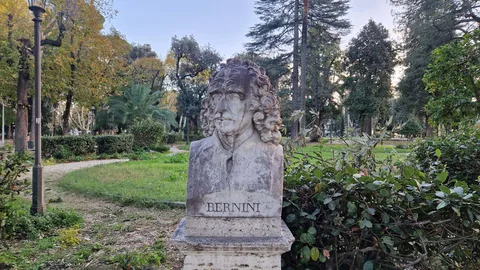
Bernini’s Borghese sculptures make action depend on the viewer’s position, turning carved stone into a sequence of discoveries.
Find on the mapPincio gardens · Nearby
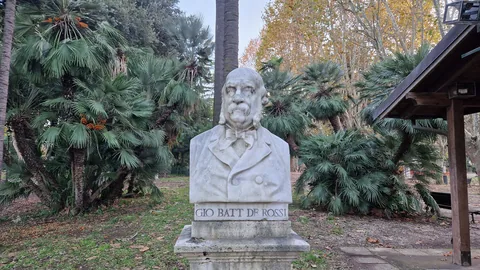
De Rossi combined inscriptions and excavation to reconstruct the early Christian burial landscapes outside Rome.
Find on the mapPincio gardens · Nearby
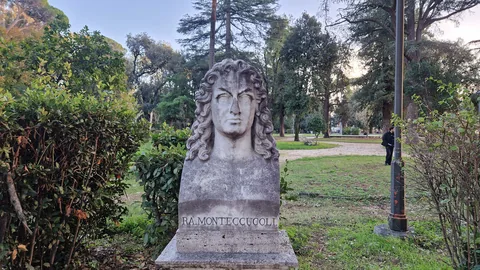
Montecuccoli combined command in the Habsburg armies with writing about the practical conditions required to sustain a war.
Find on the map