Pincio gardens · Nearby
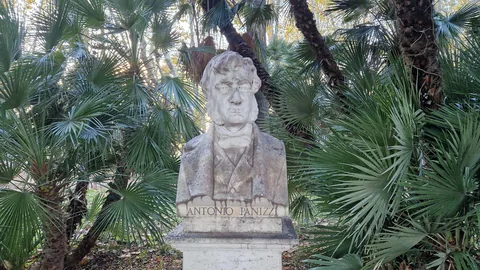
Antonio Panizzi
Panizzi helped make the British Museum’s books easier to find and its reading facilities better suited to a growing collection.
Find on the mapRead aloud with your device’s voice.
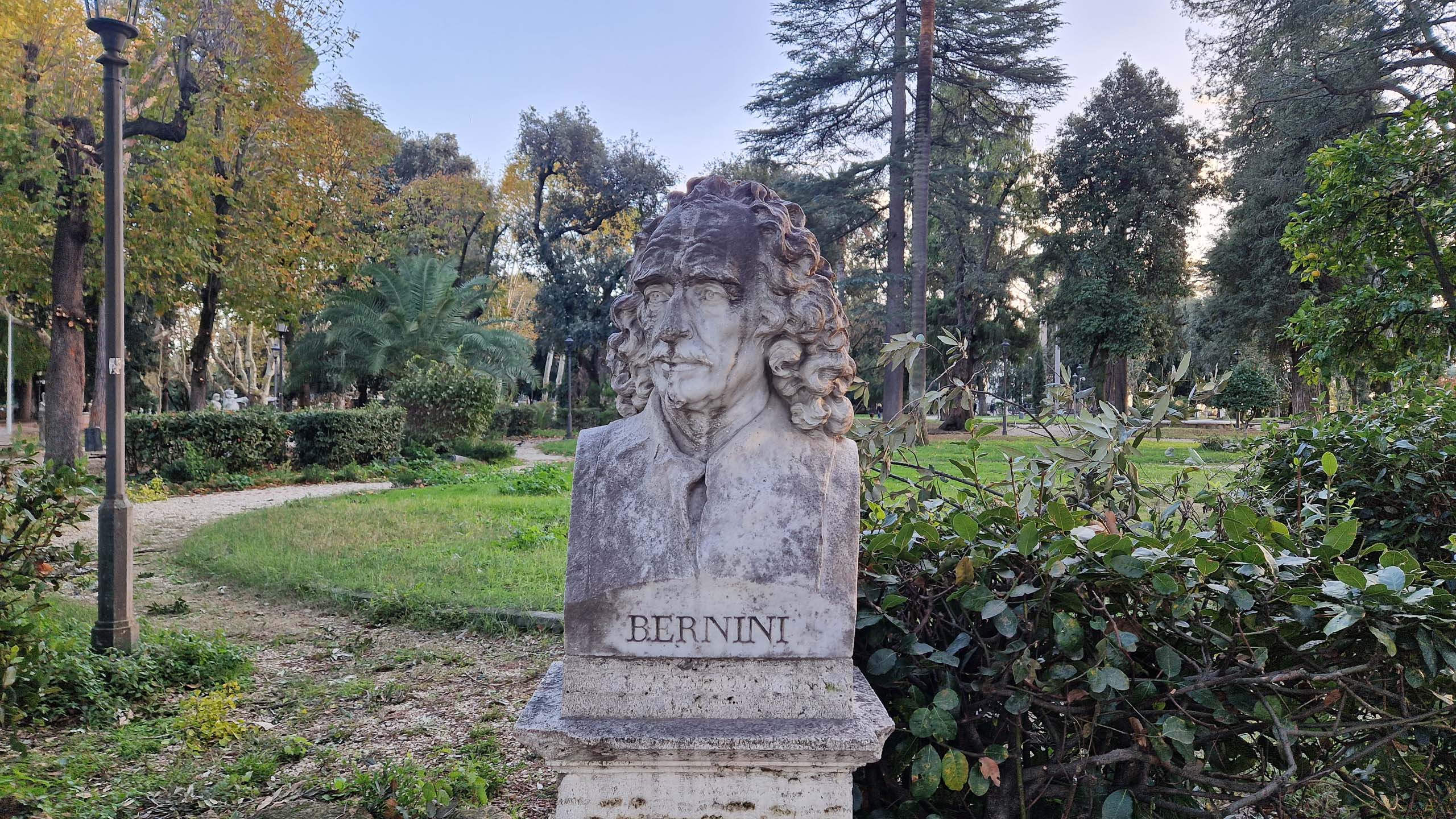
Gian Lorenzo Bernini’s early sculptures at the Borghese Gallery are organized around moments of change. David is about to release his sling; Daphne’s body is becoming a tree. The marble remains still, but the arrangement asks the viewer to reconstruct an action that extends beyond the instant represented.
Bernini was born in Naples in 1598 and trained with his father, the sculptor Pietro Bernini. The family moved to Rome while he was a child. Cardinal Scipione Borghese became a decisive patron of his early career, commissioning works whose scale and technical ambition made them demonstrations of both artistic ability and the collector’s resources.
In David, made in 1623 and 1624, the twist of the torso connects the concentrated face with the tension of the arms. Goliath is absent, but the action gives him an implied position in the surrounding room. The sculpture was originally placed against a wall on a lower base. Its present display allows views that do not reproduce that original encounter, including areas the sculptor did not finish to the same degree.
Apollo and Daphne, completed in 1625, also had an intended position near a wall. The distinction between polished skin and roughening bark helps make transformation legible, while the leaves and roots push the stone toward the limits of its strength. The subject is pursuit and escape: Daphne changes form to evade Apollo. Describing the pair as a happy romantic union would misread the violence of the story.
The delicacy of the carving has generated debate over the role of Bernini’s collaborator Giuliano Finelli. Earlier accounts mention assistance; the gallery’s modern catalog discusses evidence used to question that attribution. It is more accurate to acknowledge the debate than to assign particular leaves to a named hand as an established fact.
The group usually called The Rape of Proserpina has its own collecting history. Scipione gave it to Cardinal Ludovico Ludovisi, so the works now encountered together did not all remain continuously in the Borghese collection. Patronage involved political relationships as well as private taste.
Bernini’s later Roman projects combined sculpture with architecture and controlled light, as in the Cornaro Chapel. The early gallery works already show the principle at a smaller scale: meaning depends on the figure, its setting, and where the viewer stands. The Pincio bust commemorates the artist; a gallery visit provides the opportunity to examine those decisions in the works themselves.
Pincio gardens · Nearby
Panizzi helped make the British Museum’s books easier to find and its reading facilities better suited to a growing collection.
Find on the mapPincio gardens · Nearby
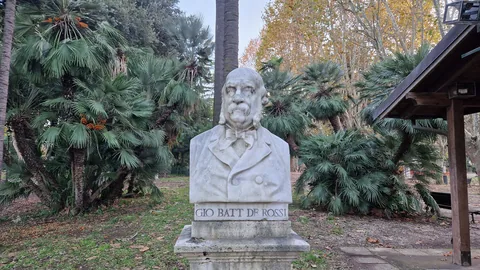
De Rossi combined inscriptions and excavation to reconstruct the early Christian burial landscapes outside Rome.
Find on the mapPincio gardens · Nearby
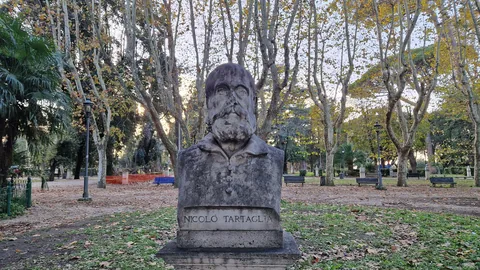
Tartaglia’s work on cubic equations became entangled in disputes over mathematical discovery and the right to publish it.
Find on the mapPincio gardens · Nearby
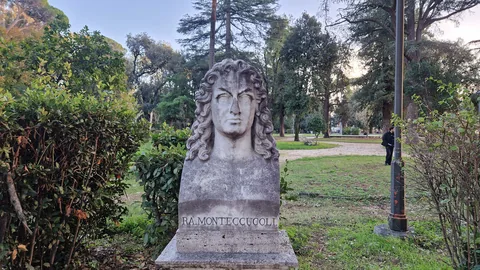
Montecuccoli combined command in the Habsburg armies with writing about the practical conditions required to sustain a war.
Find on the map