Pincio gardens · Nearby
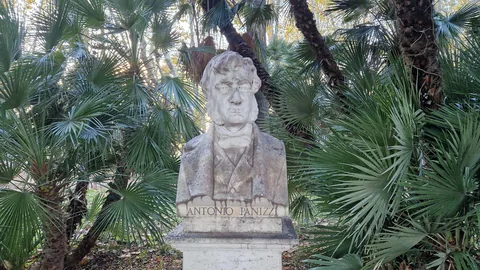
Antonio Panizzi
Panizzi helped make the British Museum’s books easier to find and its reading facilities better suited to a growing collection.
Find on the mapRead aloud with your device’s voice.
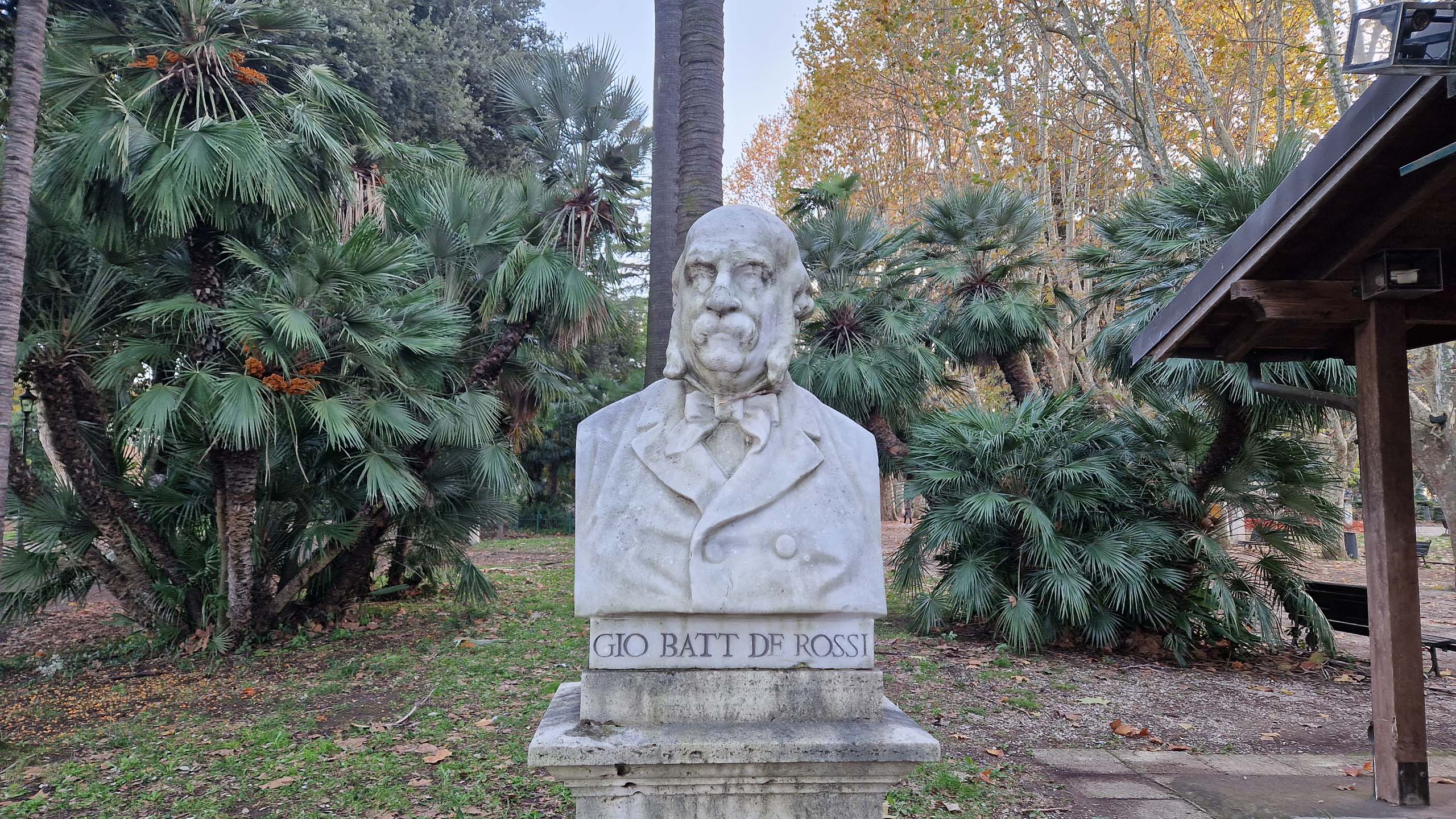
Giovanni Battista de Rossi used fragments of inscriptions to identify places in Rome’s early Christian past. Reading a name on stone could direct attention to a burial site, while excavation tested the relationship between the surviving material and written accounts. His work helped make the catacombs a subject of systematic archaeological investigation.
Born in Rome in 1822, he is particularly associated with the Catacombs of San Callisto on the Appian Way. His studies and publications connected the underground galleries with the history of the communities that used them. The sites were cemeteries; the familiar image of Christians living permanently underground to escape persecution distorts their principal function.
De Rossi’s Roma sotterranea cristiana reached readers beyond Italy, and his epigraphic scholarship connected him with international projects. His Catholic commitments formed part of the setting in which the research developed. They should be considered alongside the methods and evidence, rather than used either to dismiss or automatically validate the conclusions.
He died in 1894. His publications remain part of the record of those excavations.
Pincio gardens · Nearby
Panizzi helped make the British Museum’s books easier to find and its reading facilities better suited to a growing collection.
Find on the mapPincio gardens · Nearby
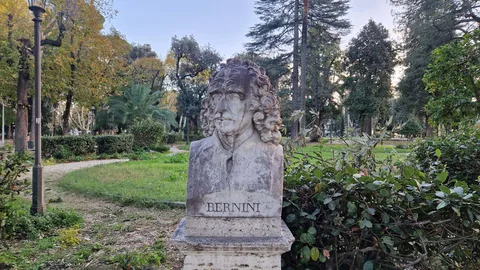
Bernini’s Borghese sculptures make action depend on the viewer’s position, turning carved stone into a sequence of discoveries.
Find on the mapPincio gardens · Nearby
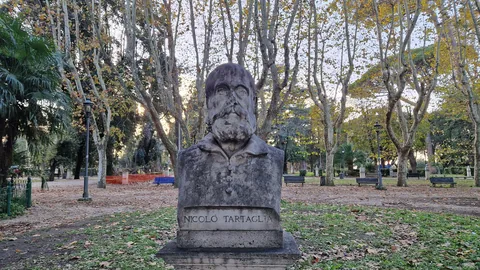
Tartaglia’s work on cubic equations became entangled in disputes over mathematical discovery and the right to publish it.
Find on the mapPincio gardens · Nearby
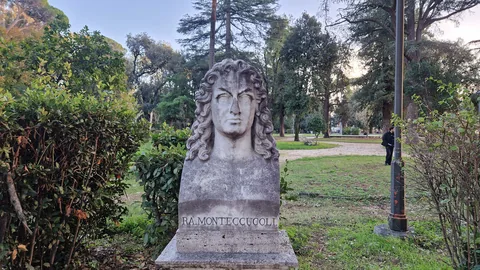
Montecuccoli combined command in the Habsburg armies with writing about the practical conditions required to sustain a war.
Find on the map