Pincio gardens · Nearby
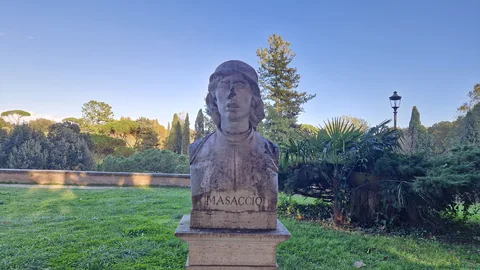
Masaccio
Masaccio gave painted figures physical weight and placed sacred events in spaces that appear measurable and inhabited.
Find on the mapRead aloud with your device’s voice.
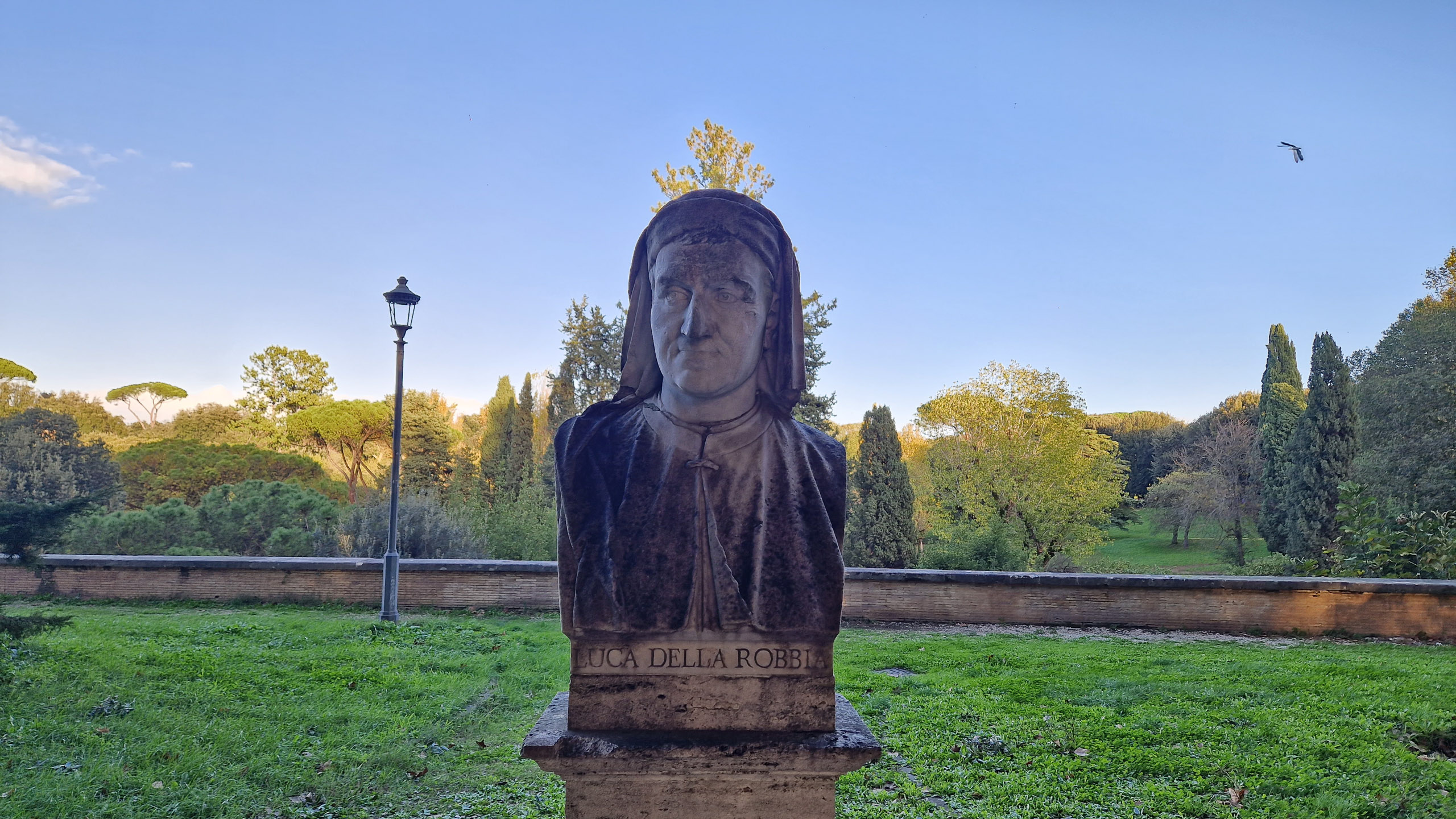
Luca della Robbia’s white figures against blue grounds can make glazed terracotta look immediately familiar. The material was an artistic choice with practical consequences: modeled clay could receive a durable, luminous surface, and separate fired sections could be assembled into architectural sculpture.
His career began with major work in marble. The singing gallery, or cantoria, made for Florence Cathedral in the 1430s shows children and young people singing and playing instruments. The rhythmic groups translate sound and movement into relief without losing their place in an ordered architectural frame.
Around the following decade, Luca developed the glazed terracotta work for which the family workshop became known. Later productions by Andrea della Robbia and other relatives extended the tradition. A blue-and-white relief therefore should not automatically be assigned to Luca himself.
The range also exceeds religious images. His roundels of the Labors of the Months, made for a Medici interior and now in the Victoria and Albert Museum, place seasonal activities within a carefully planned decorative scheme. They show a sculptor using color and modeled form to organize an entire room.
Pincio gardens · Nearby
Masaccio gave painted figures physical weight and placed sacred events in spaces that appear measurable and inhabited.
Find on the mapPincio gardens · Nearby
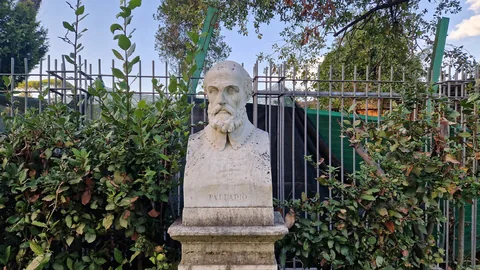
Palladio adapted ancient architectural forms to villas, civic buildings, and churches, then explained those choices in print.
Find on the mapPincio gardens · Nearby
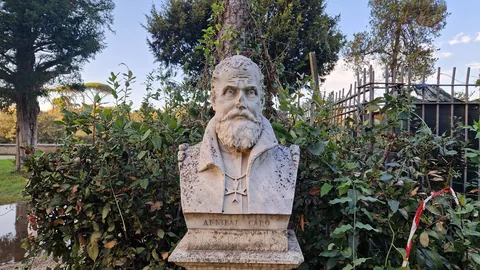
Caro’s Italian Aeneid gave Virgil a new poetic voice, while his court employment connected literature with the planning of images.
Find on the mapPincio gardens · Nearby
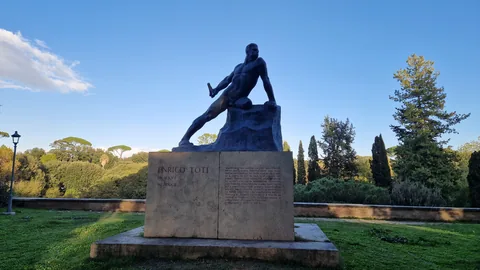
Arturo Dazzi’s bronze monument commemorates a Roman railway worker whose death in World War I became a national heroic image.
Find on the map