Pincio gardens · Nearby
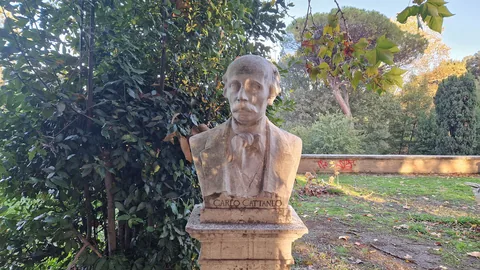
Carlo Cattaneo
Cattaneo argued for a federal republic and treated practical knowledge as a means of social and political improvement.
Find on the mapRead aloud with your device’s voice.
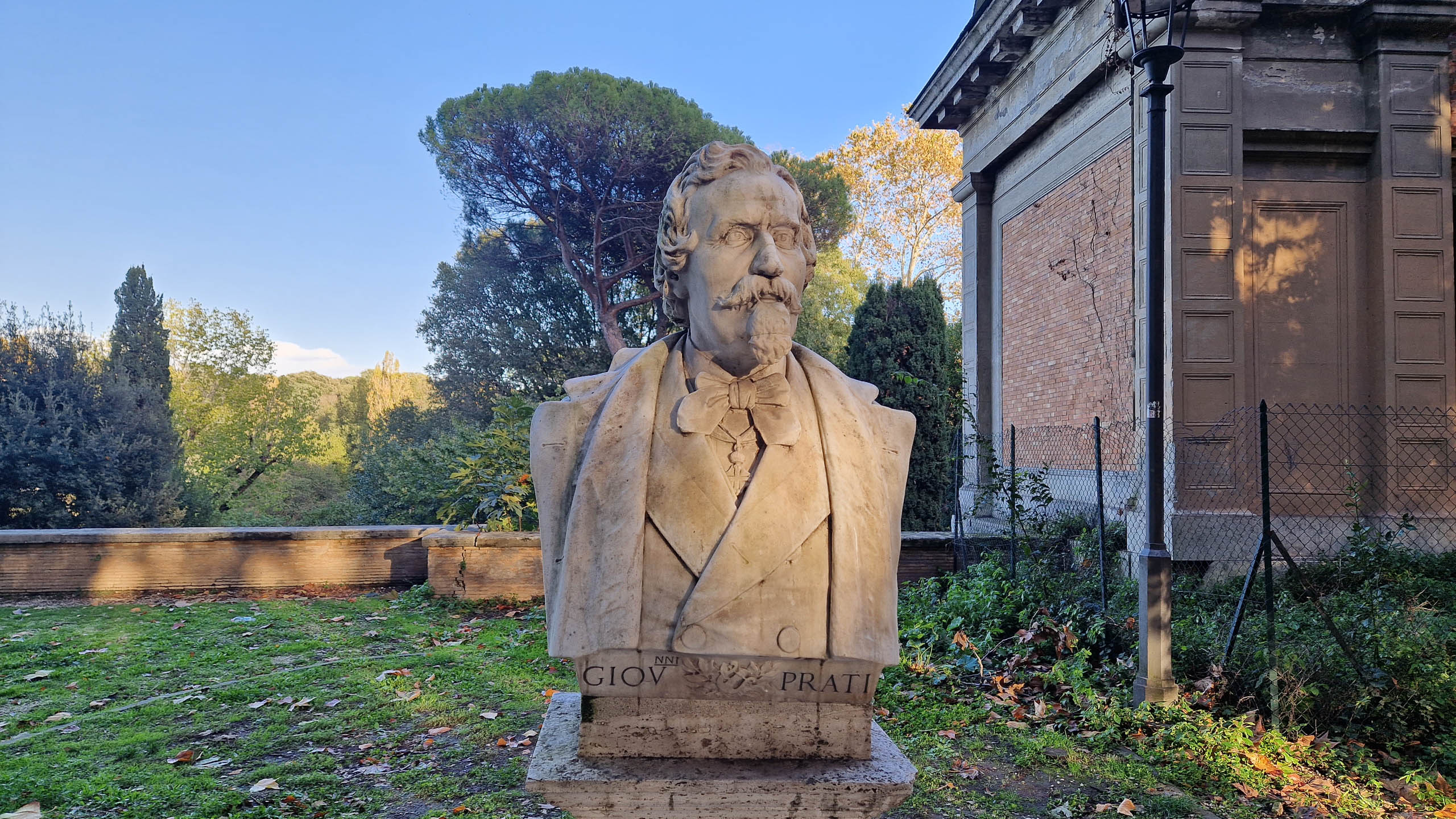
Giovanni Prati reached a wide readership with Edmenegarda, a verse narrative published in 1841. Its story of emotional transgression and suffering appealed to the audience for Romantic literature while provoking criticism of its moral and literary choices. Popular success did not mean critical agreement.
Born in 1814 in what is now Trentino, Prati developed a career across the cities of a politically divided peninsula. His public poetry supported the national movement in its monarchist form. Loyalty to the House of Savoy became a defining part of his political identity.
Among the Pincio’s portraits, monarchists and republicans now occupy the same paths. Prati’s allegiance to the dynasty places him on one side of an argument about the institutions that should govern Italy.
His later writing continued to explore inner conflict through extended verse narratives. He died in Rome in 1884. Reading the private dramas beside the patriotic poems gives a fuller account of an author whose public reputation often rests on the latter alone.
Pincio gardens · Nearby
Cattaneo argued for a federal republic and treated practical knowledge as a means of social and political improvement.
Find on the mapPincio gardens · Nearby
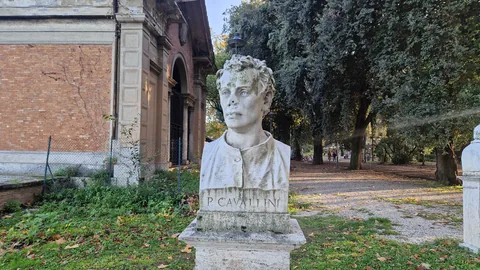
Cavallini’s Roman mosaics and frescoes give sacred figures weight and presence without abandoning their ceremonial order.
Find on the mapPincio gardens · Nearby
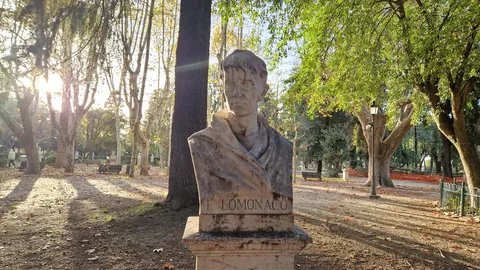
Lomonaco turned the defeat of the Neapolitan Republic into a written indictment and later taught history in Napoleonic Italy.
Find on the mapPincio gardens · 29 m away
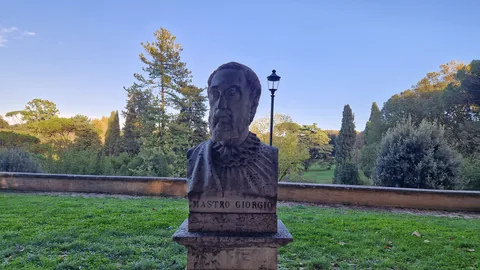
Giorgio Andreoli’s Gubbio workshop added metallic luster to ceramics, sometimes completing vessels painted in another city.
Find on the map