Pincio gardens · Nearby
Giovanni Prati
Prati’s popular verse moved between private emotional drama and public support for the Savoy monarchy.
Find on the mapRead aloud with your device’s voice.
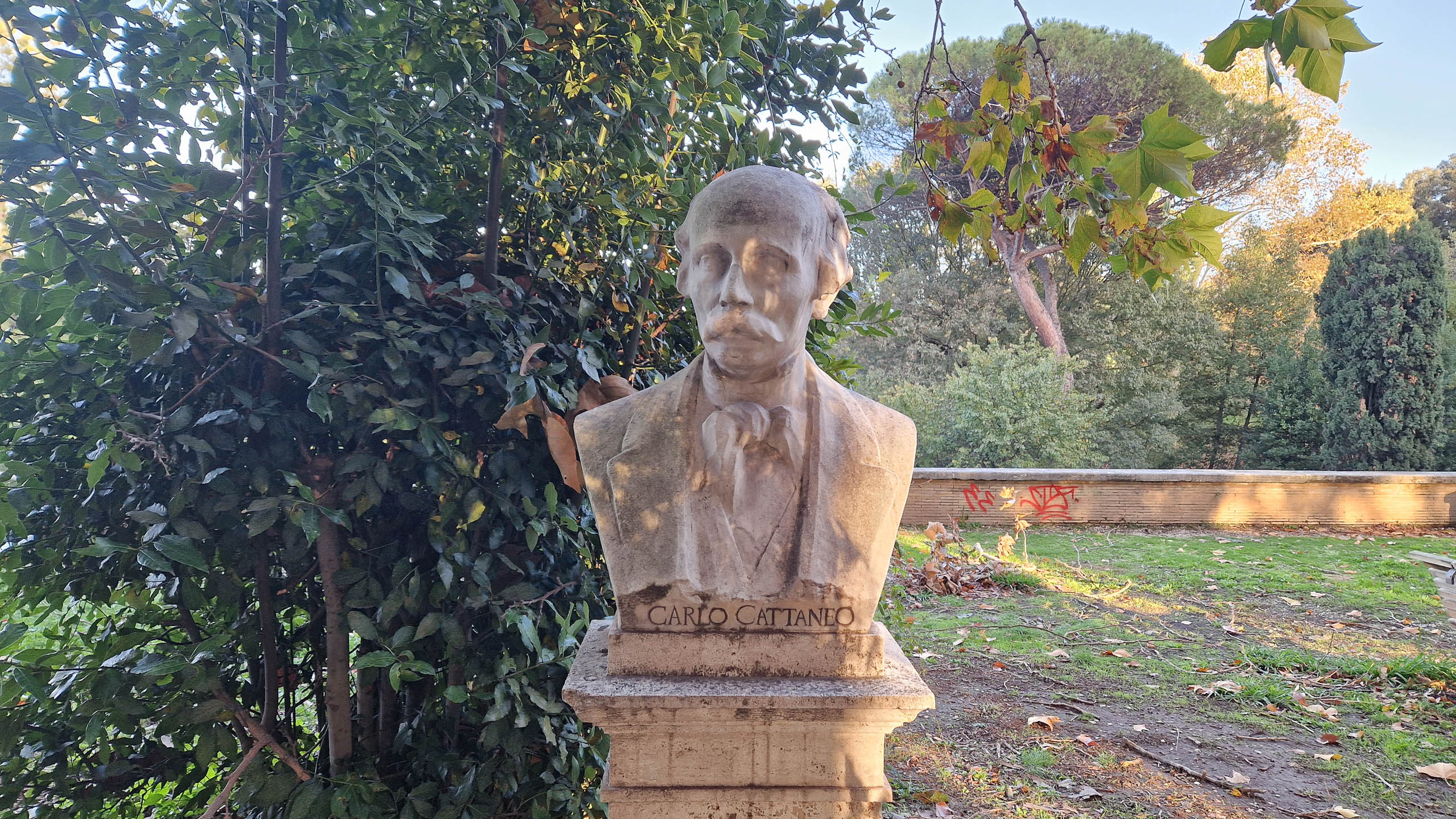
Carlo Cattaneo’s idea of an Italian future differed from the centralized monarchy that emerged from unification. He favored a federal republic, with political life rooted in the historical experience and institutions of its communities. Unity did not, in his view, require uniform government from a single center.
Born in Milan in 1801, Cattaneo founded Il Politecnico in 1839. The journal brought technical and scientific knowledge into discussion with economic and social questions. Its range reflected a belief that public improvement depended on informed work across disciplines.
During the Five Days of Milan in 1848, he took an active role in the revolt against Austrian rule. He opposed the rapid absorption of the movement into the expansion of the Piedmontese monarchy. After the defeat of the revolution, Switzerland became the setting for much of his later life.
Cattaneo’s federal republic offered a developed alternative to the centralized monarchy. His commemoration in the Italian capital preserves an argument about the state’s structure that unification did not settle for everyone.
Pincio gardens · Nearby
Prati’s popular verse moved between private emotional drama and public support for the Savoy monarchy.
Find on the mapPincio gardens · Nearby
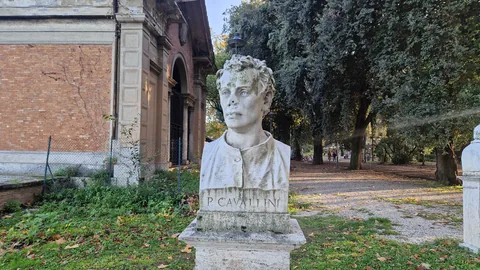
Cavallini’s Roman mosaics and frescoes give sacred figures weight and presence without abandoning their ceremonial order.
Find on the mapPincio gardens · Nearby
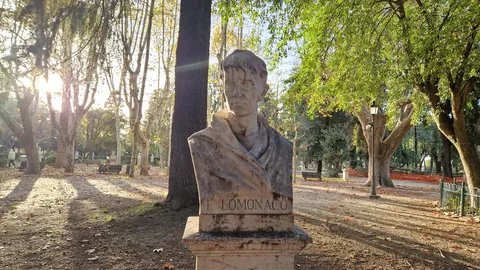
Lomonaco turned the defeat of the Neapolitan Republic into a written indictment and later taught history in Napoleonic Italy.
Find on the mapPincio gardens · 29 m away
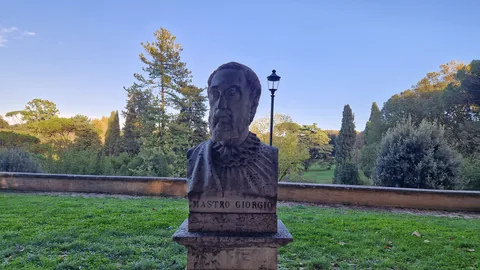
Giorgio Andreoli’s Gubbio workshop added metallic luster to ceramics, sometimes completing vessels painted in another city.
Find on the map