Pincio gardens · 30 m away
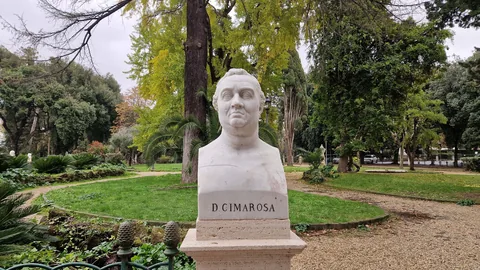
Domenico Cimarosa
Cimarosa’s comic operas use ensembles and sharply drawn situations to turn social confusion into musical drama.
Find on the mapRead aloud with your device’s voice.
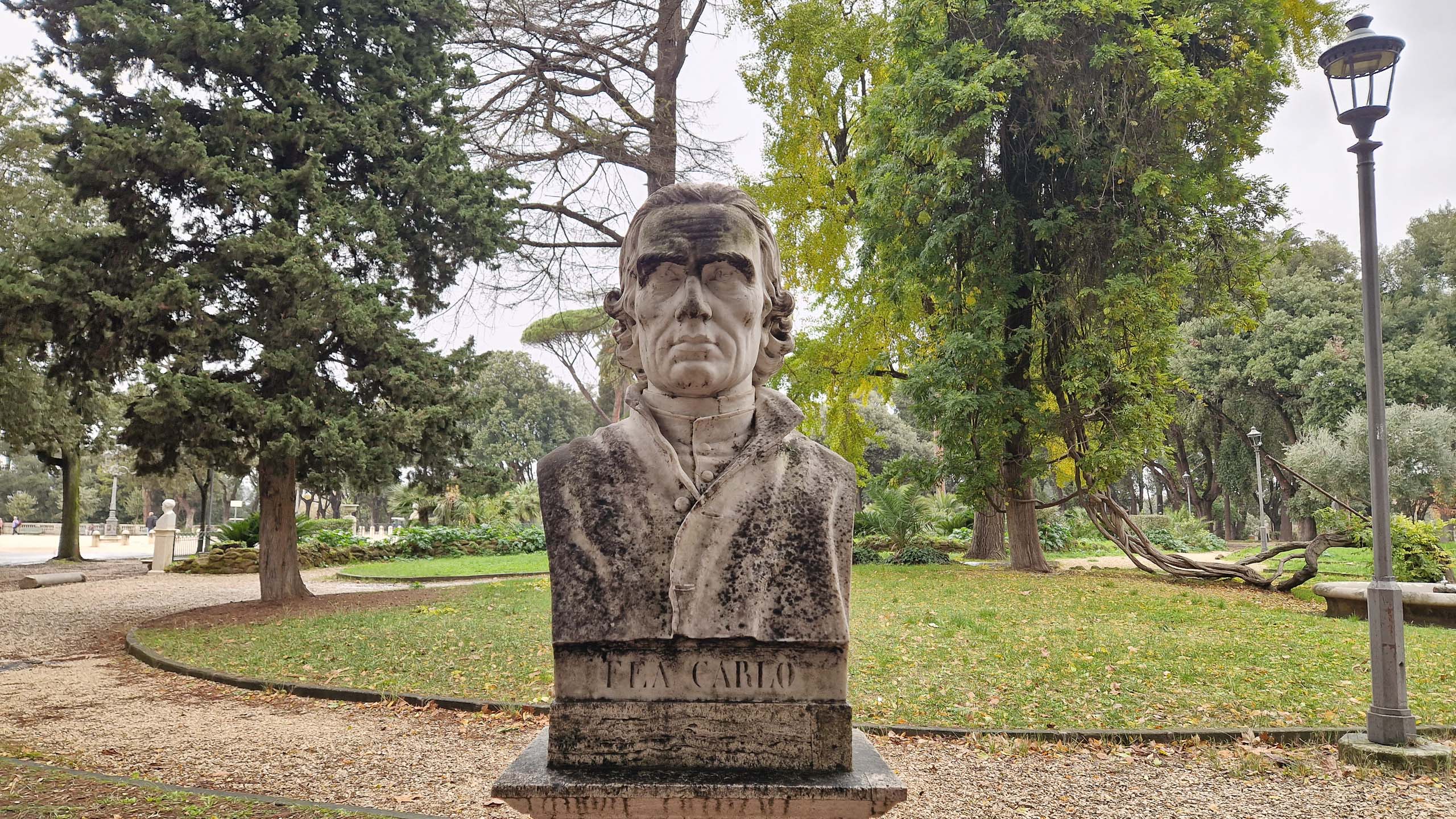
Carlo Fea treated Rome’s antiquities as a public responsibility. Born in Pigna in 1753, he trained in law before devoting himself to antiquities in Rome. His translation and annotation of Winckelmann connected him to debates about the history of ancient art.
As commissioner of antiquities from 1801, he worked on excavations, the protection of monuments, and questions of export and ownership. These responsibilities became especially difficult under French occupation and during the restoration of papal rule. The desire to collect or sell an object could conflict with the effort to preserve it in context.
Fea also investigated the identification of Roman buildings. Work around the Temple of the Dioscuri helped clarify remains that had circulated under other ancient names. Such arguments required comparison between physical evidence and literary sources, rather than confidence in a traditional label.
He died in 1836. His portrait belongs to the history of how Rome learned to administer its archaeological inheritance, with preservation emerging through repeated disputes over land, access, money, and authority.
Pincio gardens · 30 m away
Cimarosa’s comic operas use ensembles and sharply drawn situations to turn social confusion into musical drama.
Find on the mapPincio gardens · 30 m away
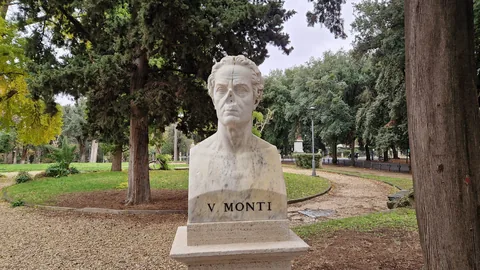
Monti’s poetry and translation show both the power of Italian classicism and the pressures placed on writers by changing regimes.
Find on the mapPincio gardens · 33 m away
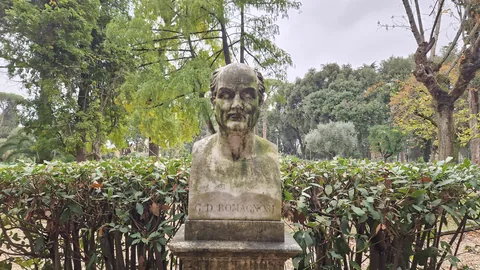
Romagnosi examined punishment, administration, and social development, linking legal thought to the study of human society.
Find on the mapPincio gardens · 38 m away
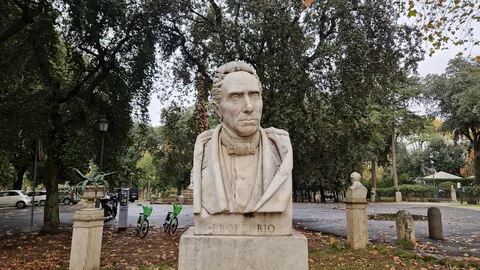
Brofferio joined journalism, theater, poetry, and parliamentary opposition in the democratic politics of the Risorgimento.
Find on the map