Central park · 292 m away
Museo Pietro Canonica
A sculptor’s former home and studio inside the Fortezzuola, where models and finished works explain how public monuments were made.
Find on the mapRead aloud with your device’s voice.
Rome's zoological garden opened in January 1911. Its early layout drew on Carl Hagenbeck's approach to displaying animals in spaces separated from visitors by features such as moats, rather than relying only on the appearance of barred cages. The design formed part of a wider change in European zoos.
The institution later developed into the Bioparco, with conservation and education stated as central aims. Its history also shows how expectations of animal care and public display have changed since the early twentieth century. An older enclosure and a newer one may answer quite different ideas about what a zoological park should do.
The Bioparco occupies a substantial enclosed area in the northern park. It is a separate ticketed visit, so a walk through Villa Borghese does not provide entry. Check the official site for current hours, admissions, accessible facilities, and any areas temporarily unavailable.
Plan it as a main activity if you want time to read the interpretation and move at a comfortable pace. Combining it with a reserved gallery visit requires particular care with walking time between the two entrances.
Central park · 292 m away
A sculptor’s former home and studio inside the Fortezzuola, where models and finished works explain how public monuments were made.
Find on the mapCentral park · 380 m away
A wooden theater inspired by Shakespeare’s Globe; reopening and performance availability must be confirmed before a visit.
Find on the mapNorthern edge of the park · 414 m away
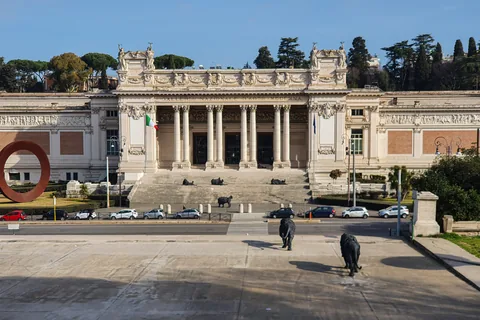
A national collection of nineteenth-century, modern, and contemporary art in a monumental building at Valle Giulia.
Find on the mapNear the Borghese Gallery · 434 m away
The former deer enclosure beside the Borghese Gallery preserves the name of an earlier use of the estate.
Find on the map