
Lake garden · 207 m away
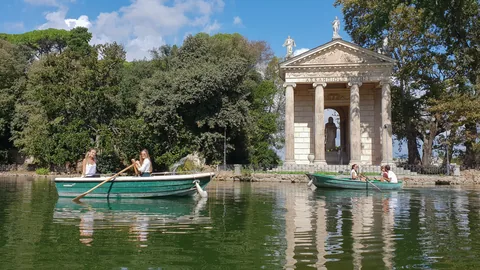
Giardino del Lago
A designed landscape of curved paths, planted views, and water, with the Temple of Aesculapius as its central focus.
Find on the mapRead aloud with your device’s voice.
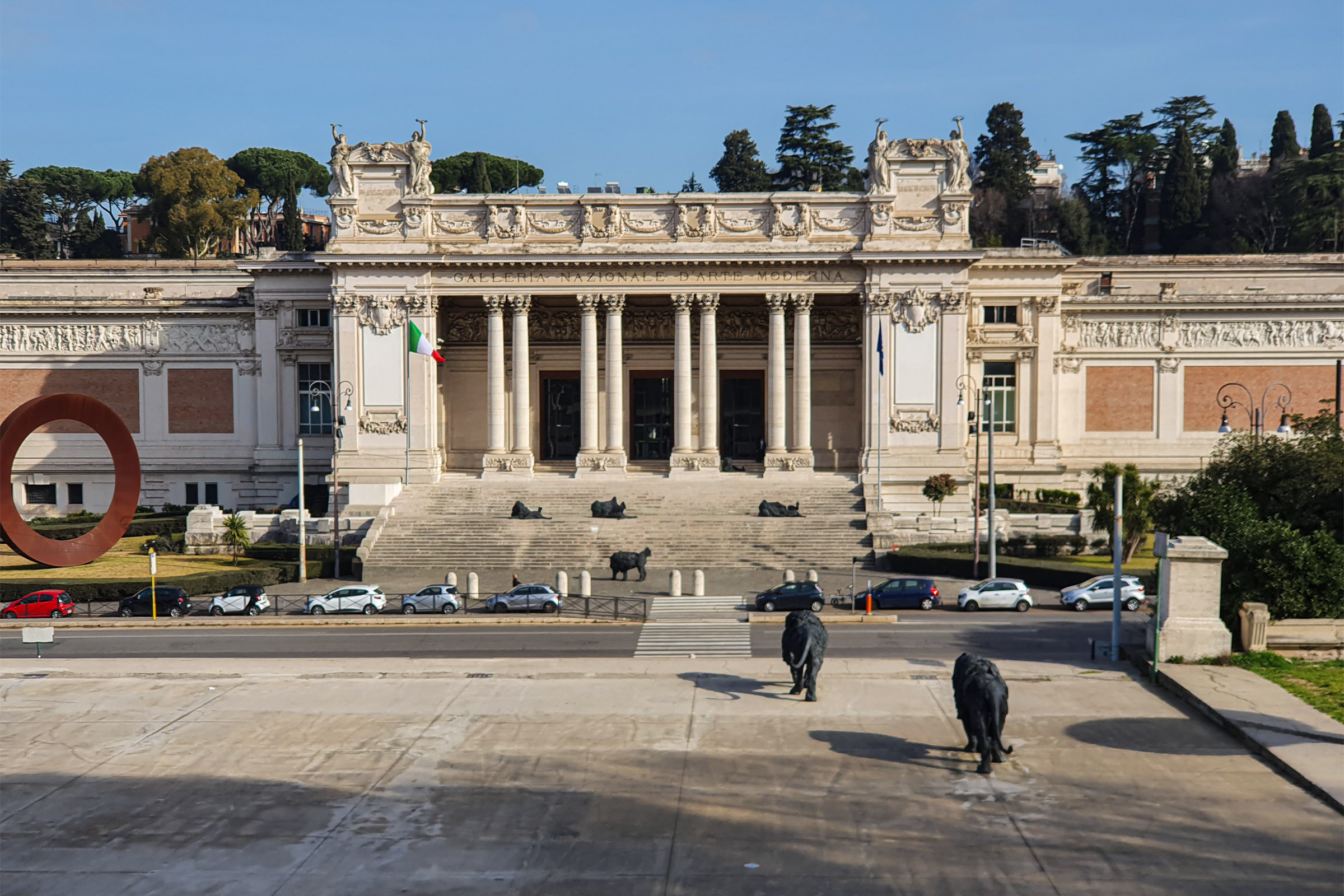
The Galleria Nazionale d'Arte Moderna e Contemporanea was founded in 1883 to collect the art of the new Italian state. Its later home in Valle Giulia, designed by Cesare Bazzani, gave that national project a monumental architectural setting near the northern edge of Villa Borghese.
The collection spans nineteenth-century art and the experiments of later generations. Works by artists such as Giovanni Fattori, Giovanni Segantini, and Auguste Rodin allow comparisons between history painting, the observation of labor and landscape, and new approaches to the sculpted body. Modern and contemporary holdings extend that conversation into other materials and forms.
This is a separate institution from the Galleria Borghese. A visit offers a useful change in historical focus: the Borghese collection grew from aristocratic patronage, while the national gallery reflects public collecting, acquisitions, donations, and changing definitions of contemporary art.
Check the museum's current displays and visitor information before you go, since collection works can be lent or rotated. Its entrance is on Viale delle Belle Arti; allow additional time for the walk and for the museum itself.
Lake garden · 207 m away
A designed landscape of curved paths, planted views, and water, with the Temple of Aesculapius as its central focus.
Find on the mapLake garden · 260 m away
An eighteenth-century temple on an artificial island, designed as a classical focus for the lake garden.
Find on the mapCentral park · 400 m away
A sculptor’s former home and studio inside the Fortezzuola, where models and finished works explain how public monuments were made.
Find on the mapCentral park · 409 m away
A wooden theater inspired by Shakespeare’s Globe; reopening and performance availability must be confirmed before a visit.
Find on the map