Eastern park · 149 m away
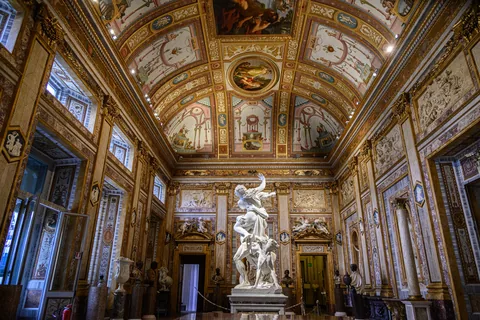
Borghese Gallery
A collection shaped by Borghese patronage, with sculptures by Bernini and Canova and paintings by Caravaggio, Raphael, and Titian.
Find on the mapRead aloud with your device’s voice.
The name Parco dei Daini means “deer park.” It recalls the keeping of fallow deer in this part of the Borghese estate during the seventeenth century, when the villa's landscape combined display, collecting, cultivation, and areas for animals.
The space beside the gallery helps explain that the historic estate was organized into different enclosures and uses. A walk from the formal setting of the villa toward a wooded area was also a movement between kinds of aristocratic leisure. The surviving name preserves that distinction even though it does not describe a deer-viewing attraction today.
More recently, the area has hosted outdoor art projects, including the Back to Nature exhibitions. Temporary installations bring another use to a landscape whose purposes have changed over centuries; works listed for a past exhibition should not be assumed to remain on view.
Check gates and signs on site before entering. If access is restricted, continue along the public paths near the gallery rather than treating the map marker as a guaranteed open entrance.
Eastern park · 149 m away
A collection shaped by Borghese patronage, with sculptures by Bernini and Canova and paintings by Caravaggio, Raphael, and Titian.
Find on the mapCentral park · 296 m away
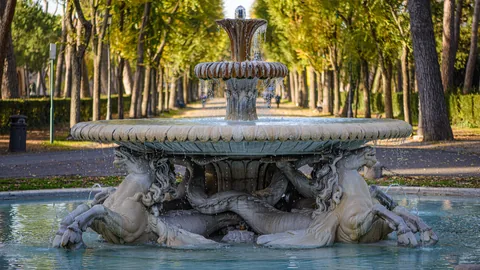
A late-eighteenth-century fountain whose winged sea horses reveal a collaboration among designers, modelers, and stone carvers.
Find on the mapNorthern park · 434 m away
Rome’s zoological park occupies the northern part of the estate and has a history stretching back to 1911.
Find on the mapCentral park · 446 m away
A sculptor’s former home and studio inside the Fortezzuola, where models and finished works explain how public monuments were made.
Find on the map