Lake garden · 91 m away
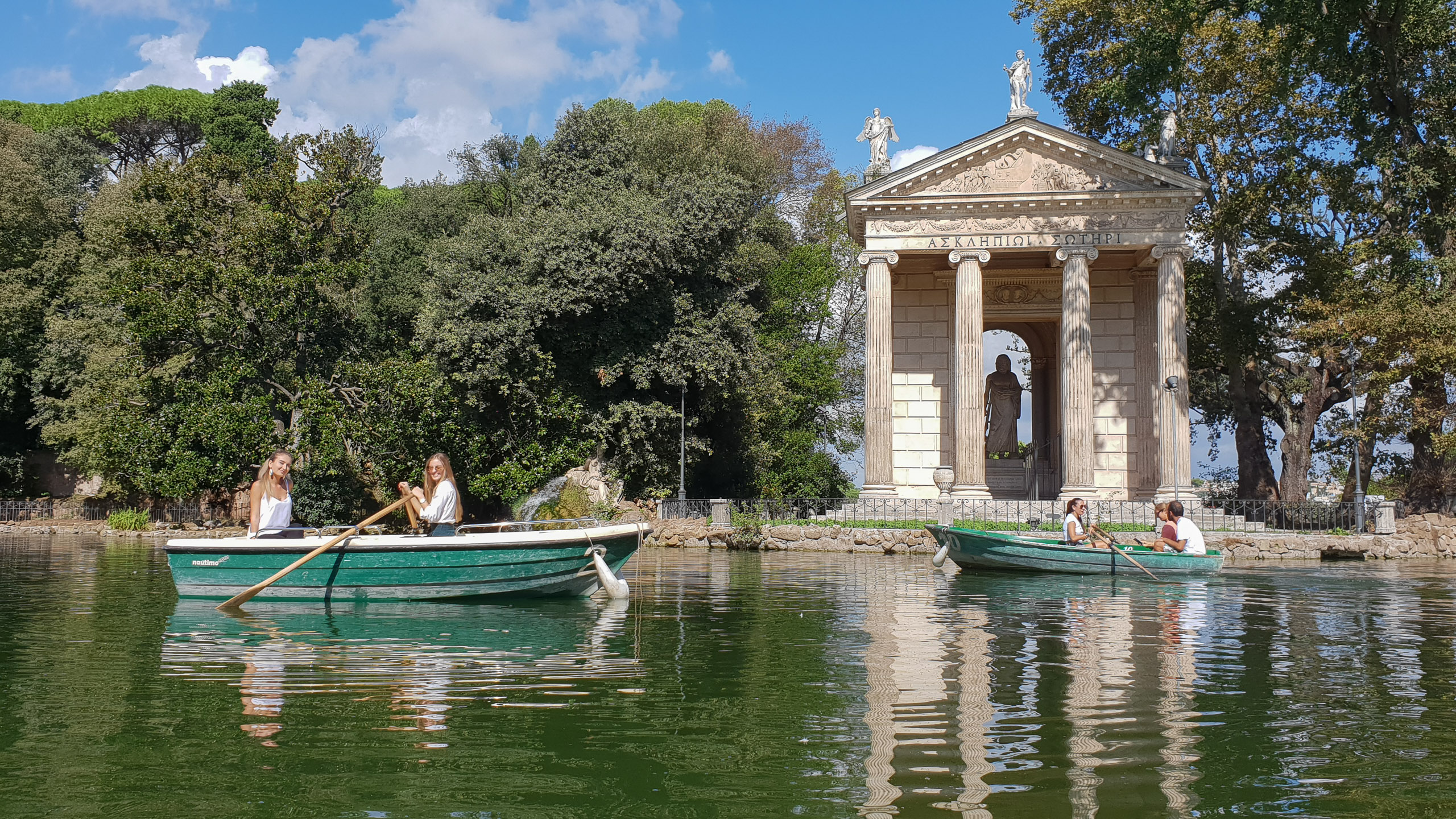
Temple of Aesculapius
An eighteenth-century temple on an artificial island, designed as a classical focus for the lake garden.
Find on the mapVoice changes restart the current paragraph.
The Giardino del Lago was made to look less regular than a formal garden. Curving paths, varied planting, and an artificial lake create a sequence of views that changes as a visitor moves. Informality is the intended effect. It takes planning to produce it.
Roma Capitale's catalog places the main work between 1784 and 1790, under Marcantonio IV Borghese. Antonio and Mario Asprucci worked with the landscape advice of the Scottish painter Jacob More. The Temple of Aesculapius gives the water a clear architectural focus, while surrounding trees partly reveal and partly interrupt it.
A useful way to read the garden is to compare the view from opposite banks. The temple may appear centered from one position and partly concealed from another. Paths, branches, and reflections guide attention without the strong straight axes found in more formal parts of the estate.
The lakeside walk is separate from any boat rental service. Availability can change with maintenance and weather, so confirm that activity on site before building a plan around it. Allow time for the paths themselves, even if you are continuing toward the Pincio or the museums.
Lake garden · 91 m away
An eighteenth-century temple on an artificial island, designed as a classical focus for the lake garden.
Find on the mapNorthern edge of the park · 207 m away
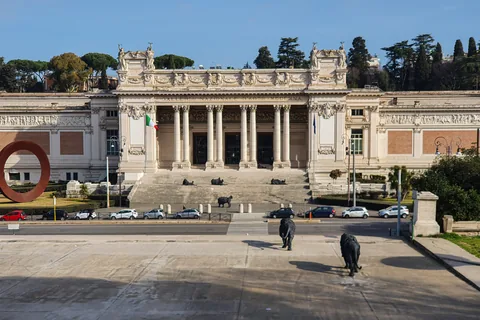
A national collection of nineteenth-century, modern, and contemporary art in a monumental building at Valle Giulia.
Find on the mapNear the lake garden · 258 m away
Modern art in the park’s former orangery, with a substantial group of works by Giorgio de Chirico and portraits connected to the Bilotti family.
Find on the mapCentral park · 322 m away
A wooden theater inspired by Shakespeare’s Globe; reopening and performance availability must be confirmed before a visit.
Find on the map