Southern park · 84 m away
Casina di Raffaello
A historic garden building used for children’s workshops, storytelling, and creative activities, with a schedule to check before visiting.
Find on the mapRead aloud with your device’s voice.
The Temple of Diana was built to place classical mythology inside a designed landscape. Its circular colonnade belongs to the late-eighteenth-century transformation of Villa Borghese, when Prince Marcantonio IV Borghese commissioned new garden architecture. This is a neoclassical garden building, rather than the surviving sanctuary of an ancient Roman cult.
The structure is open around its sides. Columns support the domed roof without an enclosing wall, so the garden remains visible through the building. Architectural historians call this type a monopteros. It can frame a statue and also frame views between the trees. Moving around it changes those alignments without requiring entry to an interior room.
Diana’s association with hunting, woodland, and the moon made her an apt subject for a garden temple. A statue of the goddess once occupied the center. The building participated in a wider practice of arranging antiquities and restored sculpture in aristocratic gardens, where ancient objects acquired new architectural settings.
The city’s heritage service associates the temple with Mario Asprucci, while other municipal descriptions refer to Antonio Asprucci and his son Mario. Published accounts also differ over the later location of the statue and its base. The secure context is the Asprucci family’s work for the Borghese gardens. Identifying the temple’s statue with a particular Diana now in a museum requires more evidence than those conflicting summaries provide.
Look at the building from the surrounding paths, where the spaces between the columns are easiest to read. It is a brief outdoor stop near Viale della Casina di Raffaello. Conservation work can affect access to the steps; the public path still provides the clearest way to understand how the temple sits within the garden.
Southern park · 84 m away
A historic garden building used for children’s workshops, storytelling, and creative activities, with a schedule to check before visiting.
Find on the mapSouthern park · 85 m away
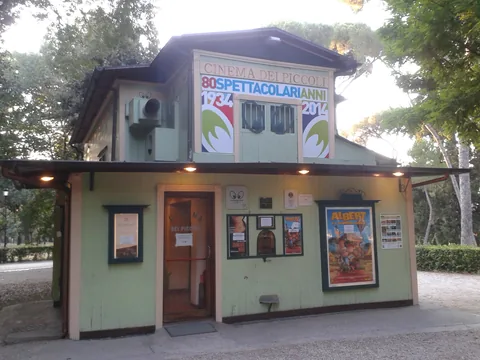
A small cinema founded in 1934, with a long connection to children’s films and film education.
Find on the mapSouthern park · 147 m away
A film venue in the restored Casina delle Rose, a building whose earlier uses included a dairy, restaurant, and dance hall.
Find on the mapCentral park · 223 m away
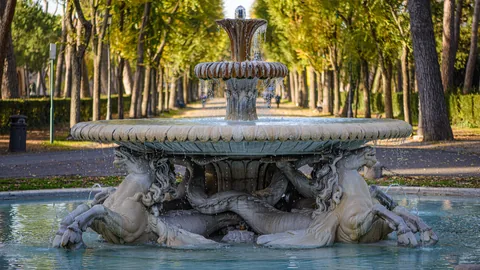
A late-eighteenth-century fountain whose winged sea horses reveal a collaboration among designers, modelers, and stone carvers.
Find on the map