Pincio gardens · Nearby
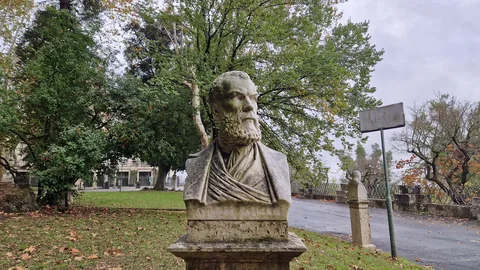
Aurelio Saliceti
Saliceti helped draft the Roman Republic’s constitution of 1849 before exile led him toward a different plan for southern Italy.
Find on the mapRead aloud with your device’s voice.
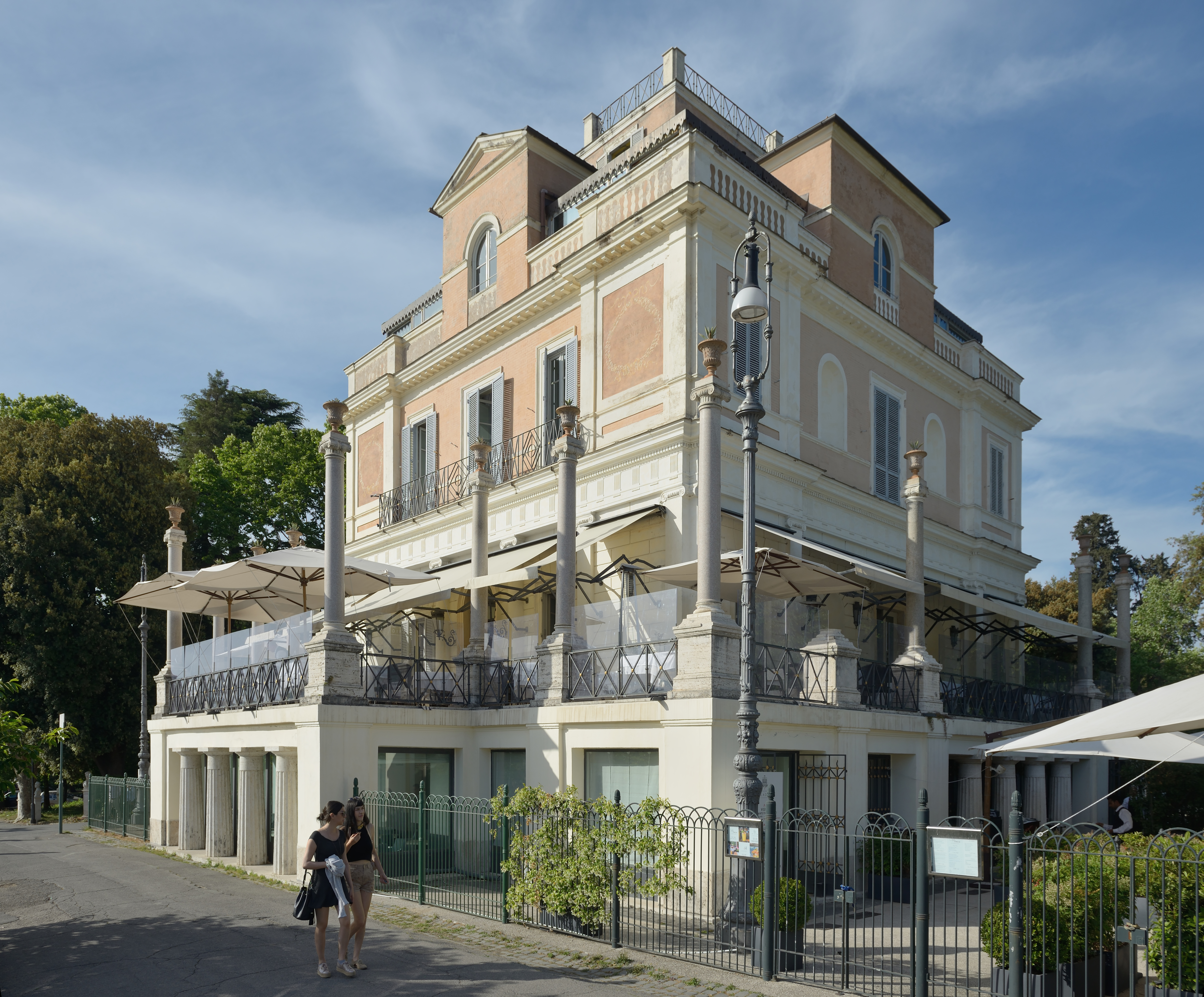
Casina Valadier was conceived as a place to stop within a public walk. In the early nineteenth century, Giuseppe Valadier helped reshape both Piazza del Popolo and the Pincio above it. The café building belongs to that larger relationship between city streets, rising paths, and a garden promenade.
Its neoclassical form reworks an older structure. A compact central building meets a curved colonnaded space, or exedra, with Ionic columns. Beneath the later architecture lies the history of an earlier casino and a Roman cistern. What looks like a single architectural composition is therefore the result of reuse as well as new design.
The building’s social purpose changed over time. It served as a café and meeting place, but also passed through periods of military use and closure. Its present role as an events and hospitality venue continues the history of gathering here under different conditions.
From the public paths, look at how the curved colonnade opens the building toward its surroundings. Access to private terraces or interior rooms depends on the venue’s arrangements. The Pincio’s public viewpoints remain the place to pause for a view without a venue reservation.
Pincio gardens · Nearby
Saliceti helped draft the Roman Republic’s constitution of 1849 before exile led him toward a different plan for southern Italy.
Find on the mapPincio gardens · Nearby
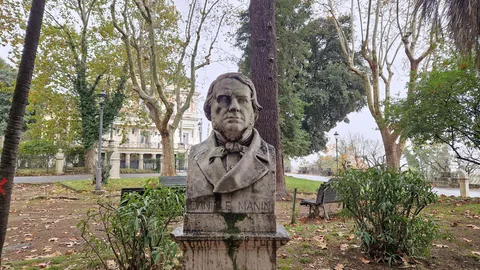
Manin led the Venetian republic of 1848 and 1849, then reconsidered the route to Italian unity during exile in Paris.
Find on the mapPincio gardens · Nearby
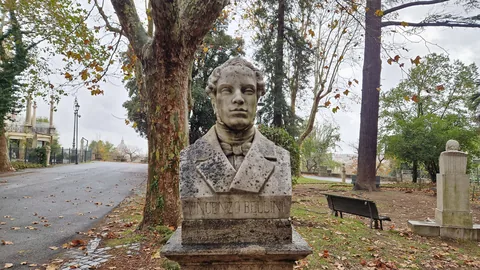
Bellini shaped long vocal lines into dramatic expression in operas including Norma, La sonnambula, and I puritani.
Find on the mapPincio gardens · 22 m away
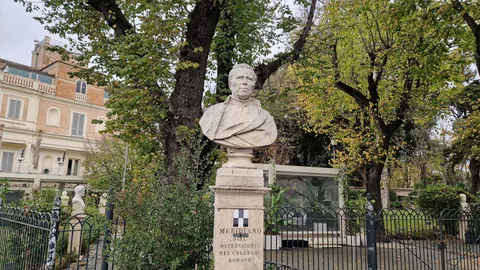
Secchi studied the physical nature of stars through their spectra and helped establish astrophysics from an observatory in Rome.
Find on the map