Pincio gardens · Nearby
Giuseppe Garibaldi
Garibaldi led volunteer armies in South America and Italy, including the 1860 campaign that overthrew Bourbon rule in the south.
Find on the mapRead aloud with your device’s voice.
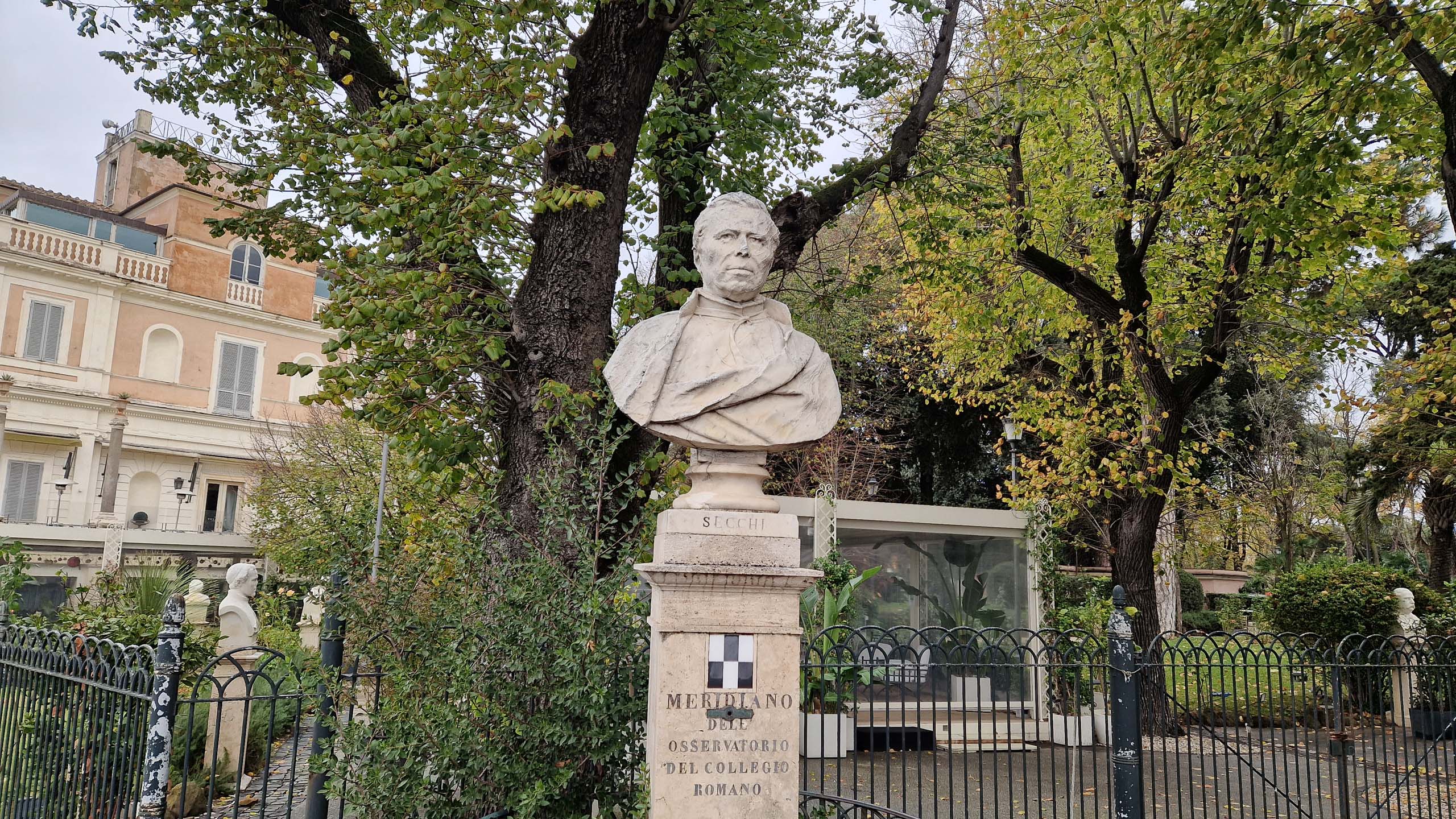
Angelo Secchi studied what starlight could reveal about a star. Born in Reggio Emilia in 1818, he became a Jesuit and directed the observatory of the Collegio Romano. His work helped move astronomy from the measurement of positions toward the investigation of physical properties.
A spectroscope separates light into a spectrum. Secchi compared the patterns seen in many stars and grouped them by shared features. Other astronomers developed and revised this classification. The system was later replaced and refined, but the method opened a way to investigate distant objects through the light that reached Earth.
He also studied the Sun, observed eclipses, and worked in meteorology and geophysics. Instruments, drawings, photographs, and published observations formed a record that other researchers could compare with their own results.
Secchi died in Rome in 1878. His portrait recalls a scientific activity carried out above the city's rooftops, where the careful study of a narrow band of light could change the understanding of bodies far beyond direct human reach.
Pincio gardens · Nearby
Garibaldi led volunteer armies in South America and Italy, including the 1860 campaign that overthrew Bourbon rule in the south.
Find on the mapPincio gardens · Nearby
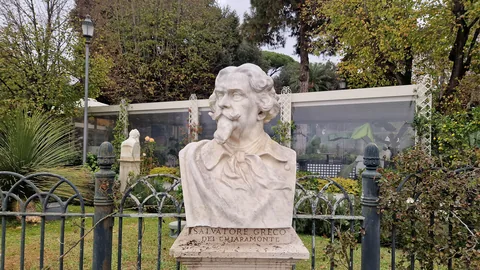
A Garibaldian volunteer and fencing master, Greco established a family tradition of teaching swordsmanship near Rome’s Pantheon.
Find on the mapPincio gardens · 22 m away
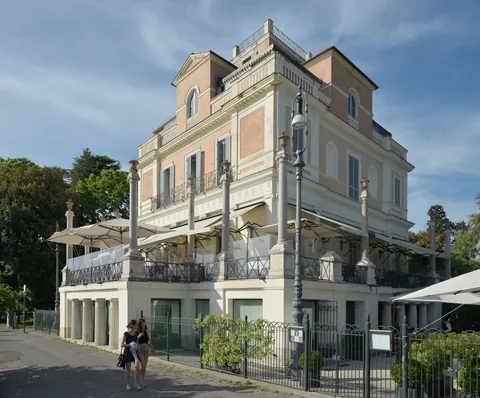
Giuseppe Valadier’s neoclassical café building connects the Pincio’s public promenade with Rome’s culture of social meeting places.
Find on the mapPincio gardens · 26 m away
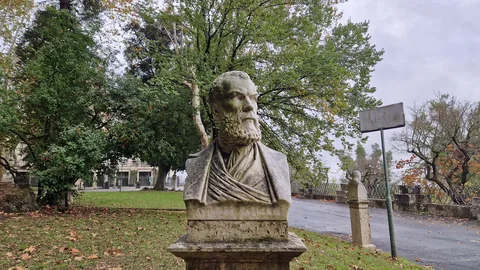
Saliceti helped draft the Roman Republic’s constitution of 1849 before exile led him toward a different plan for southern Italy.
Find on the map