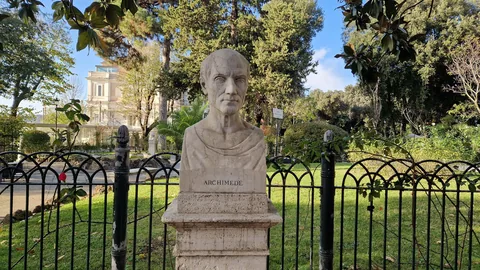
Pincio gardens · Nearby
Archimedes
Archimedes’ surviving mathematics is more revealing than the familiar stories about baths and impossible machines.
Find on the mapRead aloud with your device’s voice.
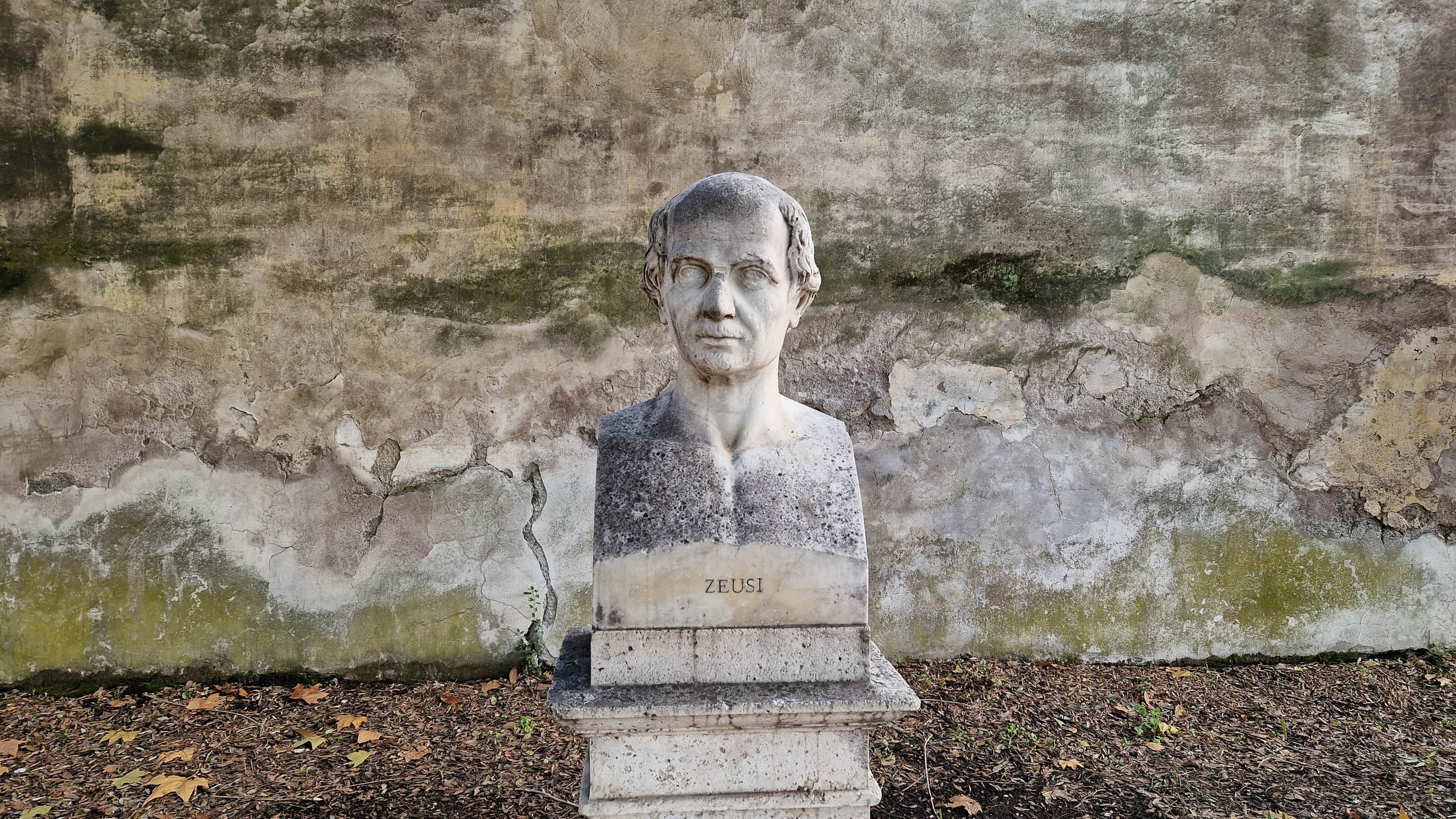
Zeuxis is a painter whose reputation outlived his paintings. Active in the Greek world in the late fifth and early fourth centuries BCE, he is known through ancient authors who praised his ability to give figures convincing form. No securely identified original painting survives.
Pliny the Elder tells of a contest with Parrhasius. Zeuxis painted grapes that deceived birds; Parrhasius painted a curtain that deceived Zeuxis himself. The anecdote measures artistic skill through illusion, but it should be understood as a story about painting rather than a verified report of a competition.
Another tradition describes Zeuxis selecting features from several women for an image of Helen. Later art theory used that story to discuss whether beauty comes from copying an individual model or choosing and combining forms. His name thus remained active in debates long after the works themselves were lost.
The place called Heraclea in accounts of his origins cannot be identified with certainty. His inclusion among these portraits belongs to the later reception of ancient culture, while the lack of surviving originals sets a firm limit on claims about exactly how his pictures looked.
Pincio gardens · Nearby
Archimedes’ surviving mathematics is more revealing than the familiar stories about baths and impossible machines.
Find on the mapPincio gardens · Nearby
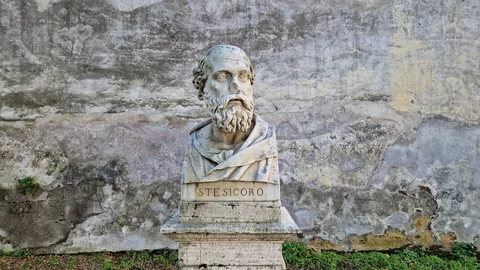
Stesichorus retold stories of Troy and Heracles in lyric poems composed for performance.
Find on the mapPincio gardens · Nearby
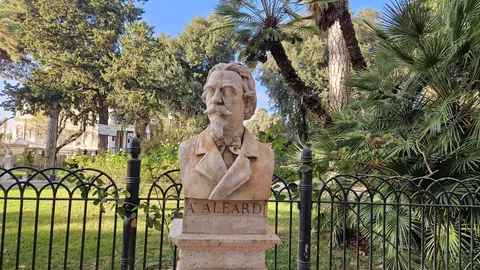
A Romantic poet whose verse joined landscape, political exile, and the movement for Italian unification.
Find on the mapPincio gardens · Nearby
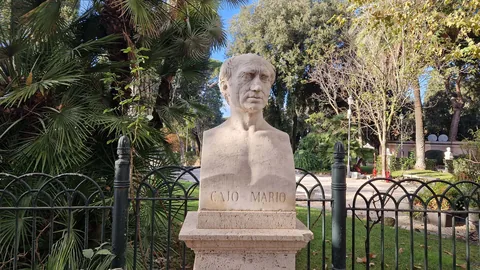
Seven consulships made Marius an exceptional figure in a republic increasingly troubled by military competition and political violence.
Find on the map