Pincio gardens · Nearby
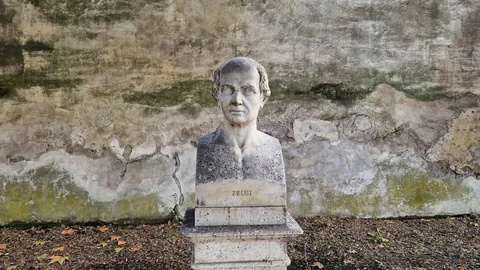
Zeuxis
Zeuxis survives through ancient descriptions and stories about painting, including the famous contest in illusion with Parrhasius.
Find on the mapRead aloud with your device’s voice.
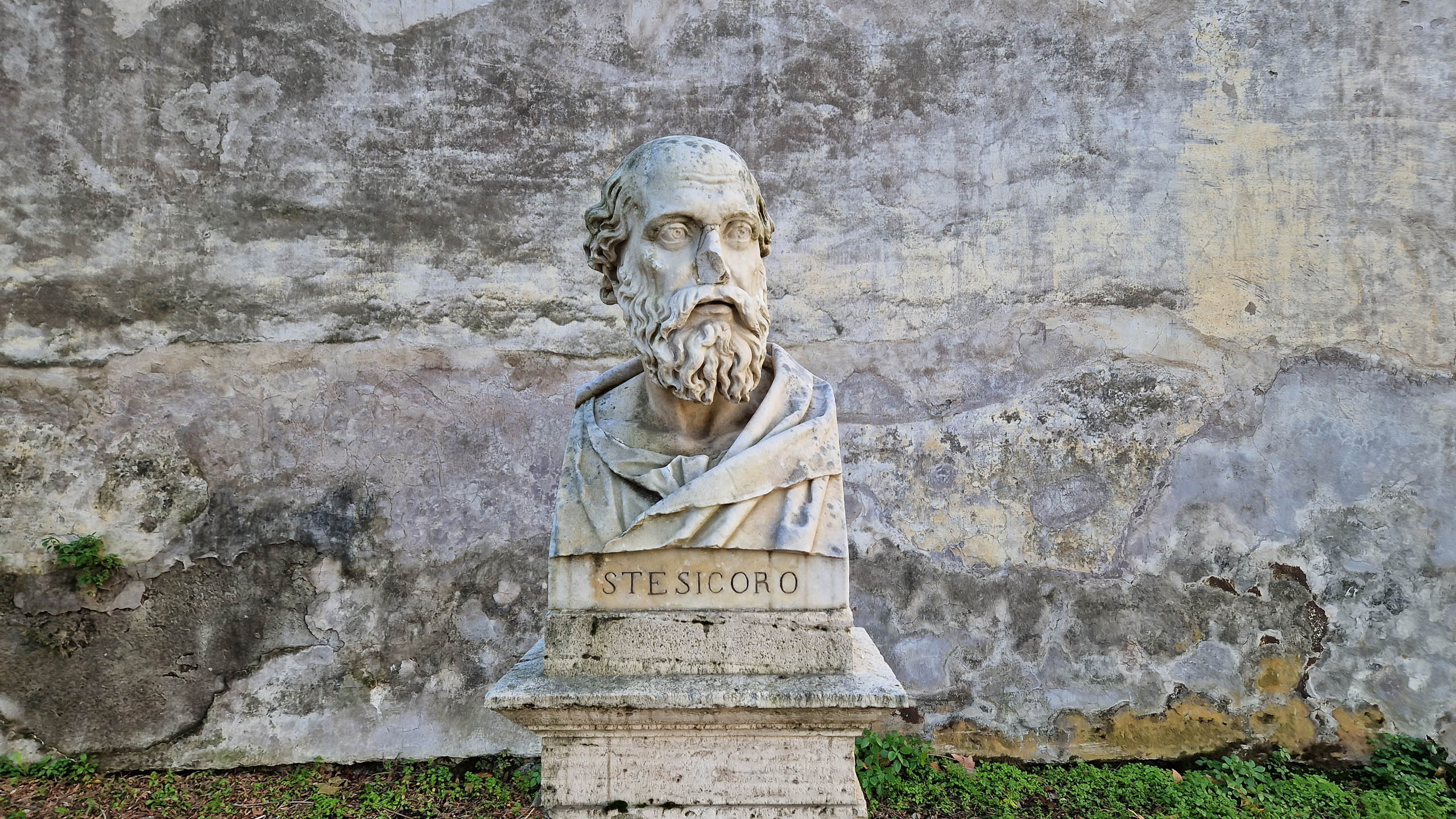
Stesichorus retold the great stories of Greek myth in a form made for lyric performance. Active in the late seventh and early sixth centuries BCE, he was associated with the Greek communities of southern Italy and Sicily, especially Himera. The details of his life remain uncertain.
His poems treated subjects such as the fall of Troy, the return of its heroes, and Heracles' encounter with Geryon. Only fragments survive, some recovered on papyrus, so modern readers have to reconstruct the shape of works once known on a much larger scale. That uneven survival is part of any account of his achievement.
Ancient tradition linked a poem about Helen to a story of blindness and recovery after he withdrew an accusation against her. The tale explains the power attributed to poetry and its subjects; it is not reliable evidence for a medical event in the poet's life.
Stesichorus' place in this commemorative collection reflects the Greek history of the Italian peninsula. His work also shows that familiar myths had competing versions long before later writers and artists gave them forms that now seem definitive.
Pincio gardens · Nearby
Zeuxis survives through ancient descriptions and stories about painting, including the famous contest in illusion with Parrhasius.
Find on the mapPincio gardens · Nearby
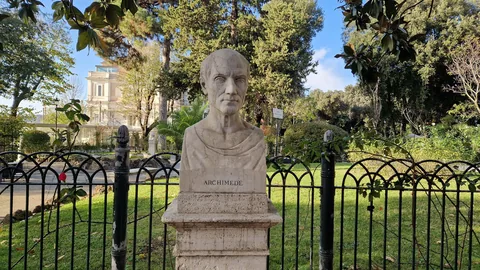
Archimedes’ surviving mathematics is more revealing than the familiar stories about baths and impossible machines.
Find on the mapPincio gardens · 22 m away
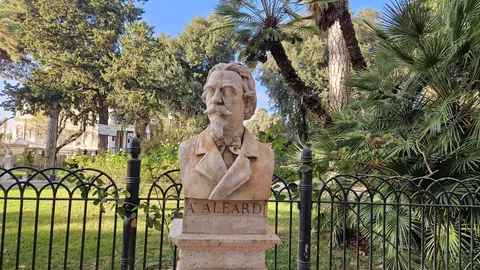
A Romantic poet whose verse joined landscape, political exile, and the movement for Italian unification.
Find on the mapPincio gardens · 22 m away
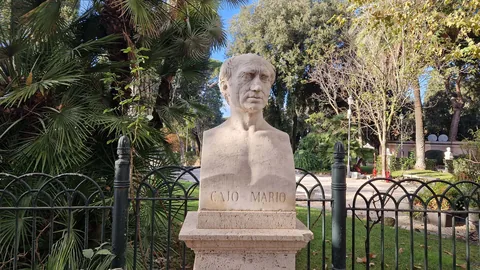
Seven consulships made Marius an exceptional figure in a republic increasingly troubled by military competition and political violence.
Find on the map