Pincio gardens · Nearby
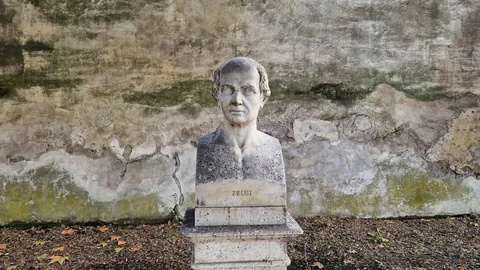
Zeuxis
Zeuxis survives through ancient descriptions and stories about painting, including the famous contest in illusion with Parrhasius.
Find on the mapRead aloud with your device’s voice.
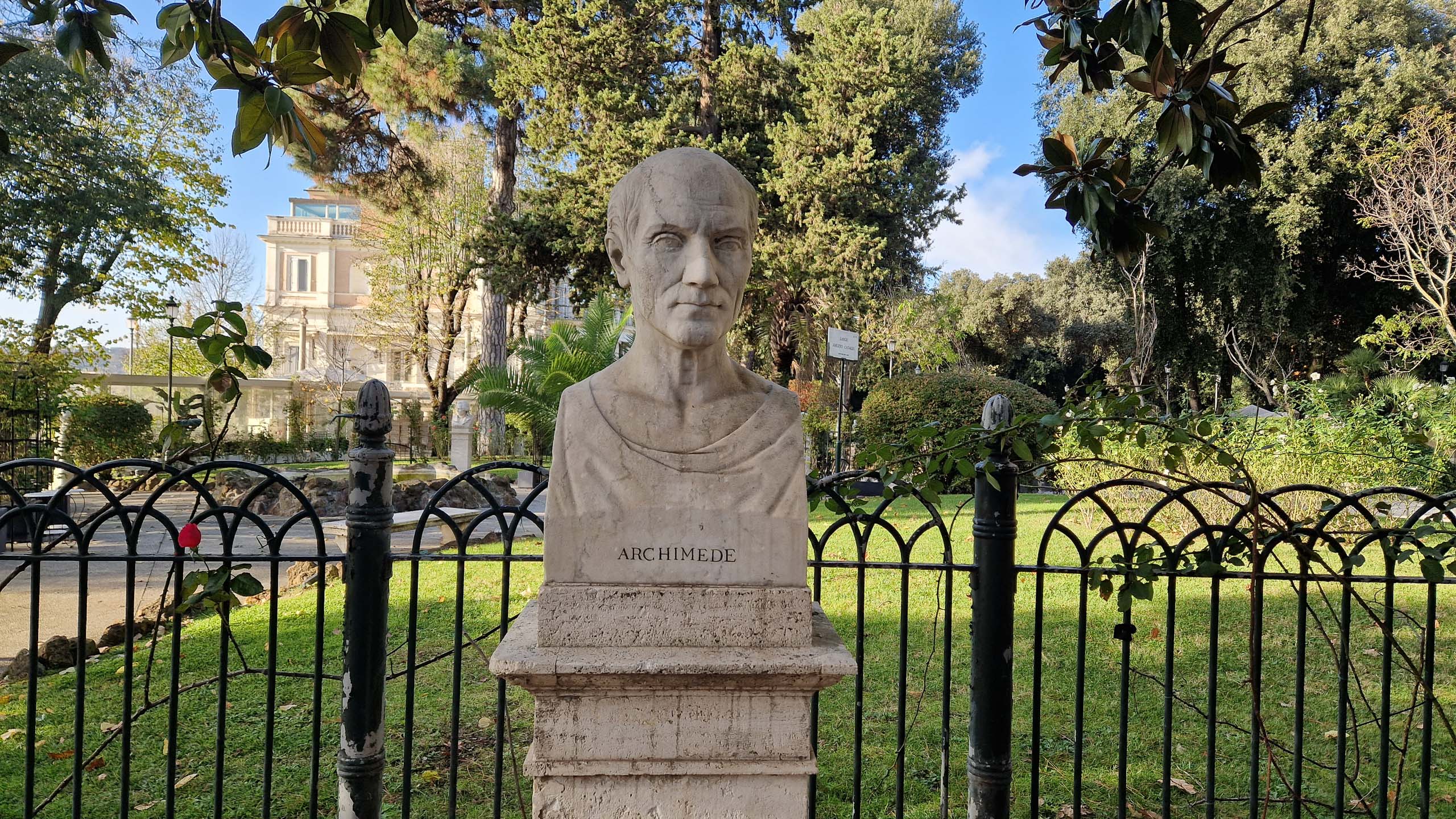
Archimedes studied how to measure curved shapes and how bodies balance or float. These are related questions: geometry could make a problem in mechanics precise, while a mechanical model could suggest a route toward a geometrical result. His surviving treatises preserve arguments whose value can be examined independently of the legends around his life.
He worked in the Greek city of Syracuse in the third century BCE and died when Roman forces captured it in 212 BCE. Later accounts associated him with machines used in the city’s defense. The celebrated bath story is also a later narrative, not a contemporary record of an experiment.
An extraordinary part of his work survives through a medieval manuscript now known as the Archimedes Palimpsest. The parchment was reused for a prayer book. The mathematical writing remained underneath. Conservation and imaging research associated with the Walters Art Museum recovered text that ordinary reading could barely detect.
The recovered material includes The Method, which helps explain how Archimedes investigated mathematical problems. The manuscript is a medieval copy, not his autograph. That long chain of copying and recovery is essential to his modern reputation: even a figure celebrated for solitary invention depends on other people’s work for his ideas to reach us.
Pincio gardens · Nearby
Zeuxis survives through ancient descriptions and stories about painting, including the famous contest in illusion with Parrhasius.
Find on the mapPincio gardens · Nearby
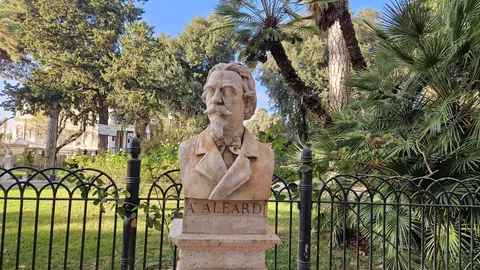
A Romantic poet whose verse joined landscape, political exile, and the movement for Italian unification.
Find on the mapPincio gardens · Nearby
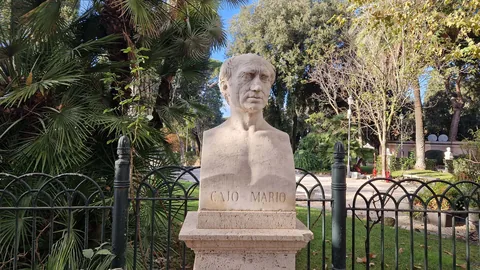
Seven consulships made Marius an exceptional figure in a republic increasingly troubled by military competition and political violence.
Find on the mapPincio gardens · Nearby
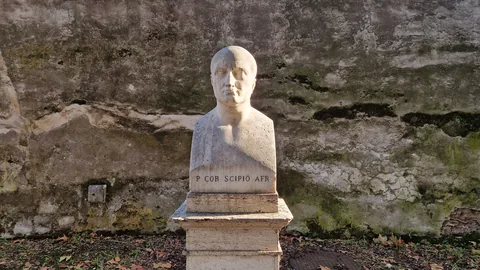
Scipio Africanus defeated Hannibal at Zama, but his later political standing in Rome was less secure than his military reputation.
Find on the map