Pincio gardens · Nearby
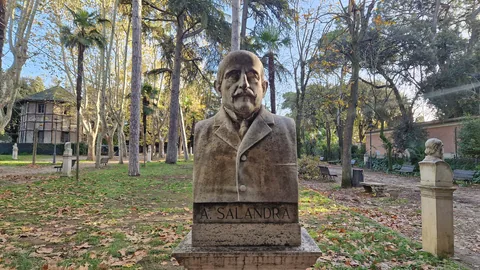
Antonio Salandra
Salandra led the government that moved Italy from neutrality into World War I in 1915.
Find on the mapRead aloud with your device’s voice.
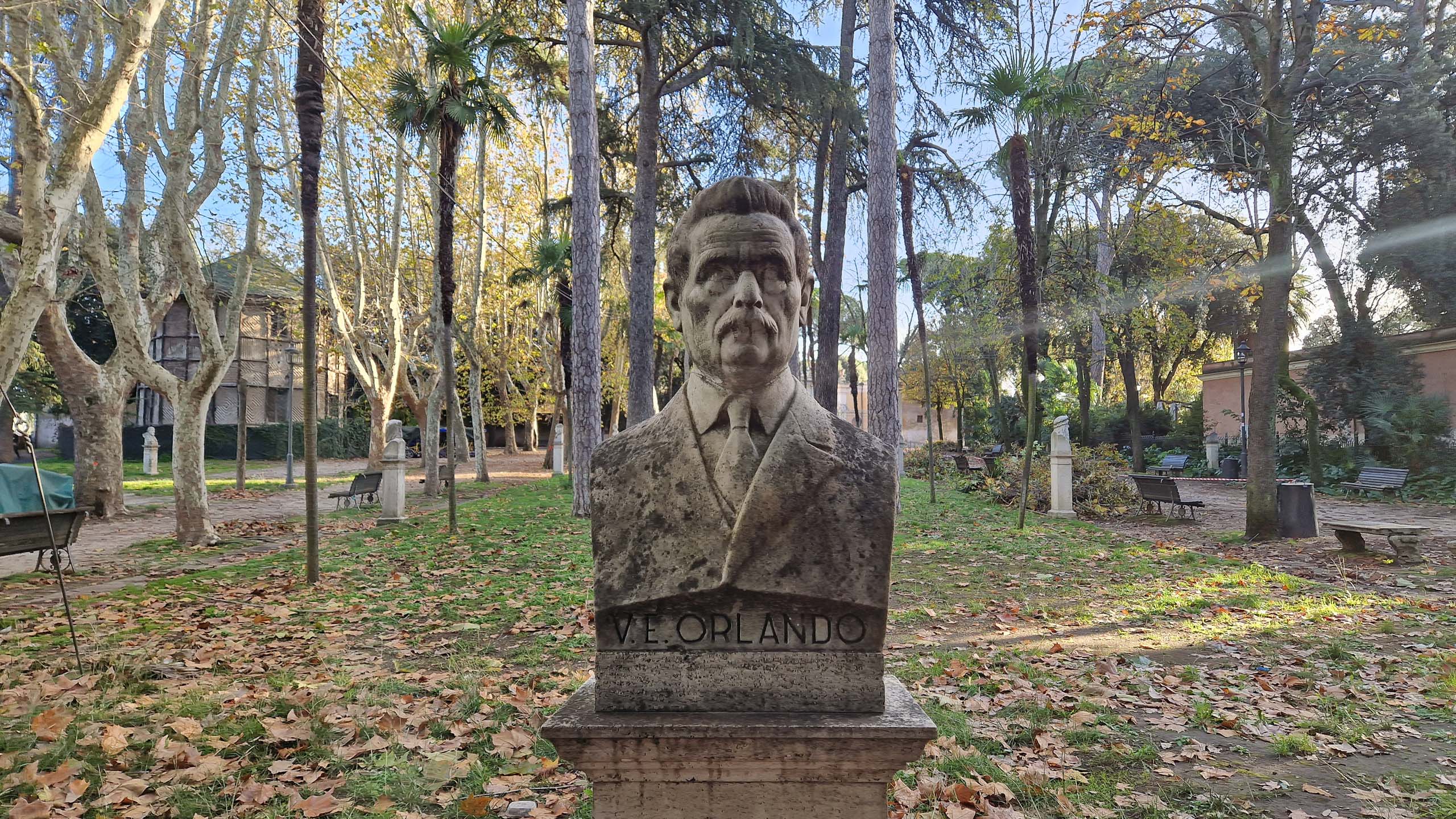
Orlando became prime minister after the defeat at Caporetto in 1917. His government continued into the peace negotiations. The commemorative title associated with him, president of victory, describes only part of that experience.
Born in Palermo in 1860, Orlando had established a career in public law before reaching the head of government. His subject was the state. He examined its institutions in legal scholarship and defended his positions through forceful parliamentary speaking.
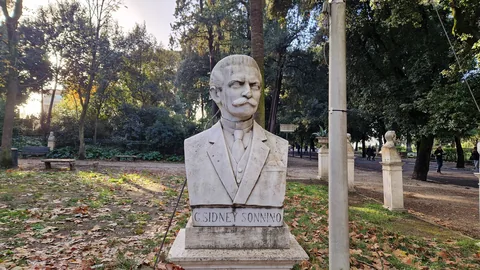
At the Paris peace conference in 1919, Orlando and Foreign Minister Sidney Sonnino pressed Italy’s territorial claims. Allied disputes over the settlement, including those concerning the Adriatic, exposed the gap between wartime commitments and the principles invoked in making the peace.
Orlando later took part in the Constituent Assembly after World War II. His lifetime thus spanned the liberal monarchy, Fascist dictatorship, and the creation of the republic. Those changing constitutional settings are especially relevant to a statesman whose original profession was the study of public law.
Pincio gardens · Nearby
Salandra led the government that moved Italy from neutrality into World War I in 1915.
Find on the mapPincio gardens · Nearby
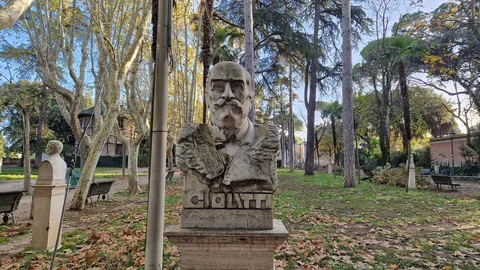
Giolitti expanded political participation while directing colonial war and relying on contested methods of parliamentary government.
Find on the mapPincio gardens · Nearby
Sonnino investigated rural poverty in Sicily before becoming a central negotiator of Italy’s entry into World War I.
Find on the mapPincio gardens · Nearby
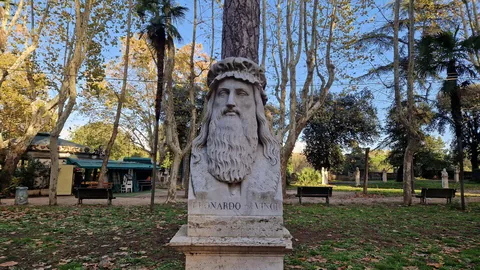
A painter who used drawing to investigate anatomy, moving water, and the mechanics of sight. His Roman years came late in his career.
Find on the map