Pincio gardens · Nearby
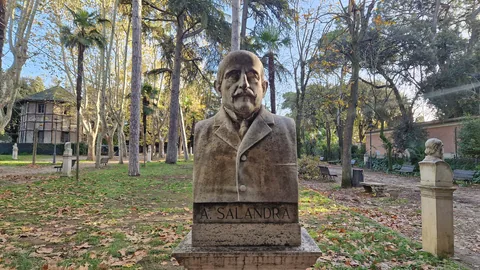
Antonio Salandra
Salandra led the government that moved Italy from neutrality into World War I in 1915.
Find on the mapRead aloud with your device’s voice.
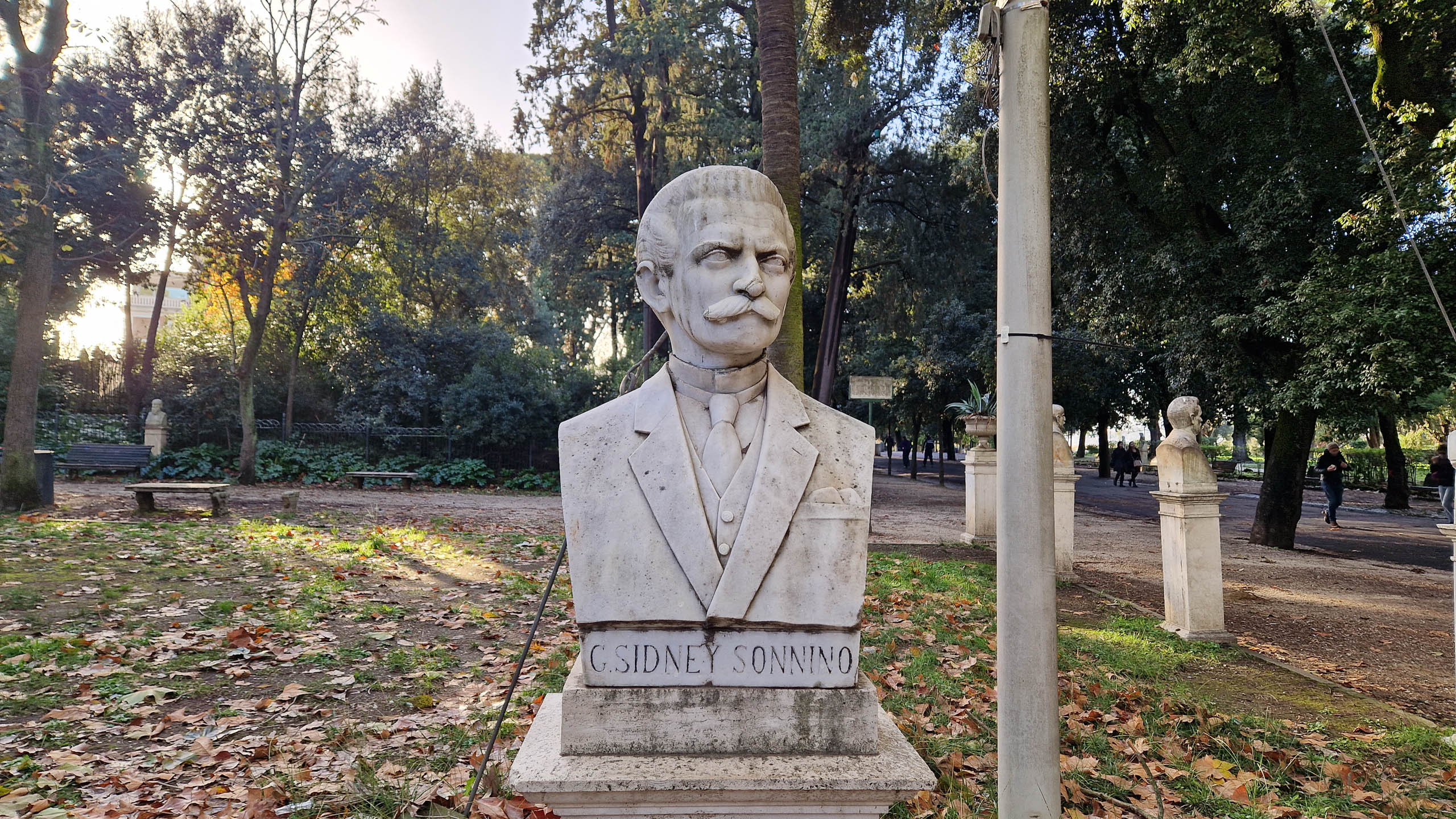
Sidney Sonnino’s career connects two very different kinds of political work: examining the conditions of rural laborers and negotiating territorial commitments between European powers. Born in Pisa in 1847, he made both activities part of a conservative program for strengthening the Italian state.
In 1876, Sonnino traveled through Sicily with Leopoldo Franchetti and Enea Cavalieri. The inquiry produced separate studies by Sonnino and Franchetti the following year. Sonnino concentrated on the island’s peasants, drawing attention to conditions that official accounts of national progress could obscure.
He later served twice as prime minister and became foreign minister in 1914. In that office, he negotiated the Treaty of London of 1915, which promised territorial gains in return for Italy joining the war on the Allied side. Those commitments subsequently became a source of conflict at the Paris peace negotiations.
The two phases should be read together. His concern for social conditions did not make him a democratic radical, and his diplomacy involved choices made with limited public scrutiny. The portrait commemorates an influential statesman whose methods and objectives remained subjects of argument.
Pincio gardens · Nearby
Salandra led the government that moved Italy from neutrality into World War I in 1915.
Find on the mapPincio gardens · Nearby
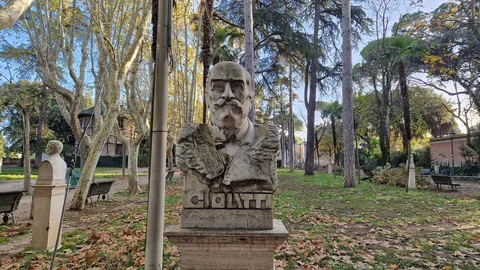
Giolitti expanded political participation while directing colonial war and relying on contested methods of parliamentary government.
Find on the mapPincio gardens · Nearby
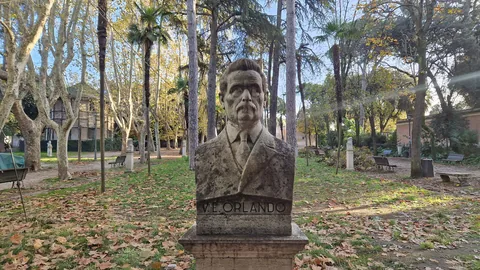
A scholar of public law, Orlando led Italy after Caporetto and represented it at the Paris peace conference.
Find on the mapPincio gardens · Nearby
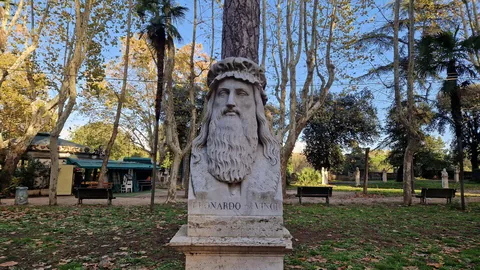
A painter who used drawing to investigate anatomy, moving water, and the mechanics of sight. His Roman years came late in his career.
Find on the map