Pincio gardens · Nearby
Cesare Fracassini
A nineteenth-century Roman painter whose church frescoes and theater curtains brought historical drama to large public spaces.
Find on the mapRead aloud with your device’s voice.
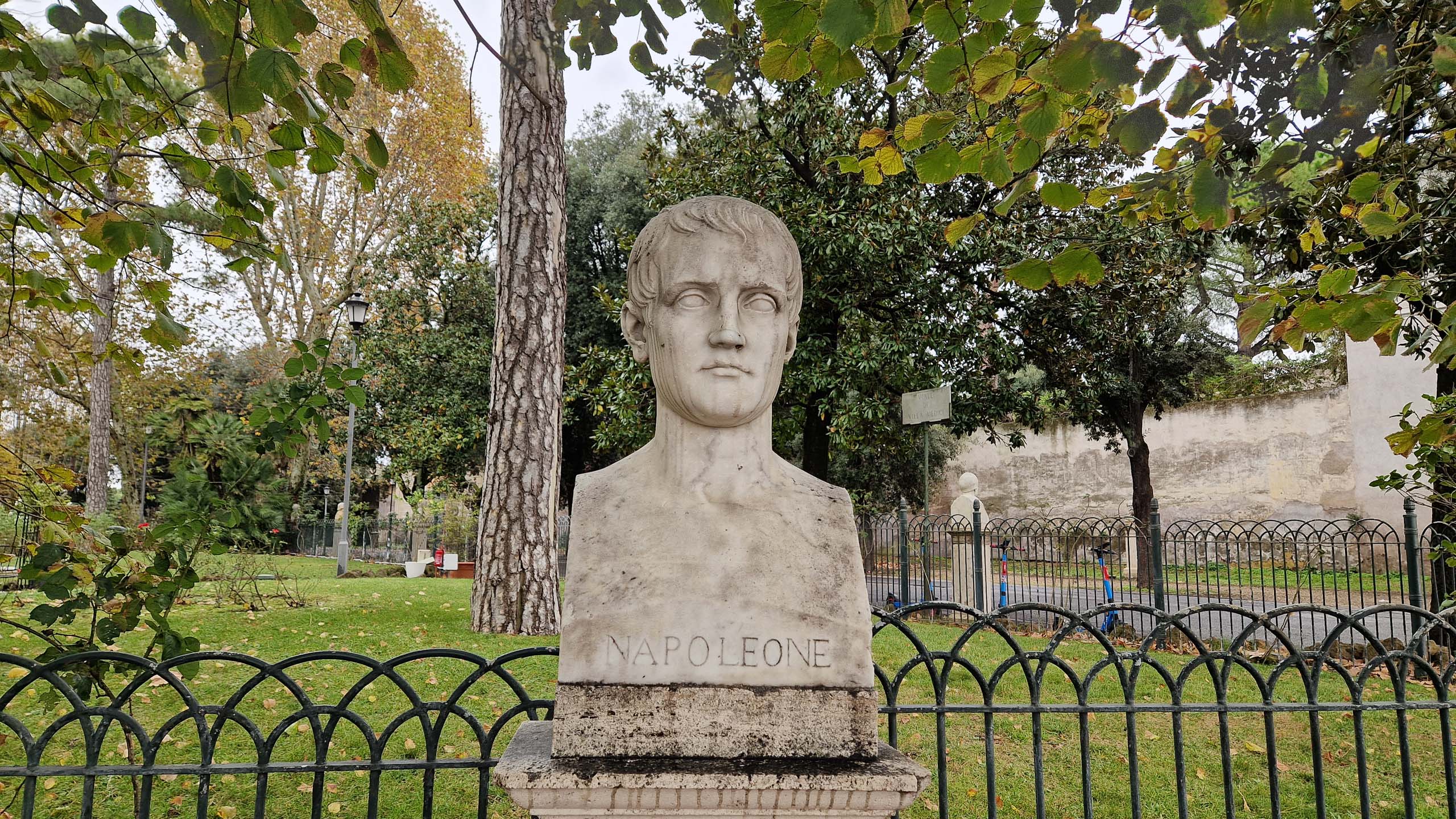
Napoleon’s connection with this part of Rome runs through government and the Borghese family. His sister Pauline married Prince Camillo Borghese, while French rule brought ambitious plans for public space on the Pincio. The promenade developed under the Napoleonic administration and continued under the restored papal government.
Born in Corsica in 1769, Napoleon rose through the armies of revolutionary France and became emperor in 1804. His state combined administrative and legal reform with censorship, conquest, and concentrated personal authority. In the colonies, the restoration and maintenance of slavery under his government sharply limited the universal language inherited from the Revolution.
French forces occupied Rome in 1808. The following year, Napoleon annexed the Papal States, and Pope Pius VII was taken into captivity after the conflict between imperial and papal authority escalated. The Pincio’s public improvements therefore belong to a history of occupation as well as urban planning.
The Borghese connection also affected the movement of antiquities from the family’s collection to France. A visitor should distinguish those ancient sculptures from Canova’s later portrait of Pauline, which remains associated with the Borghese Gallery. Napoleon’s defeat ended the imperial project. Its effects on collections and public space continued.
Pincio gardens · Nearby
A nineteenth-century Roman painter whose church frescoes and theater curtains brought historical drama to large public spaces.
Find on the mapPincio gardens · 25 m away
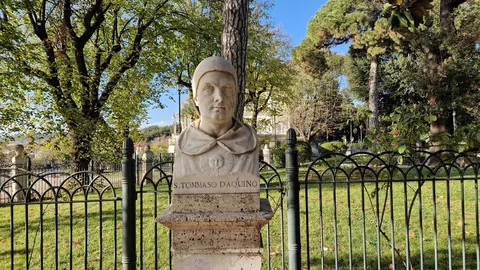
Aquinas used sustained philosophical argument to examine questions of faith, knowledge, and human action.
Find on the mapPincio gardens · 26 m away
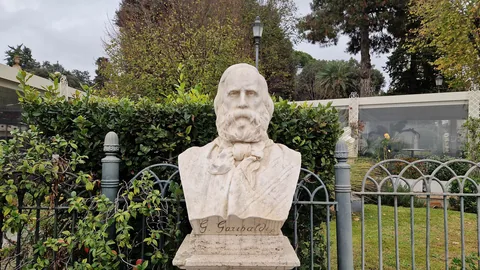
Garibaldi led volunteer armies in South America and Italy, including the 1860 campaign that overthrew Bourbon rule in the south.
Find on the mapPincio gardens · 26 m away
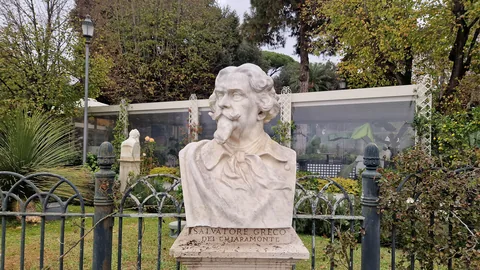
A Garibaldian volunteer and fencing master, Greco established a family tradition of teaching swordsmanship near Rome’s Pantheon.
Find on the map