Pincio gardens · Nearby
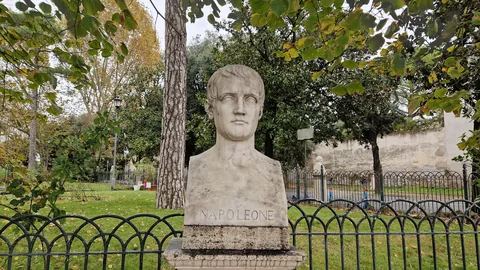
Napoleon
Napoleon’s rule changed Rome’s administration and art collections, even though his empire’s plans for the city outlasted his control of it.
Find on the mapVoice changes restart the current paragraph.
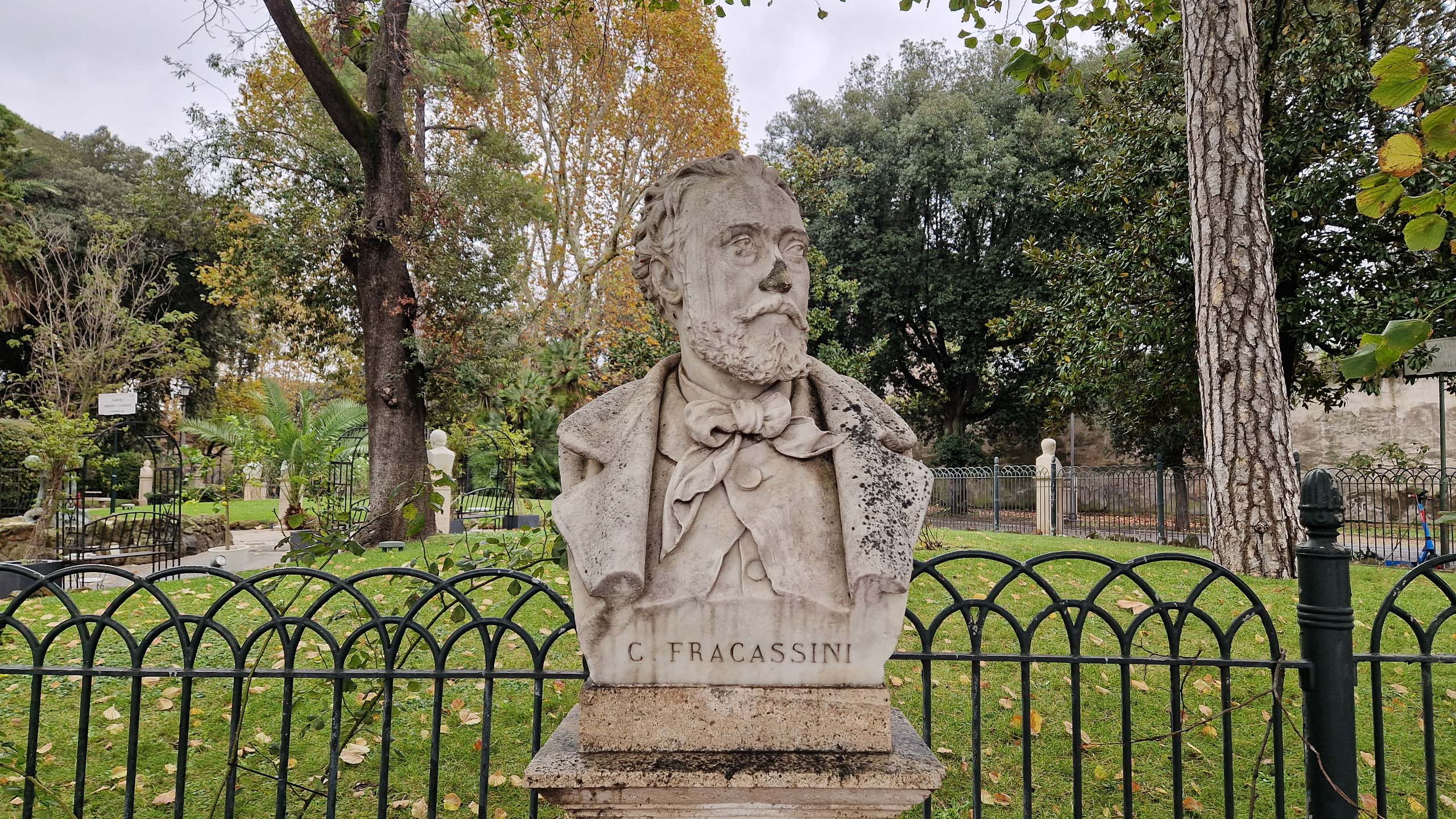
Cesare Fracassini painted for spaces where pictures had to work at a distance. His commissions included church decoration and theater curtains, both of which demanded legible figures, organized groups, and a clear dramatic action. At Orvieto’s Teatro Mancinelli, his curtain depicts the city’s liberation from the Goths by Belisarius.
Born in Rome in 1838, he trained with Tommaso Minardi. That education linked drawing from earlier art to the needs of nineteenth-century religious painting. Fracassini’s theatrical work shows another use of the same skills: a historical scene could become part of the anticipation before a performance.
His career ended in 1868, shortly before his thirtieth birthday. Work at San Lorenzo fuori le Mura remained unfinished. The bust commemorates a painter of papal Rome whose reputation depended on ambitious public commissions, rather than on the small easel pictures that now dominate many accounts of nineteenth-century art.
Pincio gardens · Nearby
Napoleon’s rule changed Rome’s administration and art collections, even though his empire’s plans for the city outlasted his control of it.
Find on the mapPincio gardens · 25 m away
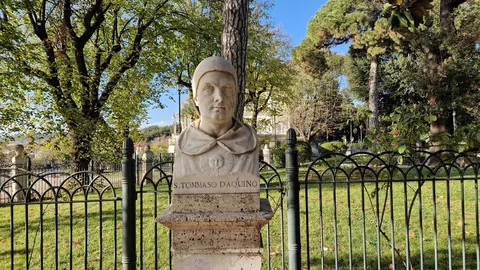
Aquinas used sustained philosophical argument to examine questions of faith, knowledge, and human action.
Find on the mapPincio gardens · 26 m away
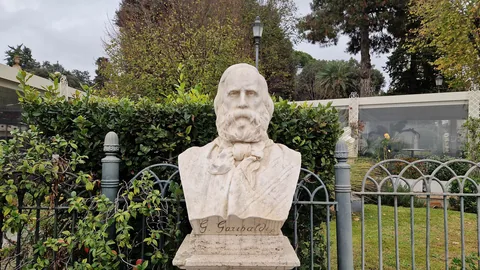
Garibaldi led volunteer armies in South America and Italy, including the 1860 campaign that overthrew Bourbon rule in the south.
Find on the mapPincio gardens · 26 m away
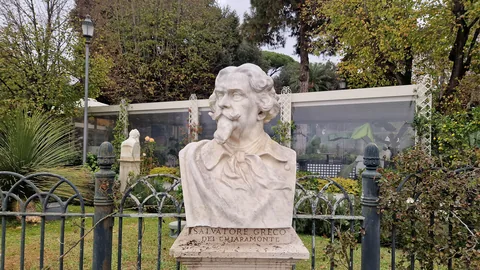
A Garibaldian volunteer and fencing master, Greco established a family tradition of teaching swordsmanship near Rome’s Pantheon.
Find on the map