Pincio gardens · Nearby
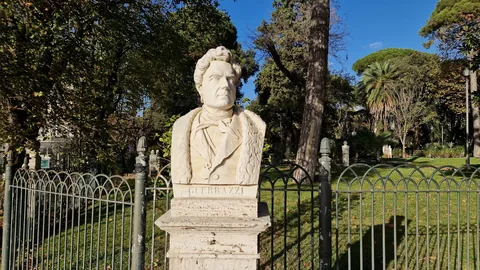
Francesco Domenico Guerrazzi
A novelist of historical resistance who also governed during Tuscany’s revolution of 1849.
Find on the mapRead aloud with your device’s voice.
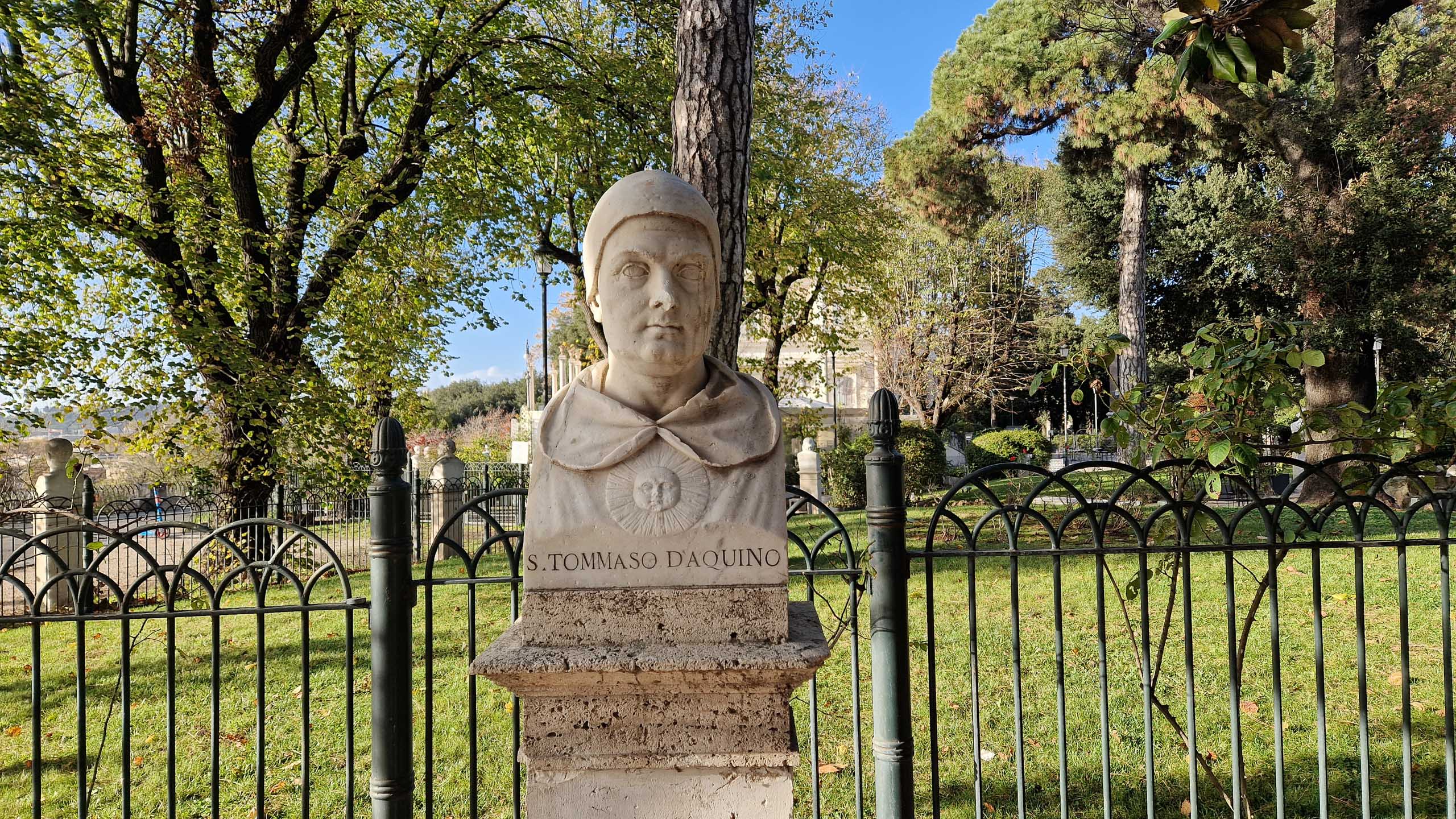
Thomas Aquinas built arguments by taking objections seriously. In the Summa theologiae, a question is divided into articles, opposing reasons are set out, and a response distinguishes the issues before answering them. The form records a culture of structured disagreement rather than a sequence of unsupported declarations.
Born near Roccasecca around 1225, Aquinas joined the Dominican order and studied with Albert the Great. His teaching career moved between Italy and the university world north of the Alps. Aristotle supplied an important philosophical vocabulary, alongside Christian authorities and the wider medieval tradition of commentary.
Aquinas distinguished what human reason could establish from truths accepted through revelation. He argued that the two could not ultimately contradict each other, although they did not have identical methods or reach. Reducing this position to either pure rationalism or a rejection of reason misrepresents it.
Aquinas died at Fossanova in 1274 while traveling toward the Council of Lyon, with the Summa still unfinished. His influence on Catholic theology grew over centuries, but the work also continues to invite philosophical arguments about knowledge and ethics beyond the limits of ecclesiastical doctrine.
Pincio gardens · Nearby
A novelist of historical resistance who also governed during Tuscany’s revolution of 1849.
Find on the mapPincio gardens · Nearby
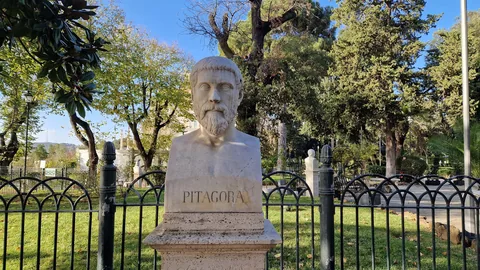
A Greek thinker associated with Croton in southern Italy, whose historical life must be separated from later Pythagorean legend.
Find on the mapPincio gardens · Nearby
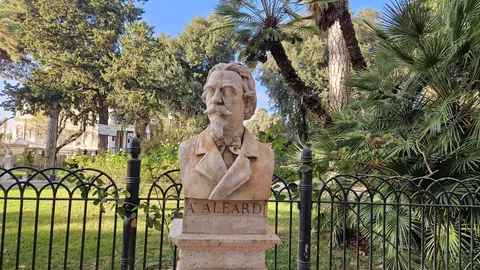
A Romantic poet whose verse joined landscape, political exile, and the movement for Italian unification.
Find on the mapPincio gardens · Nearby
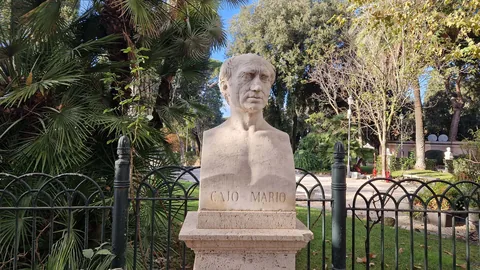
Seven consulships made Marius an exceptional figure in a republic increasingly troubled by military competition and political violence.
Find on the map