Pincio gardens · Nearby
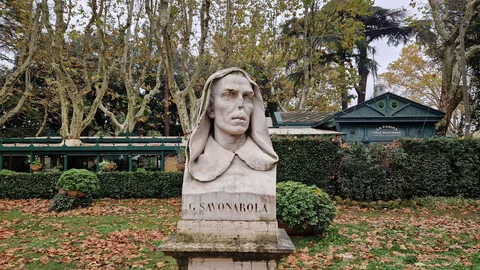
Girolamo Savonarola
Savonarola’s preaching joined religious reform to Florentine politics before his conflict with papal authority ended in execution in 1498.
Find on the mapRead aloud with your device’s voice.
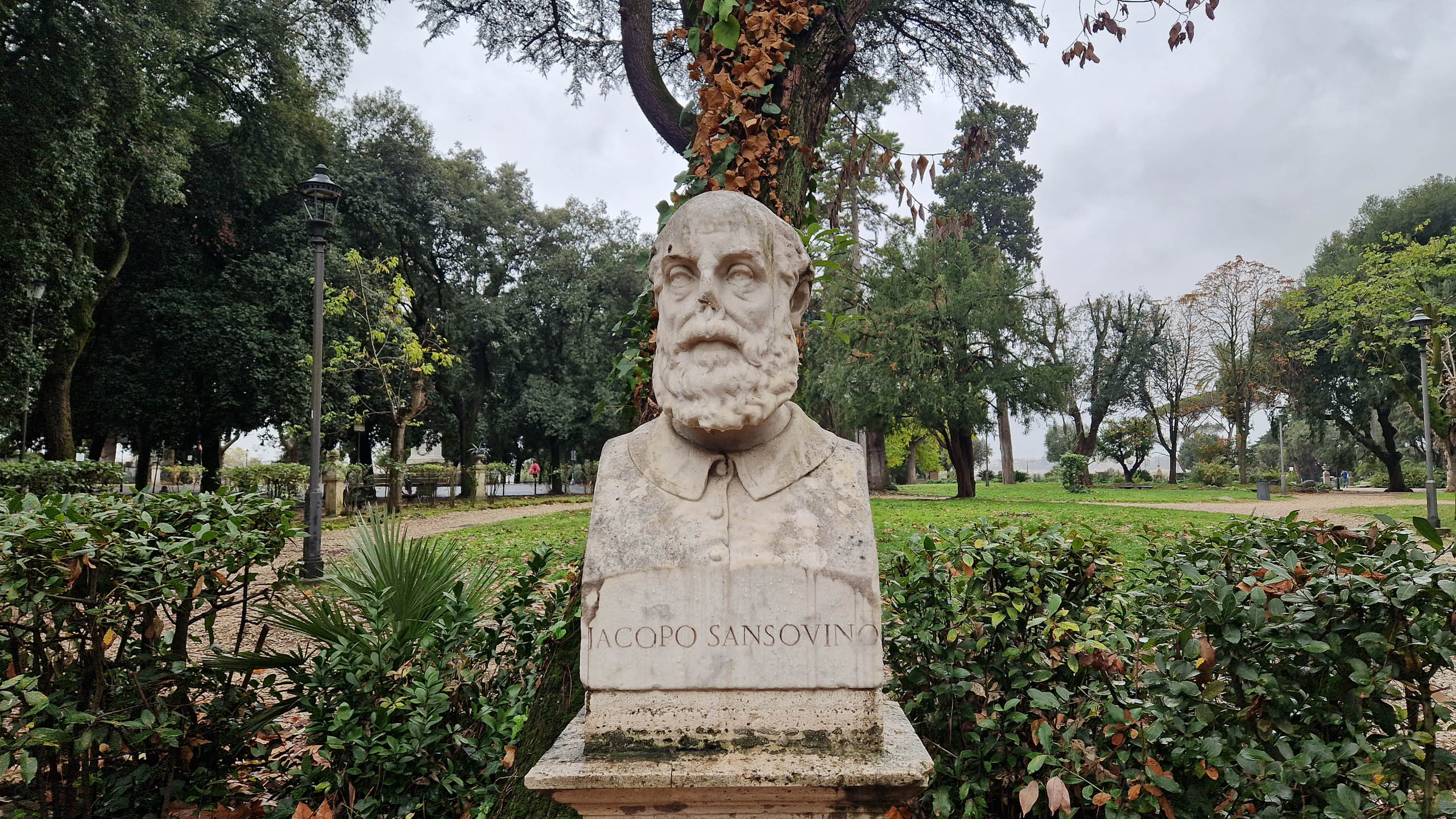
Jacopo Sansovino brought a sculptor's understanding of the figure to the architecture of Venice. Born Jacopo Tatti in Florence in 1486, he adopted the name of his teacher, Andrea Sansovino. Work in Rome gave him close experience of ancient sculpture and the ambitions of Renaissance patrons.
After the Sack of Rome in 1527, he settled in Venice and became the official architect associated with San Marco. His projects included the library opposite the Doge's Palace, the mint, and the Loggetta at the foot of the bell tower. Each contributed to the ceremonial setting in which the republic displayed its authority.
The library's repeated arches and columns create a strong rhythm, while sculptural ornament makes the facade richer as the viewer approaches. Classical architecture here answers the needs of an existing city and its institutions. It also offers a different visual language from the Gothic palace facing it.
Sansovino died in 1570. His friendship with Titian and Pietro Aretino placed him within a circle where images, buildings, and writing all contributed to the reputation of artists and patrons.
Pincio gardens · Nearby
Savonarola’s preaching joined religious reform to Florentine politics before his conflict with papal authority ended in execution in 1498.
Find on the mapPincio gardens · Nearby
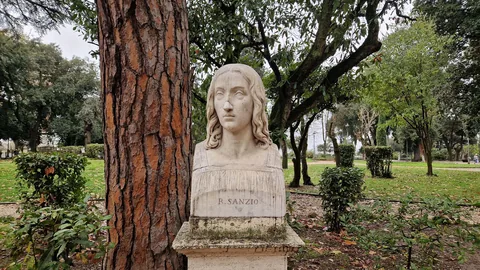
Raphael organized figures, architecture, and gesture into paintings whose apparent ease rests on careful design and collaboration.
Find on the mapPincio gardens · Nearby
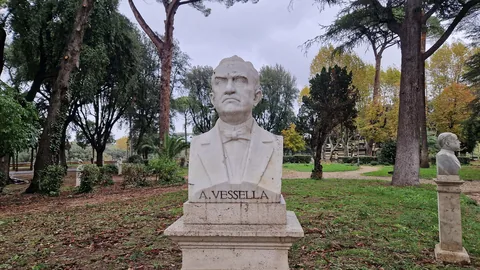
Vessella directed Rome’s municipal band and used arrangements and public concerts to bring a broad musical repertoire to the city.
Find on the mapPincio gardens · Nearby
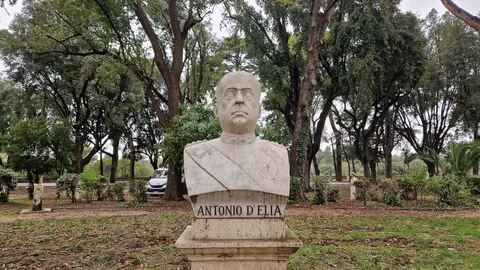
D’Elia directed civic and military bands and wrote music and studies that drew on his training as a clarinetist.
Find on the map