Pincio gardens · Nearby
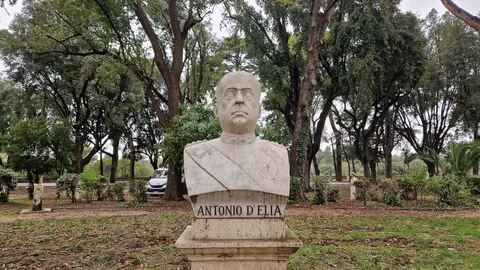
Antonio D'Elia
D’Elia directed civic and military bands and wrote music and studies that drew on his training as a clarinetist.
Find on the mapRead aloud with your device’s voice.
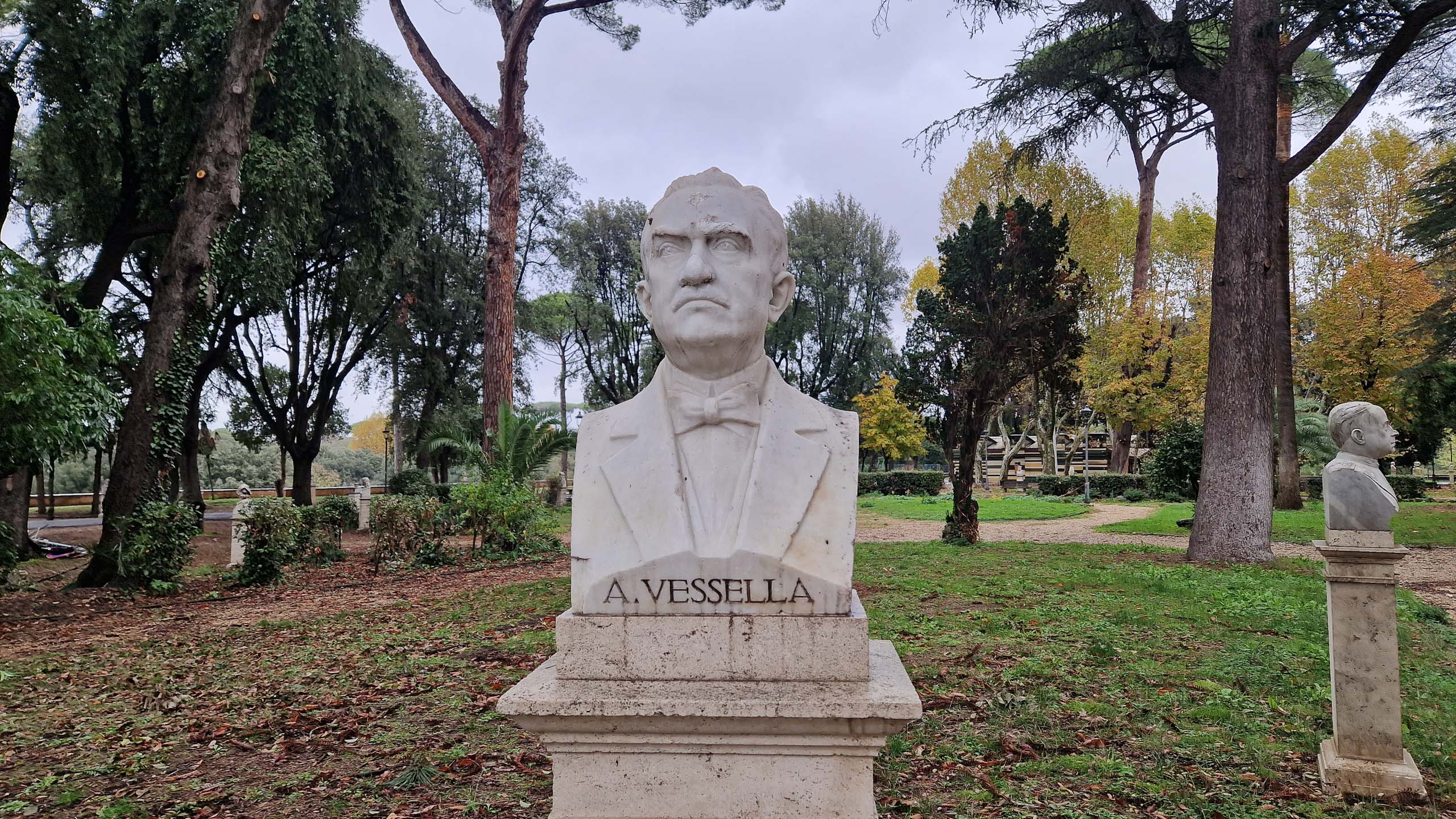
Alessandro Vessella helped make the municipal band part of Rome's musical education. Born in 1860 near Caserta, he studied in Naples and became director of Rome's civic ensemble in 1885. He held the position until 1921.
His work involved more than conducting marches. Through arrangements of orchestral and operatic music, he gave public audiences access to a wide repertoire. A transcription had to redistribute parts among wind and percussion instruments while preserving the relationships that made the original music recognizable.
Vessella also taught band composition and instrumentation at Santa Cecilia and wrote about the organization and history of bands. His treatise addressed the practical craft behind the sound: available instruments, their ranges, and the combinations a composer could use.
He died in 1929. On a walk through the Pincio, his name connects the gardens to a history of public listening, when an outdoor concert could offer serious musical experience without the setting or expense of an opera house.
Pincio gardens · Nearby
D’Elia directed civic and military bands and wrote music and studies that drew on his training as a clarinetist.
Find on the mapPincio gardens · Nearby
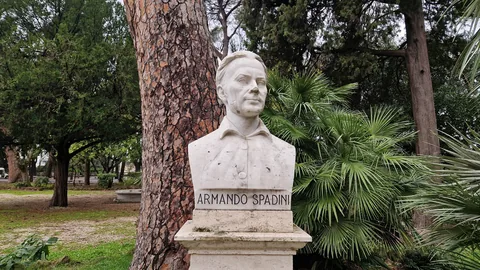
A painter of family life who also painted the Pincio. His work sits between close observation, Impressionist color, and older Italian painting.
Find on the mapPincio gardens · Nearby
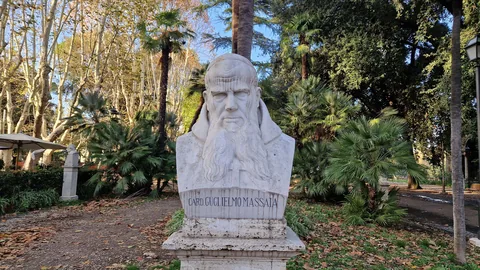
A Capuchin missionary in Ethiopia, Massaia founded missions, advised Menelik, and recorded his experiences in extensive memoirs.
Find on the mapPincio gardens · Nearby
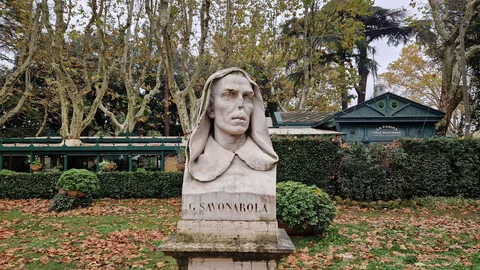
Savonarola’s preaching joined religious reform to Florentine politics before his conflict with papal authority ended in execution in 1498.
Find on the map