Pincio gardens · Nearby
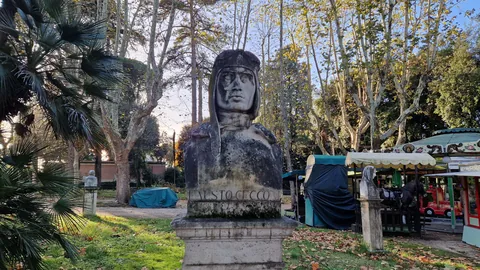
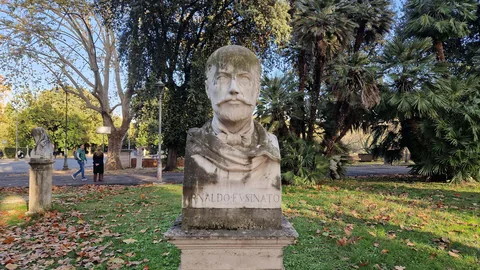
Arnaldo Fusinato
A poet of satire and political defeat, Fusinato wrote his best-known Venetian poem during the republic’s collapse in 1849.
Find on the mapVoice changes restart the current paragraph.
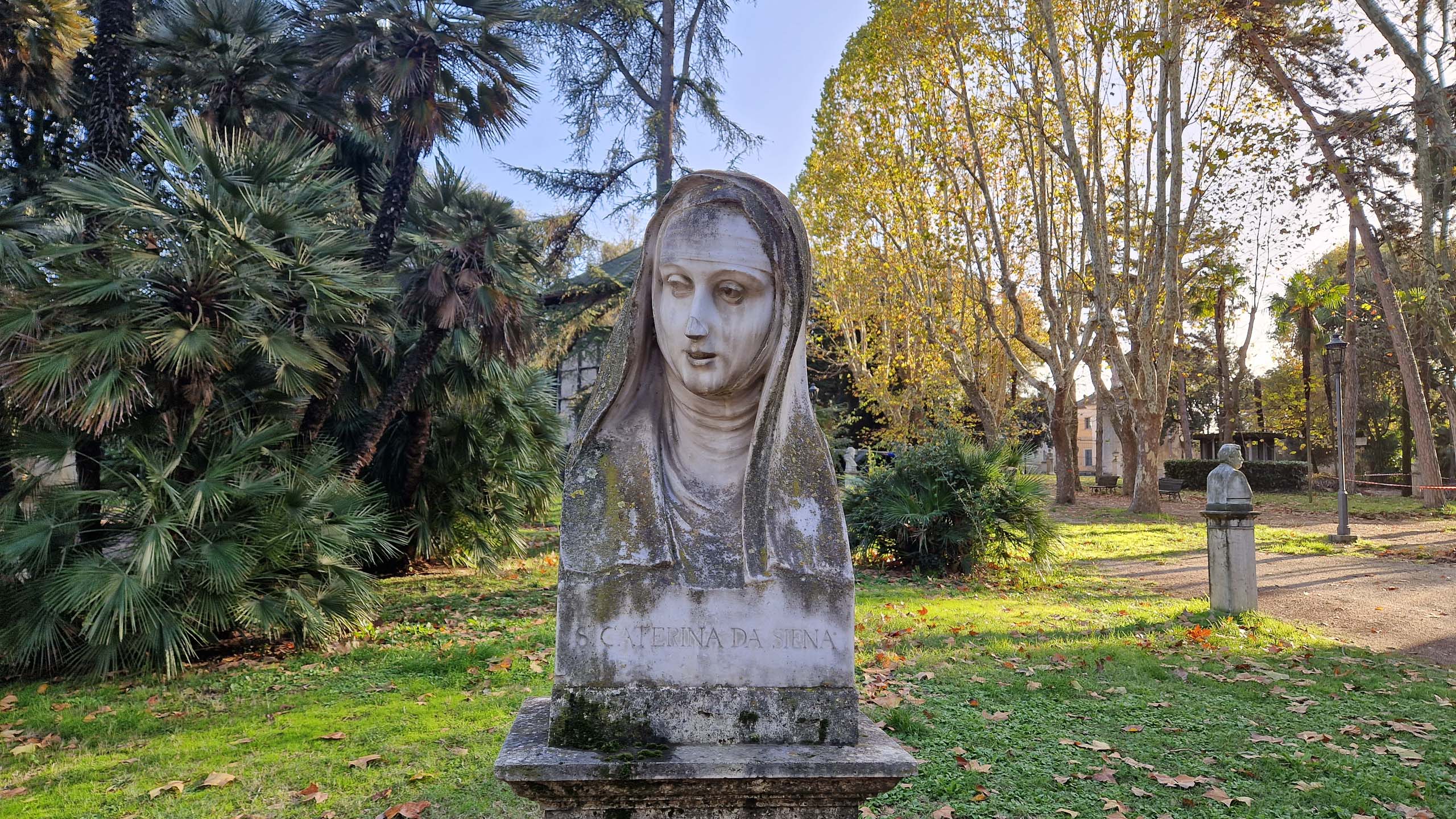
Catherine of Siena addressed popes and rulers with an authority that came from religious conviction rather than public office. Her letters called for personal reform. They also intervened in urgent Church affairs. She was a Dominican tertiary, a lay member of the order’s wider religious community, rather than a cloistered nun.
Born in Siena in 1347, Catherine became associated with the women known as the Mantellate. Her spiritual teaching survives in letters and in the work generally called the Dialogue, whose literary form places a soul in conversation with God. Mystical experience shaped her practical counsel.
Catherine urged Gregory XI to return from Avignon to Rome in 1376. The papacy’s return had political causes and preparations beyond her intervention, so she should not be credited with accomplishing it single-handedly. Her involvement nevertheless placed a woman without formal ecclesiastical office inside a central dispute of European politics.
Catherine spent her final years supporting Urban VI during the Western Schism and died in Rome in 1380. Her later recognition as a Doctor of the Church honors theological teaching. It should be distinguished from the formal authority she was permitted to exercise during her lifetime.
Pincio gardens · Nearby
A poet of satire and political defeat, Fusinato wrote his best-known Venetian poem during the republic’s collapse in 1849.
Find on the mapPincio gardens · Nearby
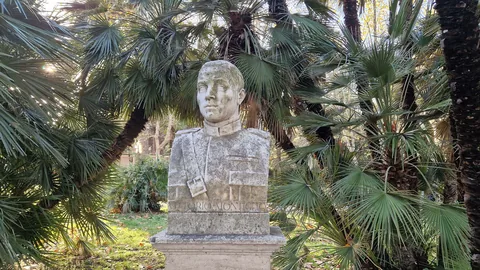
Cecconi flew with Umberto Maddalena in endurance trials that tested how long an aircraft and its crew could remain aloft.
Find on the mapPincio gardens · Nearby
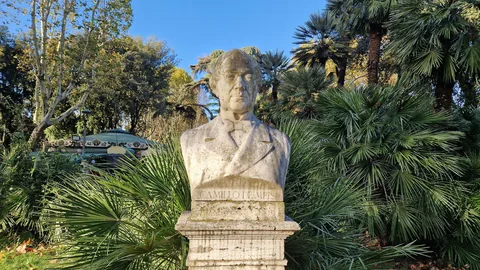
Montiglio’s wartime service and later Fascist activism belong together in the history behind his commemorative portrait.
Find on the mapPincio gardens · 24 m away
A physician and philosopher, De Meis treated the history of medicine as part of a larger argument about science and society.
Find on the map