Pincio gardens · Nearby
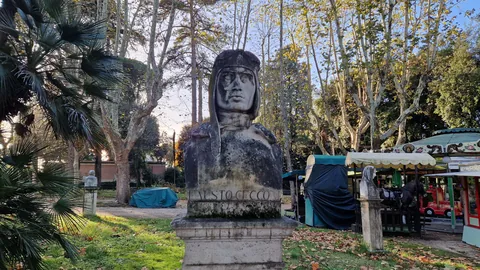
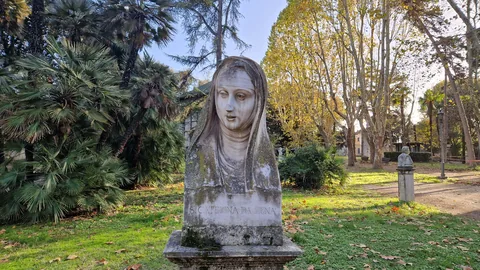
Catherine of Siena
Catherine of Siena used letters and religious authority to intervene in the politics of the fourteenth-century Church.
Find on the mapRead aloud with your device’s voice.
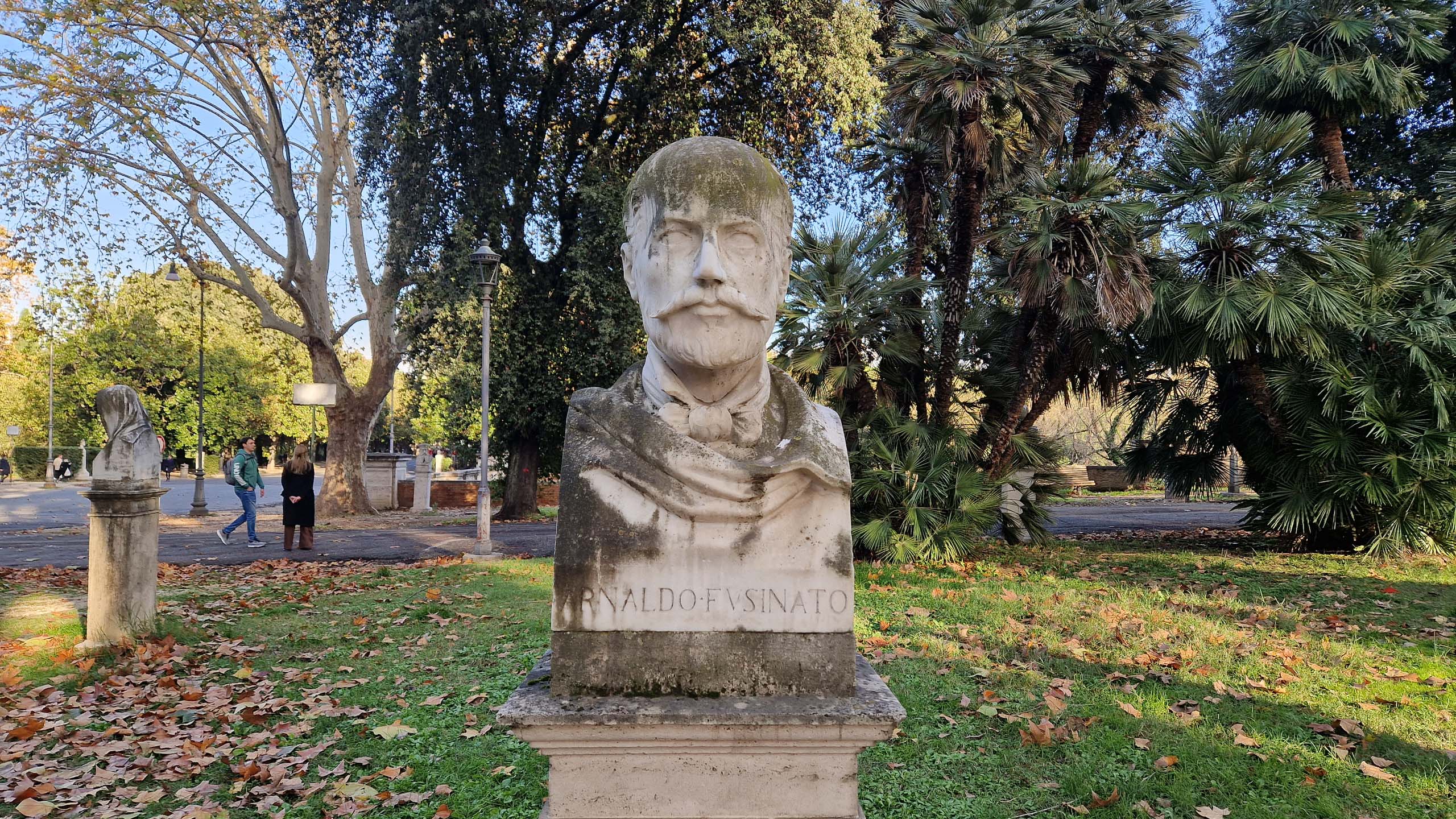
Arnaldo Fusinato’s most familiar poem describes a city running out of food and resistance. Written during the fall of the Venetian republic in 1849, it is known as A Venezia or L’ultima ora di Venezia. Its white flag belongs to a defeated cause. That perspective gives the poem a different voice from the victory speeches often associated with Italian unification.
Born in Schio in 1817, Fusinato studied law in Padua but devoted much of his energy to verse. He fought during the revolutions of 1848 and served in the defense of Venice the following year. His poetry carried the experience of political commitment into a form that could be recited and remembered.
Patriotic verse was one part of his work. In Lo studente di Padova and other comic poems, he satirized recognizable social types, including the student more interested in the pleasures of university life than in study. Reading that humor beside the Venetian lament reveals a writer who could move from public catastrophe to the small vanities of daily life.
Pincio gardens · Nearby
Catherine of Siena used letters and religious authority to intervene in the politics of the fourteenth-century Church.
Find on the mapPincio gardens · Nearby
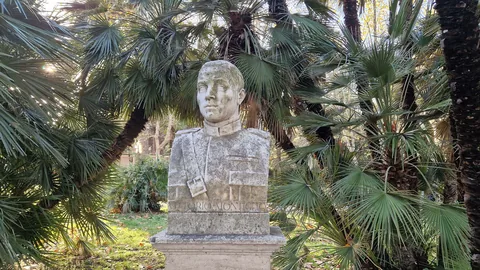
Cecconi flew with Umberto Maddalena in endurance trials that tested how long an aircraft and its crew could remain aloft.
Find on the mapPincio gardens · Nearby
Montiglio’s wartime service and later Fascist activism belong together in the history behind his commemorative portrait.
Find on the mapPincio gardens · 20 m away
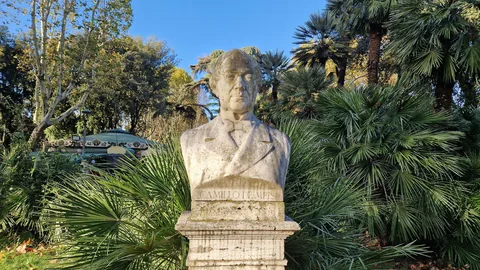
A physician and philosopher, De Meis treated the history of medicine as part of a larger argument about science and society.
Find on the map