Pincio gardens · Nearby
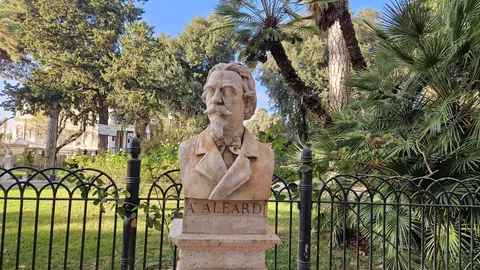
Aleardo Aleardi
A Romantic poet whose verse joined landscape, political exile, and the movement for Italian unification.
Find on the mapRead aloud with your device’s voice.
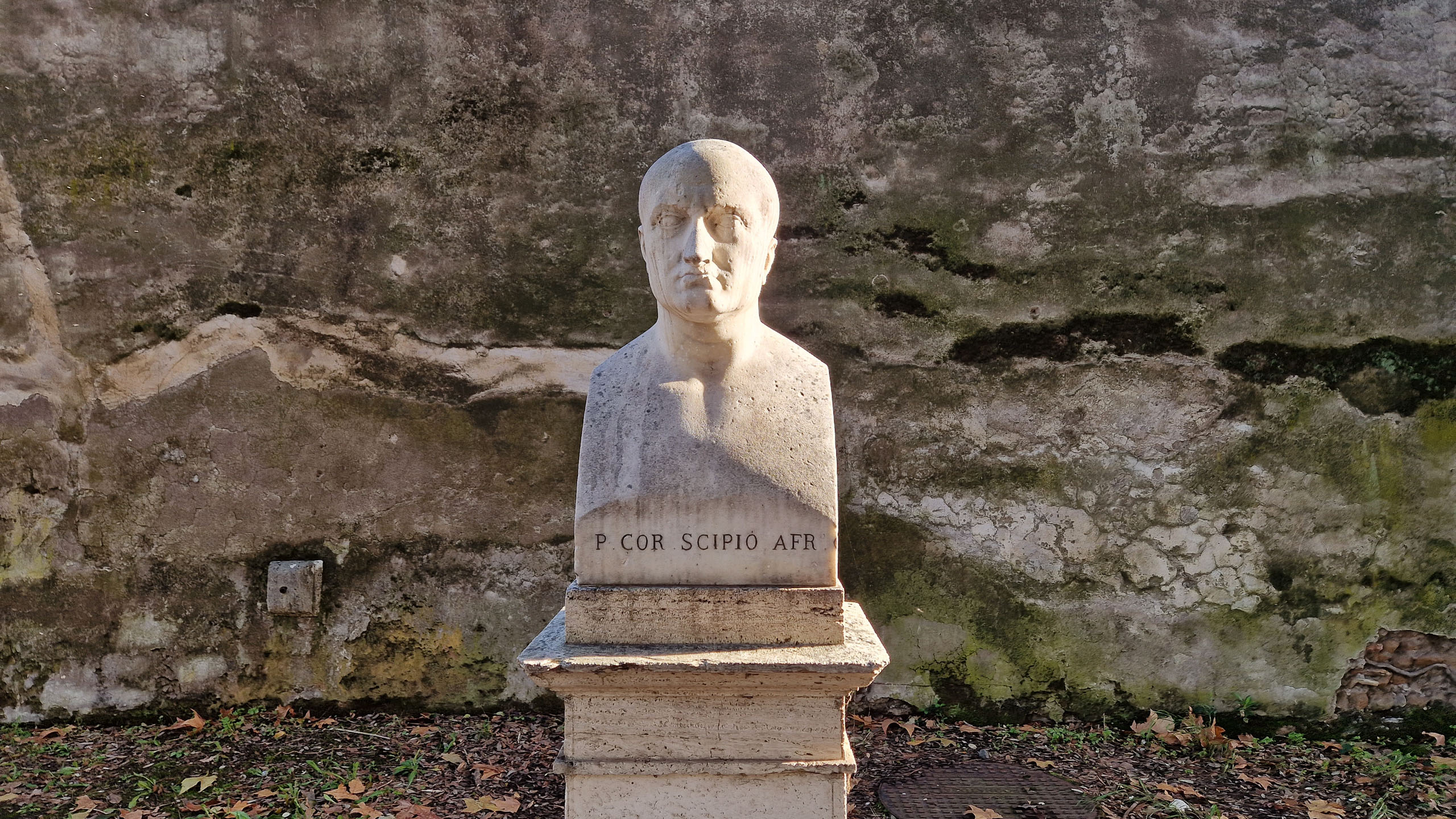
Scipio Africanus is the Roman commander who defeated Hannibal at Zama in 202 BCE. The victory ended the Second Punic War and left Rome dominant over Carthage. It did not destroy the city: that happened in a later war, under another Scipio.
Born around 236 BCE, Publius Cornelius Scipio gained command in Spain while still unusually young for such responsibility. His capture of Carthago Nova in 209 BCE removed an important Carthaginian base. He then carried the war to North Africa, where alliances with local rulers were essential to the campaign.
The name Africanus commemorated the victory, but military prestige did not eliminate opposition at Rome. Disputes over the conduct of eastern campaigns and the handling of money affected both Scipio and his brother. Ancient accounts of these proceedings are difficult to reconcile in every detail.
Scipio withdrew to Liternum and died in 183 BCE. His career shows how an exceptional commander could become uncomfortable within a republic that depended on collective officeholding while repeatedly entrusting individuals with extraordinary power.
Pincio gardens · Nearby
A Romantic poet whose verse joined landscape, political exile, and the movement for Italian unification.
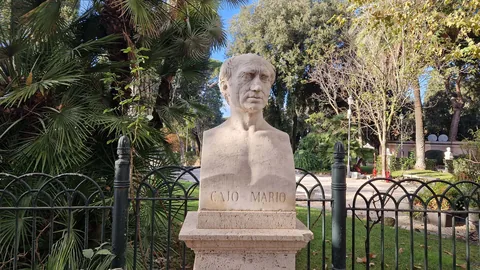
Find on the mapPincio gardens · Nearby
Seven consulships made Marius an exceptional figure in a republic increasingly troubled by military competition and political violence.
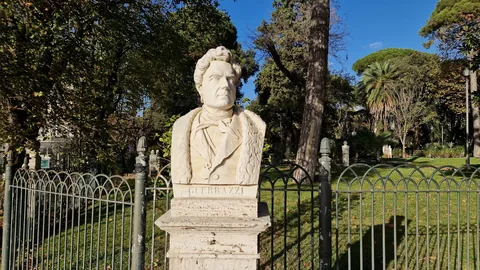
Find on the mapPincio gardens · Nearby
A novelist of historical resistance who also governed during Tuscany’s revolution of 1849.
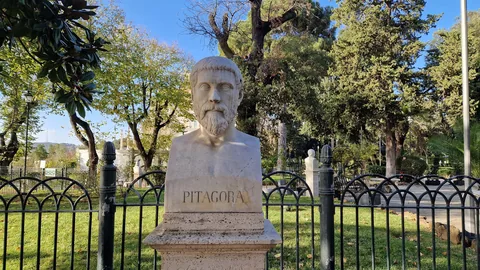
Find on the mapPincio gardens · Nearby
A Greek thinker associated with Croton in southern Italy, whose historical life must be separated from later Pythagorean legend.
Find on the map