Pincio gardens · 25 m away
Benvenuto Cellini
Cellini made goldsmithing and sculpture serve princely display, then cast his own turbulent career as the subject of an autobiography.
Find on the mapRead aloud with your device’s voice.
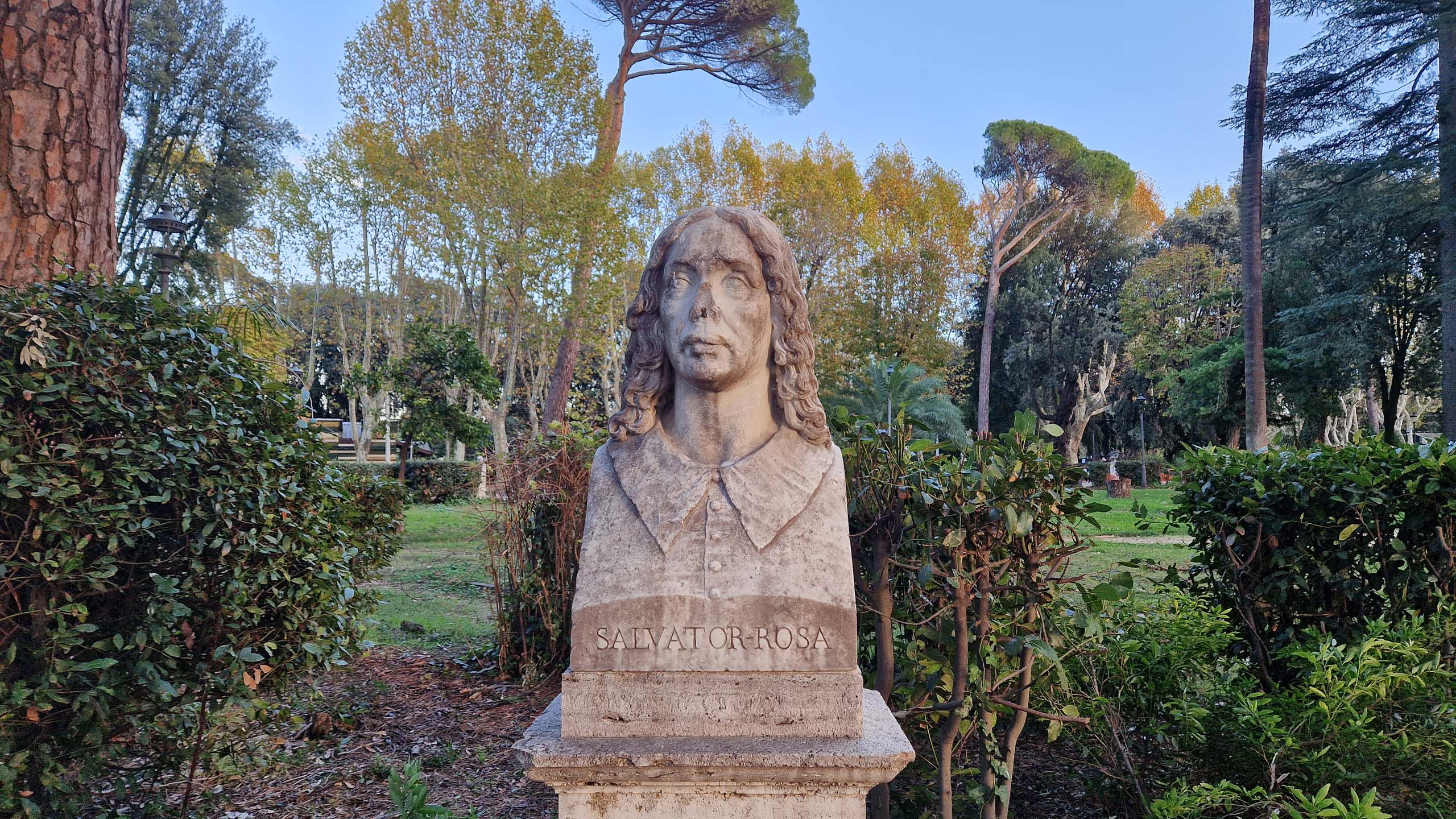
Broken ground, difficult paths, and abrupt trees give many of Salvator Rosa’s landscapes an unsettled character. The people within them can seem exposed to a world that resists easy occupation. Such paintings helped establish his later reputation as a precursor of Romantic taste, although he worked within the patronage and arguments of the seventeenth century.
Born near Naples in 1615, Rosa developed a career in Florence and Rome as well as his native region. He painted historical and philosophical subjects and made prints. His satires and public self-presentation also formed part of his identity as an artist with intellectual ambitions.
Paintings of witchcraft belong to that varied production. They supplied learned and fashionable collectors with images whose grotesque details could support different readings. Depicting magic does not establish that the painter practiced it.
Rosa died in Rome in 1673. His work is best approached through its deliberate choices of setting and subject, without turning the artist into the bandit or solitary outlaw of later romanticized biographies.
Pincio gardens · 25 m away
Cellini made goldsmithing and sculpture serve princely display, then cast his own turbulent career as the subject of an autobiography.
Find on the mapPincio gardens · 25 m away
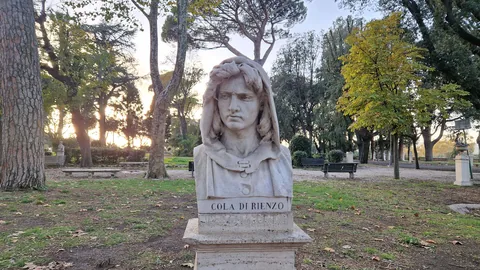
A Roman notary who became tribune in 1347, Cola di Rienzo used the language of ancient Rome to challenge the city’s barons.
Find on the mapPincio gardens · 25 m away
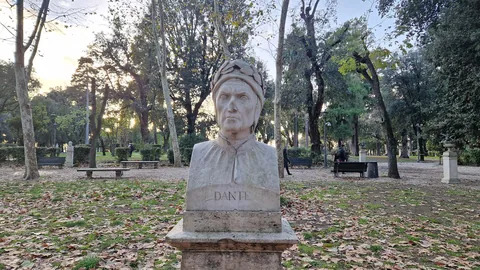
An exiled Florentine who made the afterlife a setting for arguments about language, power, love, and justice.
Find on the mapPincio gardens · 25 m away
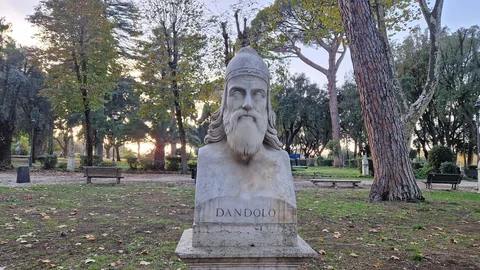
Venice’s doge during the Fourth Crusade, Dandolo helped direct the expedition that captured and sacked Constantinople in 1204.
Find on the map