Pincio gardens · Nearby
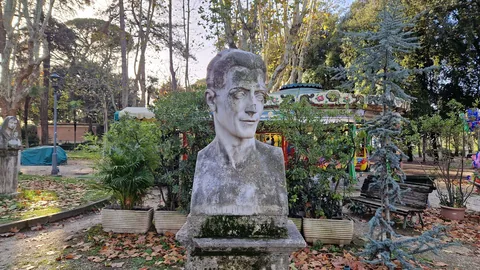
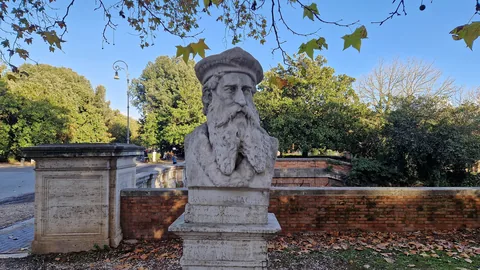
Bartolomeo Eustachio
The anatomist behind the Eustachian tube, whose major anatomical plates reached print long after his death.
Find on the mapRead aloud with your device’s voice.
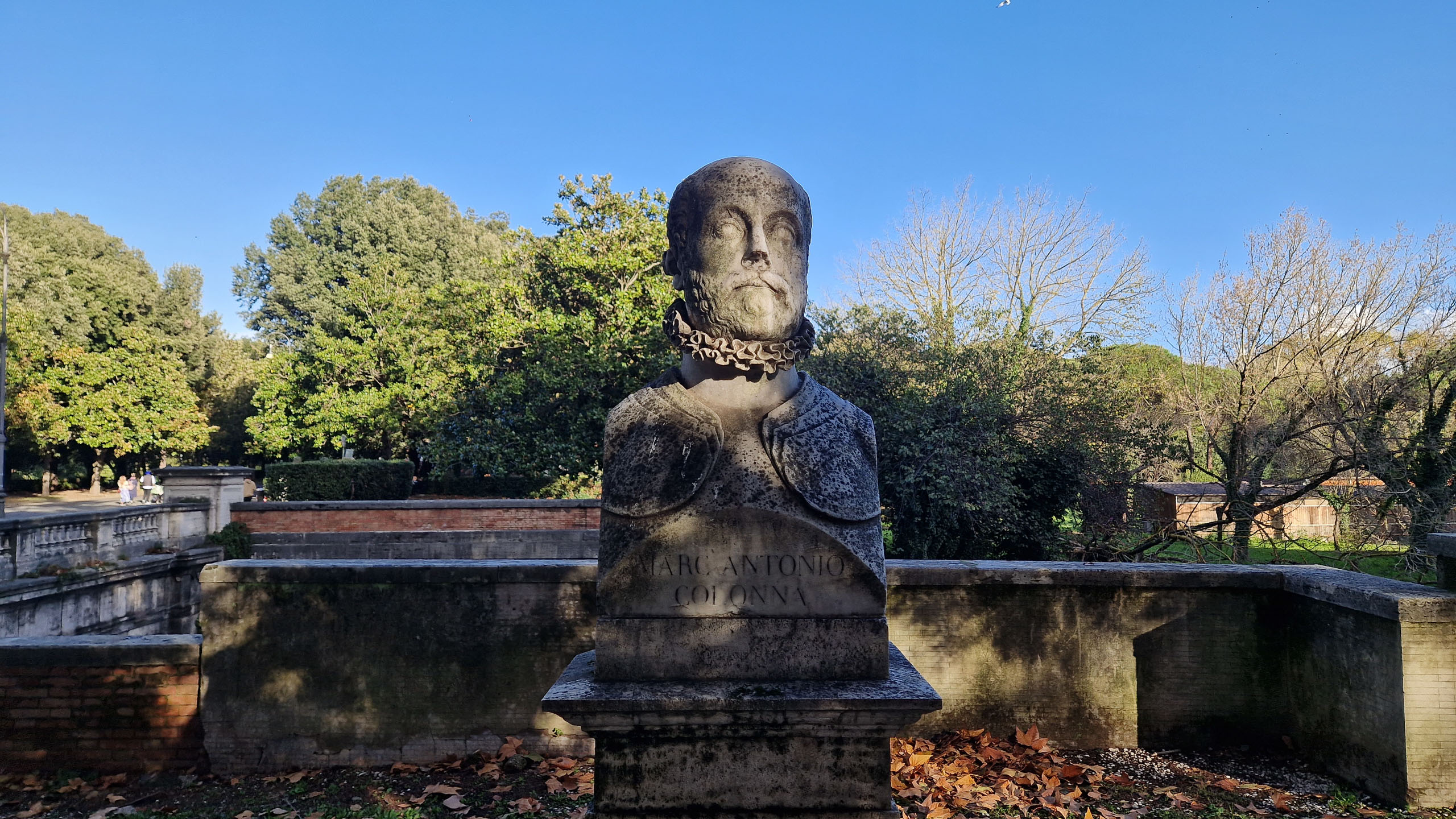
Marcantonio Colonna commanded the papal fleet at the Battle of Lepanto in 1571. The allied fleet as a whole was led by Don John of Austria. Keeping those commands distinct places Colonna’s achievement within a coalition whose success depended on cooperation among powers with different interests.
His relationship with the papacy had not always been cooperative. During the pontificate of Paul IV, conflict cost his family lands and strongholds. The recovery of those possessions preceded his later service under Pius V. In sixteenth-century Rome, a noble family’s loyalty to a pope could be a political negotiation rather than a permanent allegiance.
Colonna later served the Spanish crown as viceroy of Sicily from 1577. His career moved between a Roman dynasty, papal naval command, and the administration of a Spanish-ruled kingdom. The portrait commemorates a military reputation, but the offices behind it reveal the interconnected politics of the Mediterranean.
Pincio gardens · Nearby
The anatomist behind the Eustachian tube, whose major anatomical plates reached print long after his death.
Find on the mapPincio gardens · Nearby
Del Prete combined navigation and piloting in the long-distance flights that made Italian aviation a public spectacle in the 1920s.
Find on the mapPincio gardens · Nearby
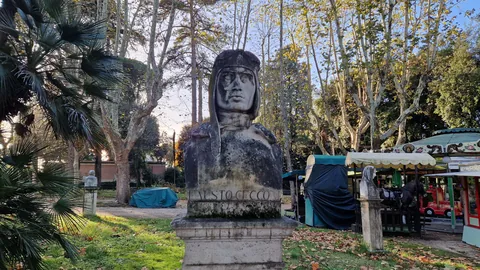
Cecconi flew with Umberto Maddalena in endurance trials that tested how long an aircraft and its crew could remain aloft.
Find on the mapPincio gardens · Nearby
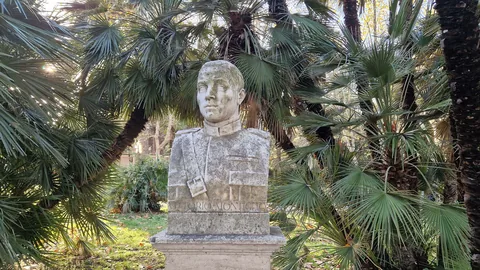
Montiglio’s wartime service and later Fascist activism belong together in the history behind his commemorative portrait.
Find on the map