Pincio gardens · Nearby
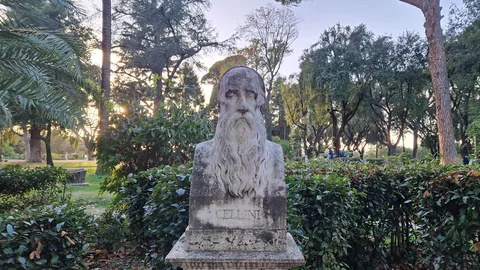
Benvenuto Cellini
Cellini made goldsmithing and sculpture serve princely display, then cast his own turbulent career as the subject of an autobiography.
Find on the mapRead aloud with your device’s voice.
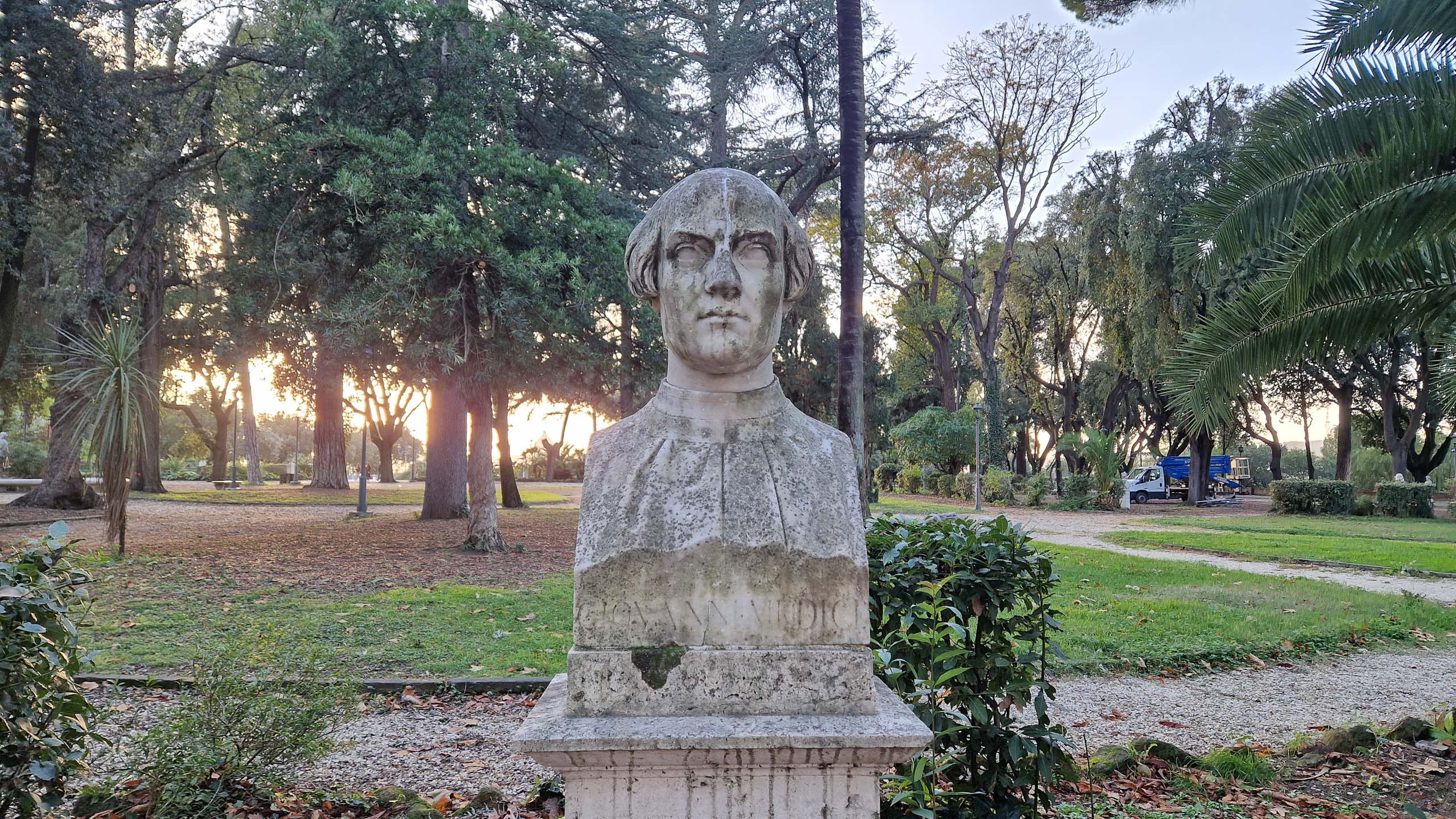
Giovanni delle Bande Nere fought in an Italy divided among rival states and foreign powers. Born in 1498 to Caterina Sforza and Giovanni de' Medici, he belonged to a younger branch of the Medici family. His military career served shifting alliances during the Italian Wars.
He became known for the aggressive use of mobile troops, including light cavalry and infantry. Command was a profession shaped by contracts, family interests, and the demands of patrons; changing sides could bring opportunities and damage a captain's reputation. Giovanni's service to Medici popes and to French interests belongs to that political world.
In 1526 he fought against imperial forces advancing through northern Italy. A severe artillery wound led to an amputation, and he died in Mantua that November, aged twenty-eight. His son Cosimo later became Duke of Florence and promoted the memory of his father as a distinguished military ancestor.
The surviving portraits are therefore also evidence of Medici dynastic commemoration. Their armored commander should not be mistaken for a soldier of an already united Italy, a state that would not exist for centuries.
Pincio gardens · Nearby
Cellini made goldsmithing and sculpture serve princely display, then cast his own turbulent career as the subject of an autobiography.
Find on the mapPincio gardens · Nearby
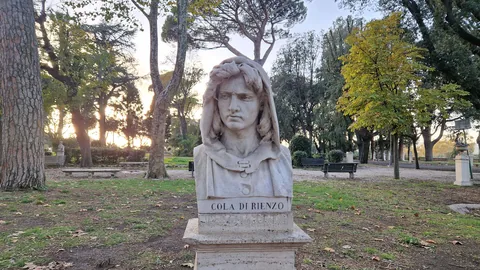
A Roman notary who became tribune in 1347, Cola di Rienzo used the language of ancient Rome to challenge the city’s barons.
Find on the mapPincio gardens · Nearby
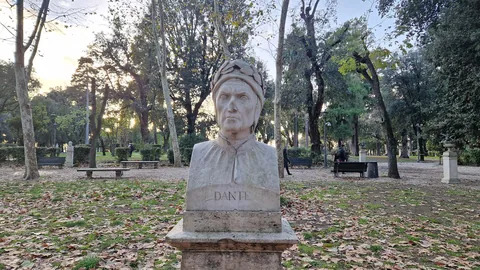
An exiled Florentine who made the afterlife a setting for arguments about language, power, love, and justice.
Find on the mapPincio gardens · Nearby
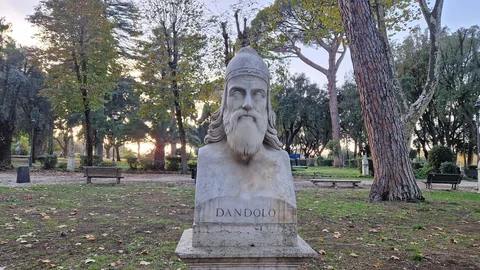
Venice’s doge during the Fourth Crusade, Dandolo helped direct the expedition that captured and sacked Constantinople in 1204.
Find on the map