Pincio gardens · Nearby
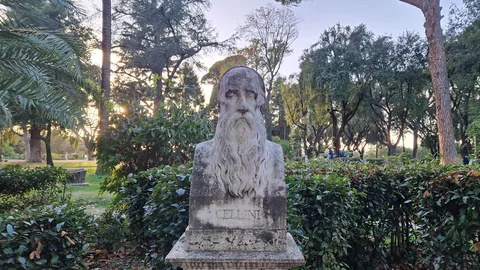
Benvenuto Cellini
Cellini made goldsmithing and sculpture serve princely display, then cast his own turbulent career as the subject of an autobiography.
Find on the mapRead aloud with your device’s voice.
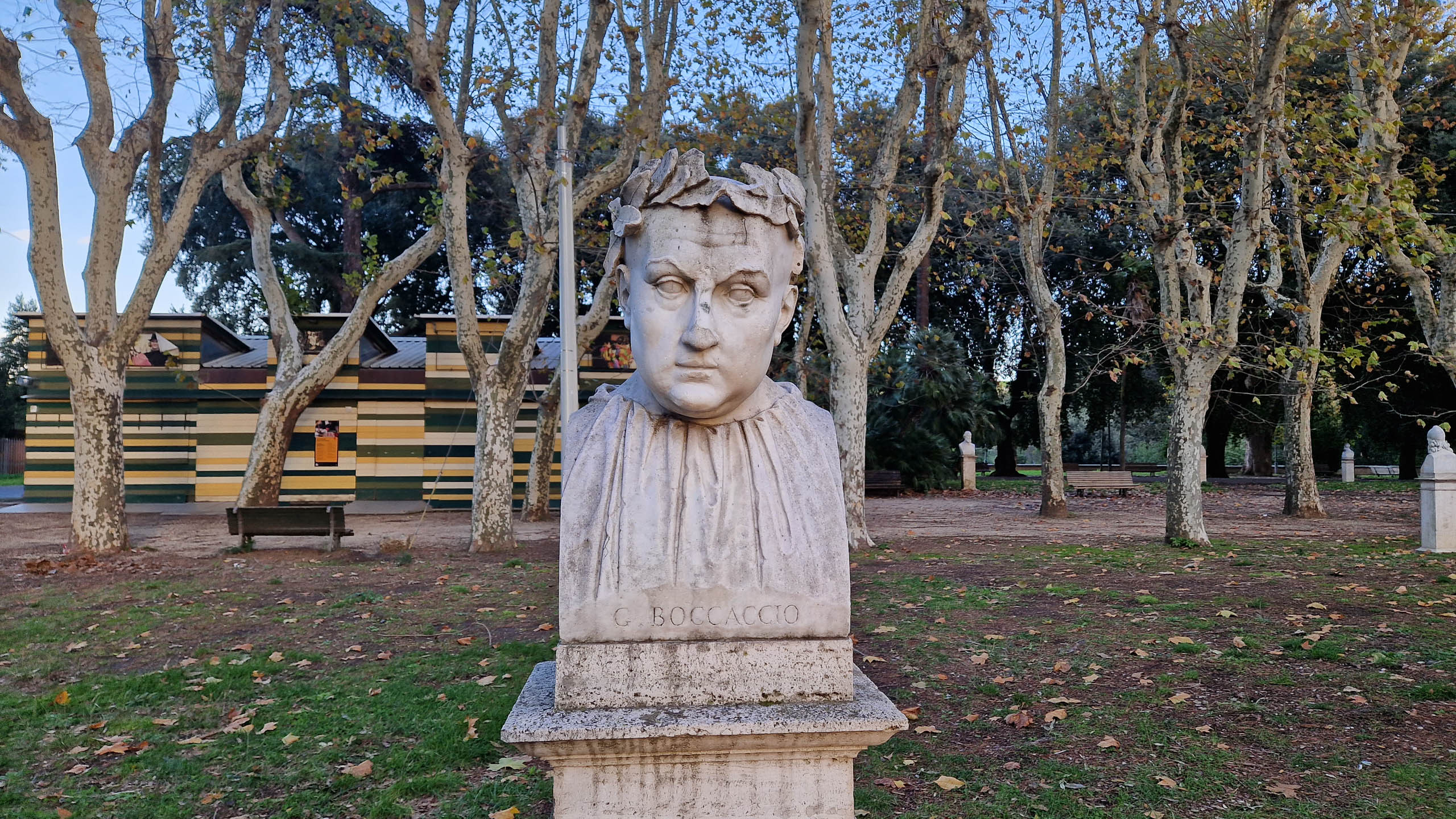
The Decameron begins with a city in crisis. As plague devastates Florence in 1348, seven young women and three young men leave for the countryside and organize their days around storytelling. Across ten storytelling days, their hundred tales test the behavior of merchants, rulers, lovers, servants, and clergy.
Giovanni Boccaccio, born in 1313, knew the worlds of commerce and courtly culture through his youth in Florence and Naples. That range enters his prose: a clever answer can overturn a hierarchy, while money and reputation can determine who gets believed. The book's comedy often has sharp consequences. Its frame also makes conversation and shared rules a fragile response to social collapse.
Boccaccio worked in Latin as well as Italian and studied classical mythology. His friendship with Petrarch connected him to the developing humanist movement, and his admiration for Dante produced both biographical writing and public lectures on the Comedy in Florence in 1373.
He died in 1375. Reading the Decameron as a collection of bawdy anecdotes misses the care of its construction: stories answer other stories, narrators disagree, and the distance between a persuasive performance and an ethical action remains unsettled.
Pincio gardens · Nearby
Cellini made goldsmithing and sculpture serve princely display, then cast his own turbulent career as the subject of an autobiography.
Find on the mapPincio gardens · Nearby
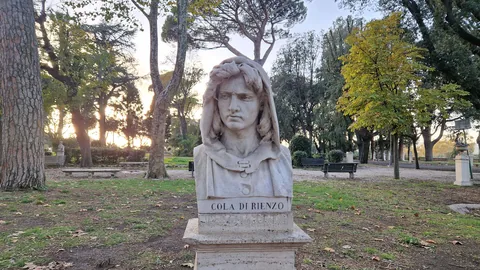
A Roman notary who became tribune in 1347, Cola di Rienzo used the language of ancient Rome to challenge the city’s barons.
Find on the mapPincio gardens · Nearby
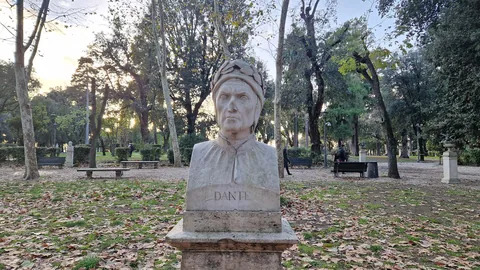
An exiled Florentine who made the afterlife a setting for arguments about language, power, love, and justice.
Find on the mapPincio gardens · Nearby
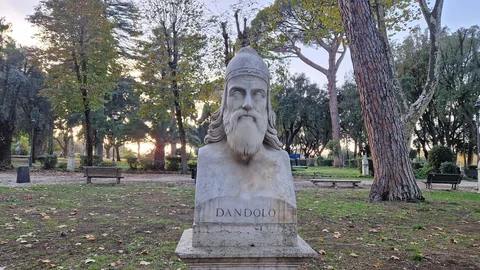
Venice’s doge during the Fourth Crusade, Dandolo helped direct the expedition that captured and sacked Constantinople in 1204.
Find on the map