Pincio gardens · Nearby
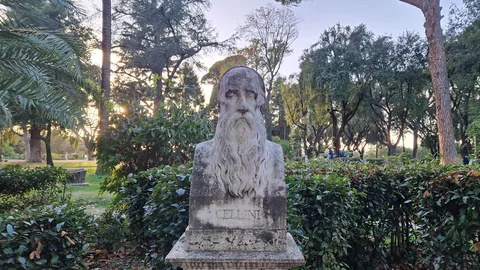
Benvenuto Cellini
Cellini made goldsmithing and sculpture serve princely display, then cast his own turbulent career as the subject of an autobiography.
Find on the mapRead aloud with your device’s voice.
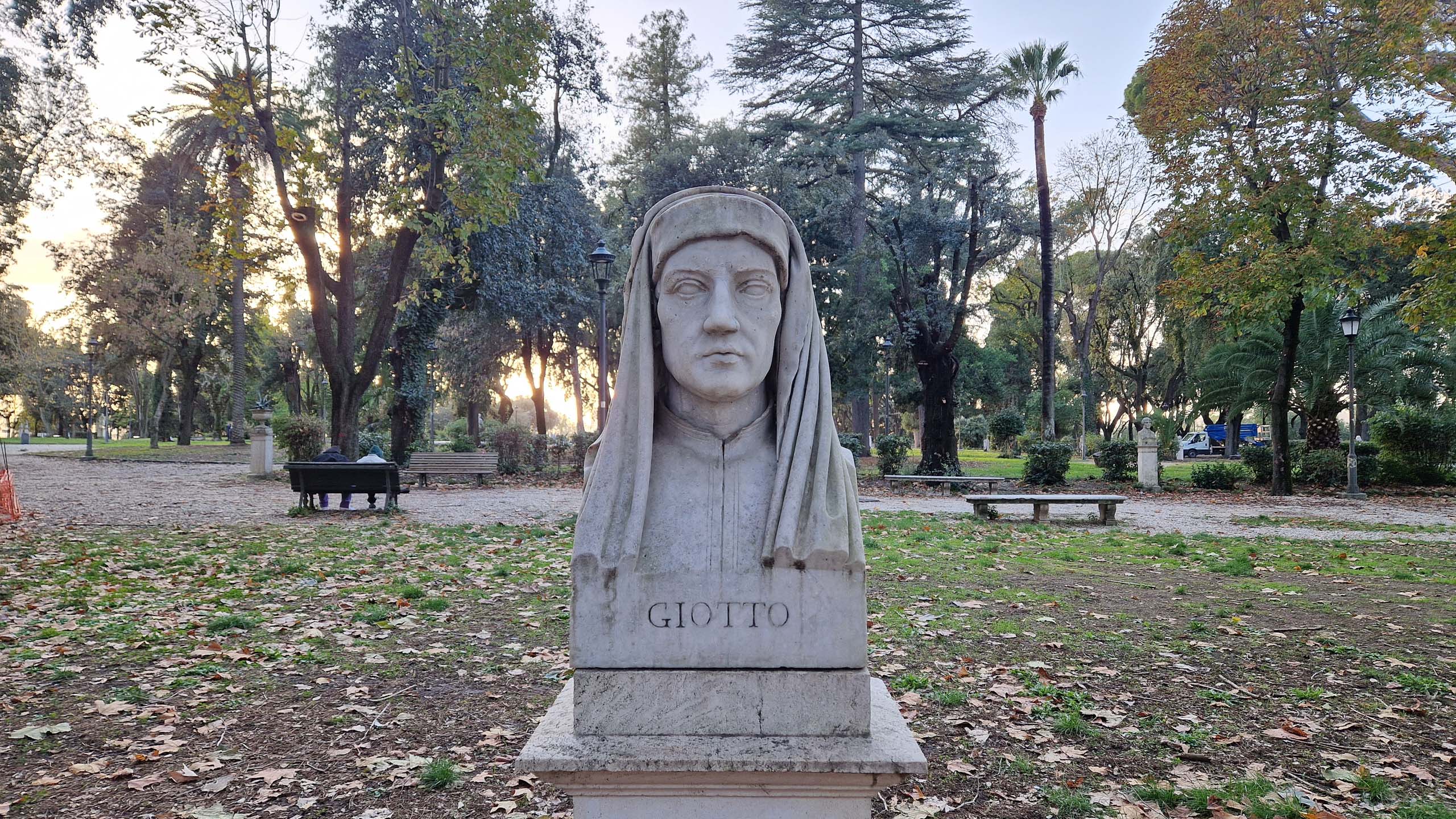
In Giotto's paintings, grief has a physical weight. Figures lean toward one another, turn their backs, or hold a face between their hands. These gestures help explain why the Florentine painter, born around 1267, became a reference point for later accounts of the history of Italian art.
His frescoes in the Scrovegni Chapel in Padua, painted between 1303 and 1305 for Enrico Scrovegni, tell the lives of Mary and Christ within an ordered religious program. Bodies occupy convincing spaces, but the architecture and landscape also direct attention toward the action. Emotional expression serves the story. The chapel's Last Judgment places those individual encounters within a larger account of salvation.
Giotto also worked for patrons beyond Florence and Padua, including in Rome and Naples. The extent of his participation in the frescoes at Assisi remains a major attribution question. Workshop collaboration and uneven survival make the familiar list of “Giottos” less straightforward than a sequence of signed masterpieces.
Later biographies made him a founding hero of painting and surrounded his childhood with memorable anecdotes. Those stories belong to his reputation; the surviving works offer firmer ground for understanding how he used bodies, glances, and intervals of space to make a scene intelligible.
Pincio gardens · Nearby
Cellini made goldsmithing and sculpture serve princely display, then cast his own turbulent career as the subject of an autobiography.
Find on the mapPincio gardens · Nearby
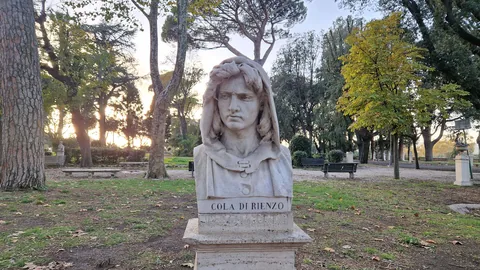
A Roman notary who became tribune in 1347, Cola di Rienzo used the language of ancient Rome to challenge the city’s barons.
Find on the mapPincio gardens · Nearby
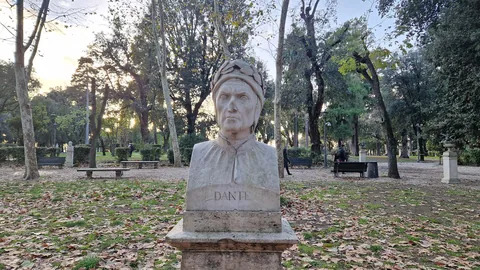
An exiled Florentine who made the afterlife a setting for arguments about language, power, love, and justice.
Find on the mapPincio gardens · Nearby
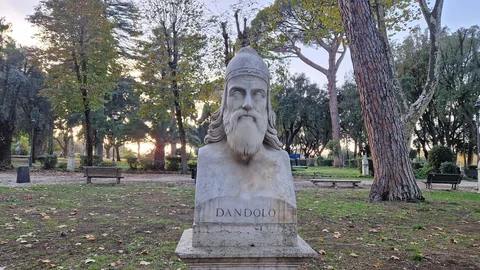
Venice’s doge during the Fourth Crusade, Dandolo helped direct the expedition that captured and sacked Constantinople in 1204.
Find on the map