Pincio gardens · Nearby
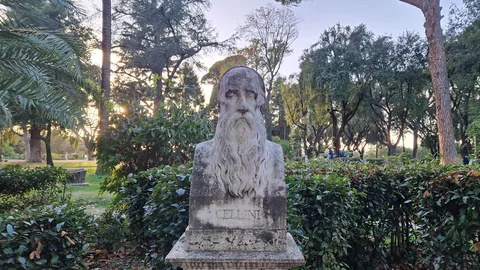
Benvenuto Cellini
Cellini made goldsmithing and sculpture serve princely display, then cast his own turbulent career as the subject of an autobiography.
Find on the mapRead aloud with your device’s voice.
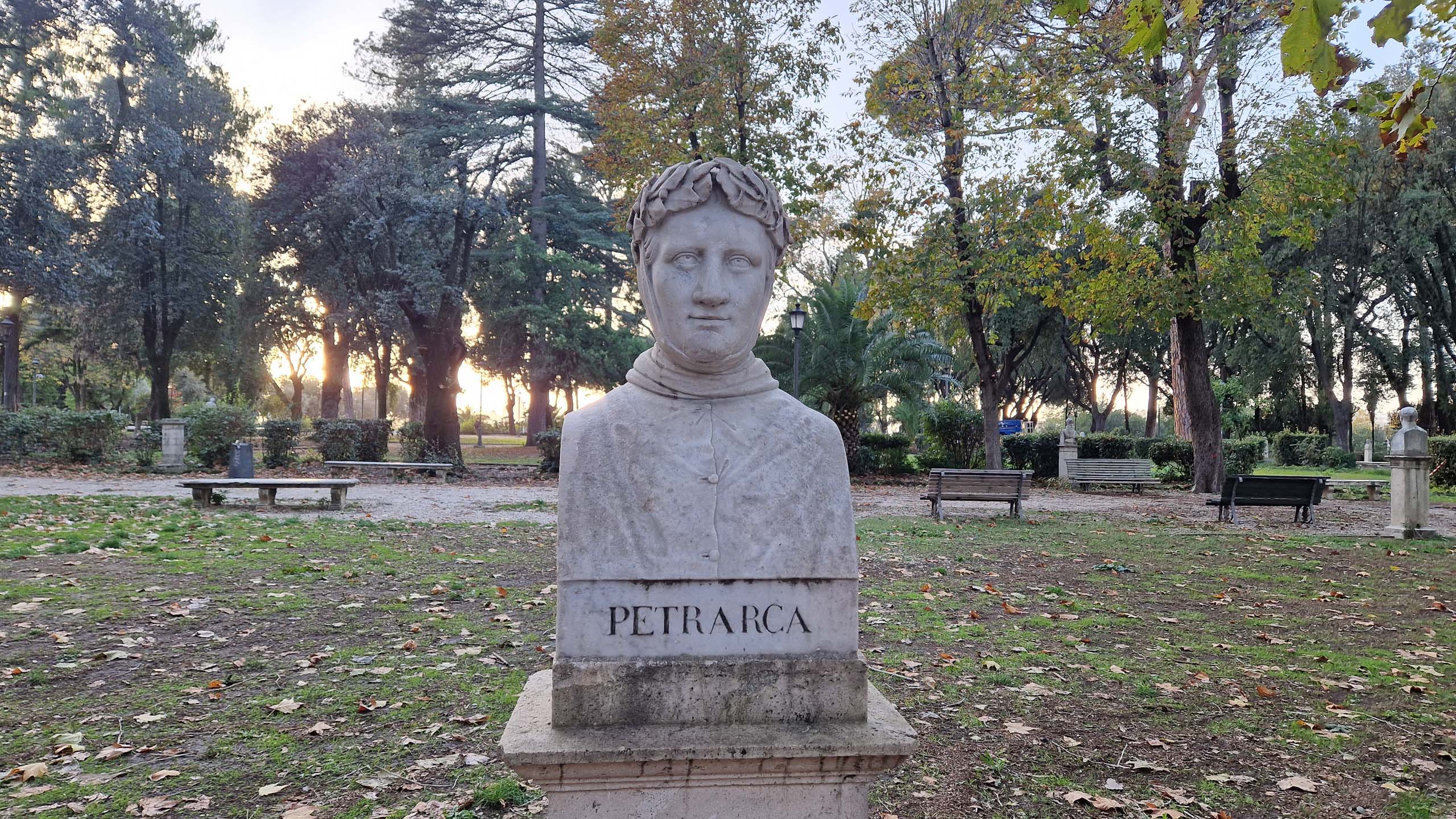
Petrarch received the poet's laurel on Rome's Capitoline Hill in 1341. The ceremony joined his personal ambition to the authority of ancient Rome, a culture he studied through manuscripts, inscriptions, and the works of Latin authors. Born Francesco Petrarca in 1304, he spent much of his life moving between patrons and cities.
English readers often meet him through the Canzoniere, the collection of 366 poems written in the Italian vernacular. Desire for Laura repeatedly collides with religious conscience, the passage of time, and the wish for literary fame. Petrarch revised the wording and arrangement of the poems over decades. Their speaker is a carefully constructed literary self.
His Latin writings mattered deeply to him. He recovered and compared classical texts, cultivated correspondents, and edited letters that would shape how later readers understood his life. Even the famous account of climbing Mont Ventoux turns an outward journey into an examination of the soul; it should be read as literature as well as autobiography.
Petrarch died in 1374. His influence reached both humanist scholarship and European love poetry, where writers adopted, argued with, and parodied his language of desire. The tension in that language, between self-knowledge and self-deception, still gives the poems their bite.
Pincio gardens · Nearby
Cellini made goldsmithing and sculpture serve princely display, then cast his own turbulent career as the subject of an autobiography.
Find on the mapPincio gardens · Nearby
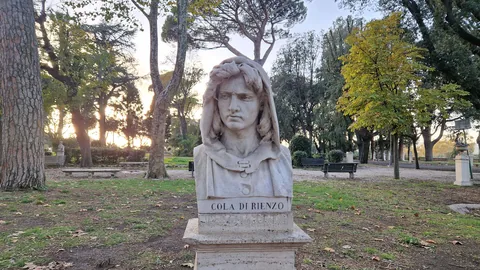
A Roman notary who became tribune in 1347, Cola di Rienzo used the language of ancient Rome to challenge the city’s barons.
Find on the mapPincio gardens · Nearby
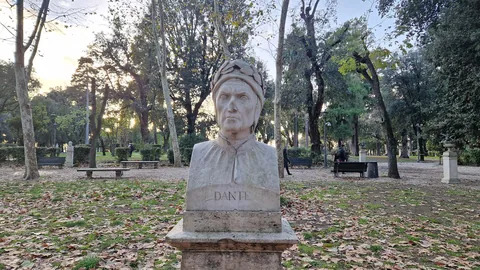
An exiled Florentine who made the afterlife a setting for arguments about language, power, love, and justice.
Find on the mapPincio gardens · Nearby
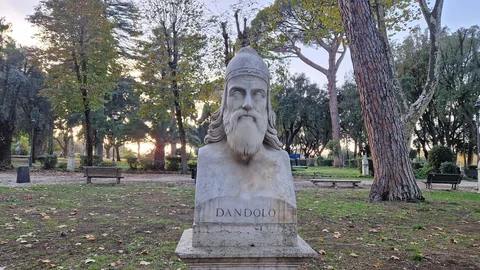
Venice’s doge during the Fourth Crusade, Dandolo helped direct the expedition that captured and sacked Constantinople in 1204.
Find on the map